krumbi.de
Deutsch

Gallery

2026

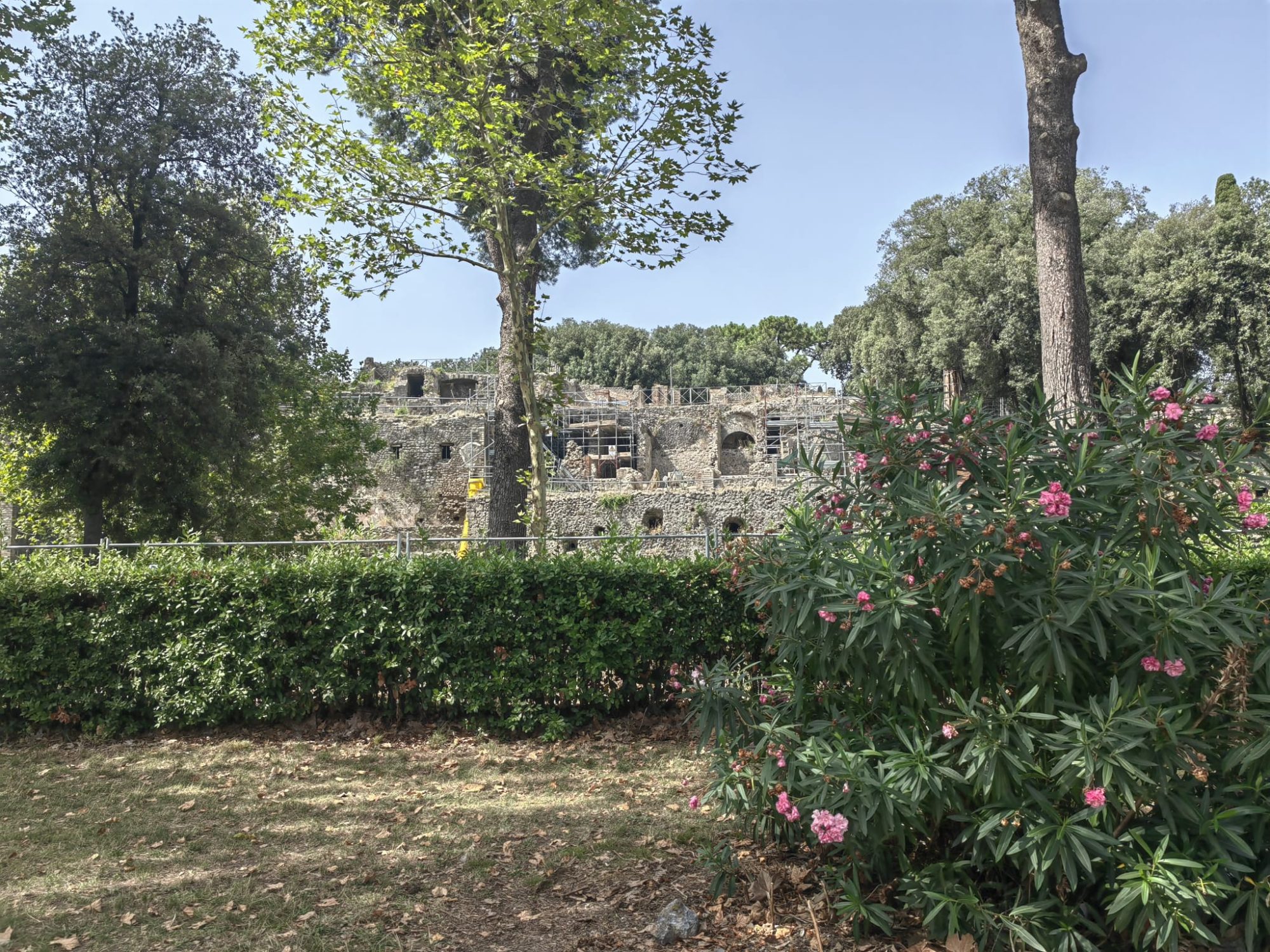
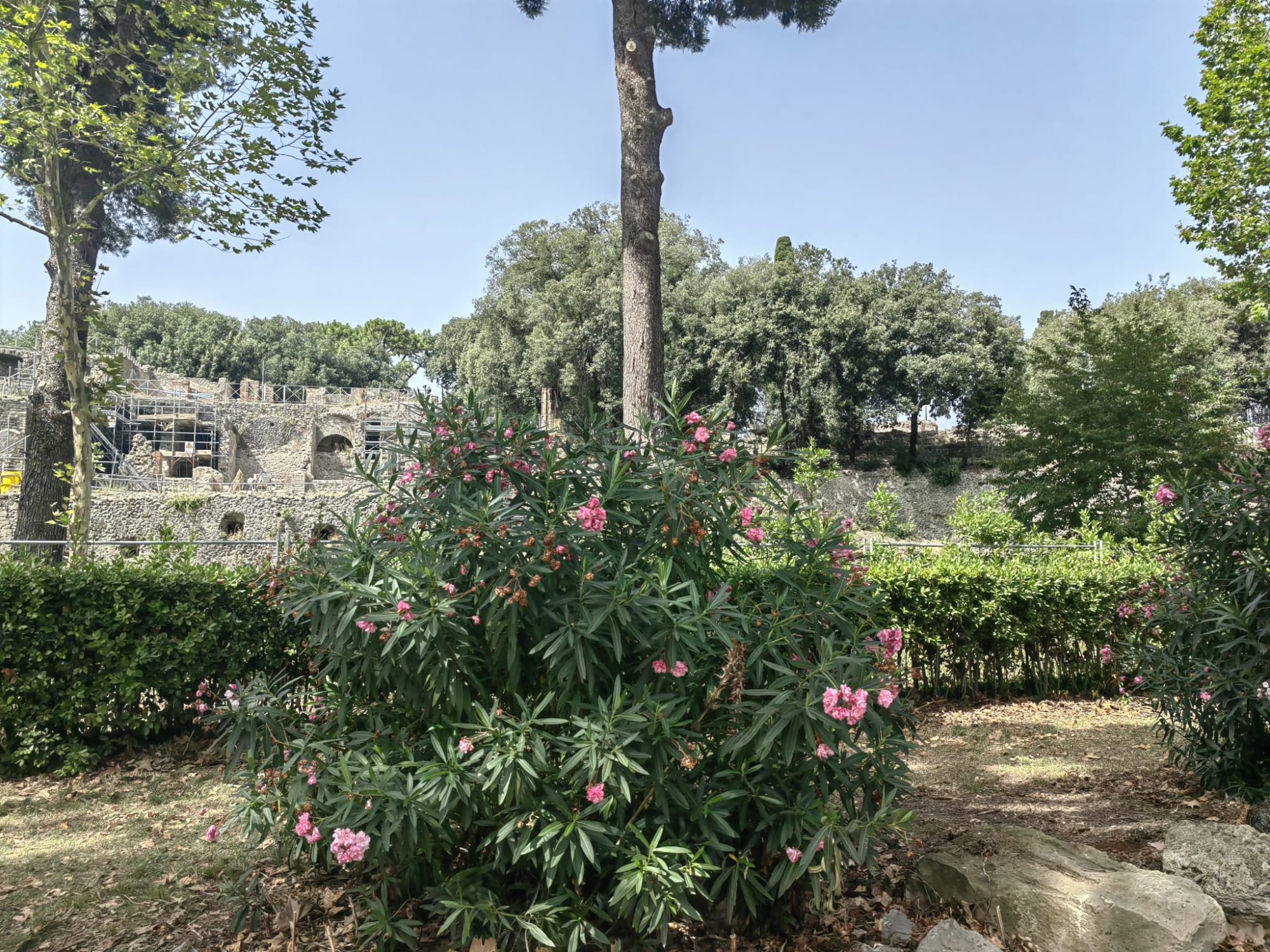
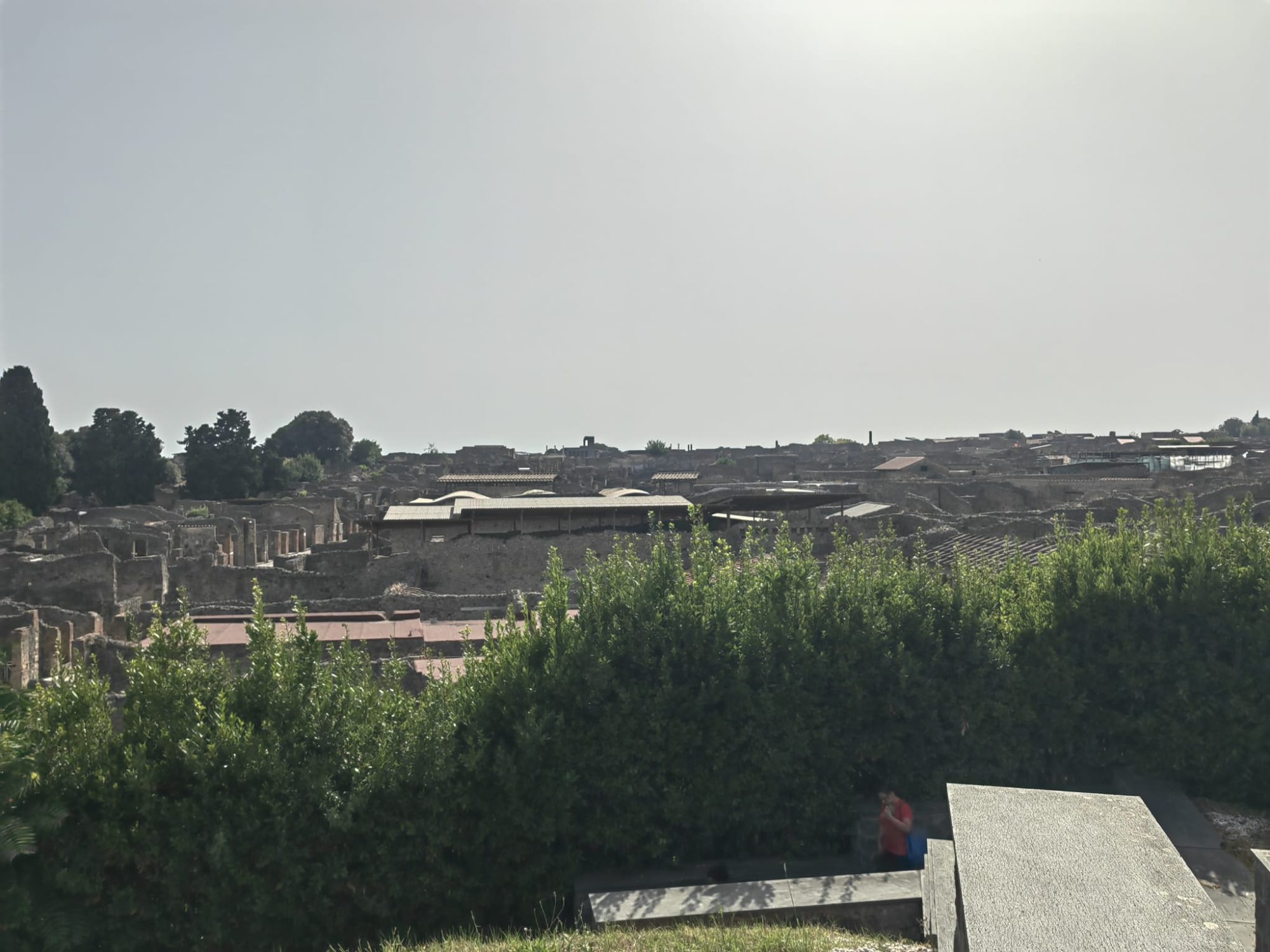
The sculptures opted for the box seat between oleander bushes and mountain views.Behind blooming oleanders, antiquity is currently getting a little cosmetic touch-up.The oleander confidently insists on taking center stage in front of the ancient ruins.A tactile scale model with Braille script helps visually impaired visitors experience Pompeii's ancient structures, including the theatre and amphitheatre.The Romans built for eternity, but upkeep still calls for modern scaffolding.Ancient history is all well and good, but this shady spot clearly took priority.In the steep tiers of Pompeii's Odeon, up to 1,500 spectators once listened to musical performances and poetry readings.Where gladiators once trained, display boards and a velvet rope now hold the fort.Once a foyer for theatregoers, later barracks for gladiators: the sprawling quadriporticus overlooking distant Mount Vesuvius.The Small Theatre of Pompeii was once fully covered as a theatrum tectum. The front parapets are flanked by kneeling atlantes.An ancient thermopolium in Pompeii: Clay jars for hot food and drinks were embedded directly into the masonry counter.The large stepping stones in the street paving served as ancient crosswalks: pedestrians could cross with dry feet while carts passed through the gaps.The front door has been missing for nearly two thousand years, but the security gate takes its job very seriously.The paving has held up for two thousand years. Only the through traffic has noticeably dropped off.The sign marks Regio VIII, Insula VII: In the 19th century, Giuseppe Fiorelli divided Pompeii into nine regions and numbered city blocks to aid navigation.Two small niches in the stone wall. Plenty of space for ancient knick-knacks.The walls have been standing strong for two thousand years. Only the roof could use a little patching up sometime soon.Nearly two thousand years of wind and weather, yet the red wall paint still stubbornly refuses to fade.In any case, no one has complained about property boundaries around here for a very long time.A paved walkway between two-thousand-year-old walls. You certainly won't get lost here.Remnants of the ancient marble paving are still preserved in the semi-circle of the orchestra. This is where guests of honor once sat on movable chairs.View along the Via di Stabia toward the Porta Stabia, the oldest surviving city gate of the ancient town.The remarkably high curbs protected the sidewalks from rainwater and waste that drained down the paved street.Unlike its large neighbor, the Odeon (Small Theatre) of Pompeii was once completely roofed and seated around 1,500 spectators.Deep ruts worn into the basalt stones bear witness to the heavy cart traffic of everyday Roman life.Wide sidewalks, solid basalt paving, and guaranteed no more rush hour.The round arches are soldiering on bravely, even if the upper floor moved out long ago.The brick arches provide reliable shade. For a nap, however, the floor is a bit on the rustic side.No entry to the construction site. Then again, after nearly two millennia, the completion date hardly matters anymore.A cypress perfectly framed. As if the Roman architects had factored it right into the blueprints back then.No through traffic – a rule everyone around here has been following for quite some time.Where suites of rooms once stood, the grass has now quietly taken over the floor plan.The modern downpipe is visibly trying its best to blend in among the ancient stones.No point in breaking in: The doorway may be firmly barred, but the roof has been missing for nearly two thousand years anyway.Little glass vials, oil lamps, and carved bones. Sometimes ordinary everyday trinkets outlast entire epochs.Between the high walls, the hustle and bustle stays outside – and the shade leisurely wanders from one side of the street to the other.An ancient jigsaw puzzle for advanced players. Sadly, the instruction manual was lost nearly two thousand years ago.Through the reconstructed compluvium in the atrium roof, not only did daylight once stream in, but also rainwater into the catchment basin below.Ochre-yellow panels, dark bases, and clean lines: Ancient interior design did just fine without wallpaper or picture frames.Filigree candelabra and delicate ornaments on plaster. There certainly was no need for a change of wallpaper here for a very long time.The topiary is trimmed to perfection. For ancient ruins, this green courtyard looks remarkably move-in ready.Columns across two levels framing a small garden: in the ancient townhouse, they were already thinking remarkably vertically.Grass grows leisurely between the sun-warmed stones. No one has been in a hurry here for a very long time.As a colonnaded courtyard, the peristyle provided light, fresh air, and space for a carefully planted garden at the heart of the ancient house.A neat row of beam holes in the wall still reveals quite precisely where the upper floor once began.Deeply notched into the hard basalt rock: carts were already running on rails here two thousand years ago.Spaciously laid out, sunny location, and guaranteed good ventilation. The ceiling, however, could do with a little touch-up.A passageway with a built-in vista. With a view like that, there was really no need to hang pictures on the walls.High curbstones separated sidewalks from street level, where wastewater and carts flowed; stepping stones allowed for a dry crossing.The large storage jars are still standing by the entrance. Though no one has refilled them in a very long time.Not a single pothole repaired in nearly two thousand years—and the road surface is still holding up.Two-thousand-year-old paving stones, and the cat unerringly found the shadiest spot.A delightfully quiet neighborhood, and even after two thousand years, the pavement is still remarkably even.Seamlessly laid paving between high walls: there was definitely no room intended for oncoming traffic in this alley.In the Fullonica di Stephanus, the ancient proprietors simply converted the atrium into a commercial laundry, complete with wash basins.A wall on the left, a wall on the right, and a mountain view at the end. Roman traffic calming in its purest form.Whatever was once painted on the wall here in red: the deadline has definitely passed by now.History or no history: the fur has to look just right first.Looking across the archaeological site into the sun. Pompeii is keeping discreetly to the shadows today.An entire ancient city quarter at a glance—though you largely have to imagine the roofs.