krumbi.de
Deutsch

Gallery

2026

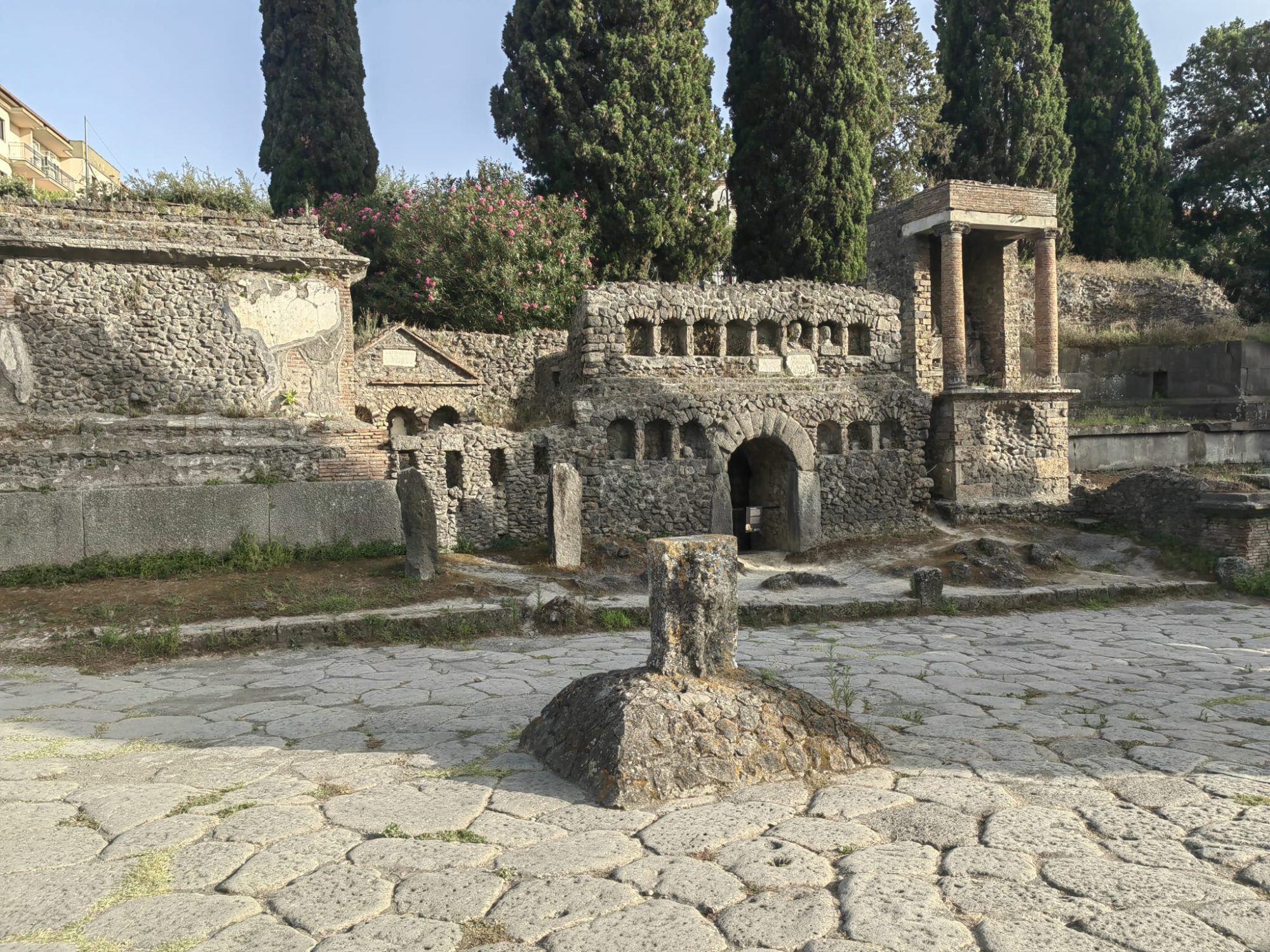
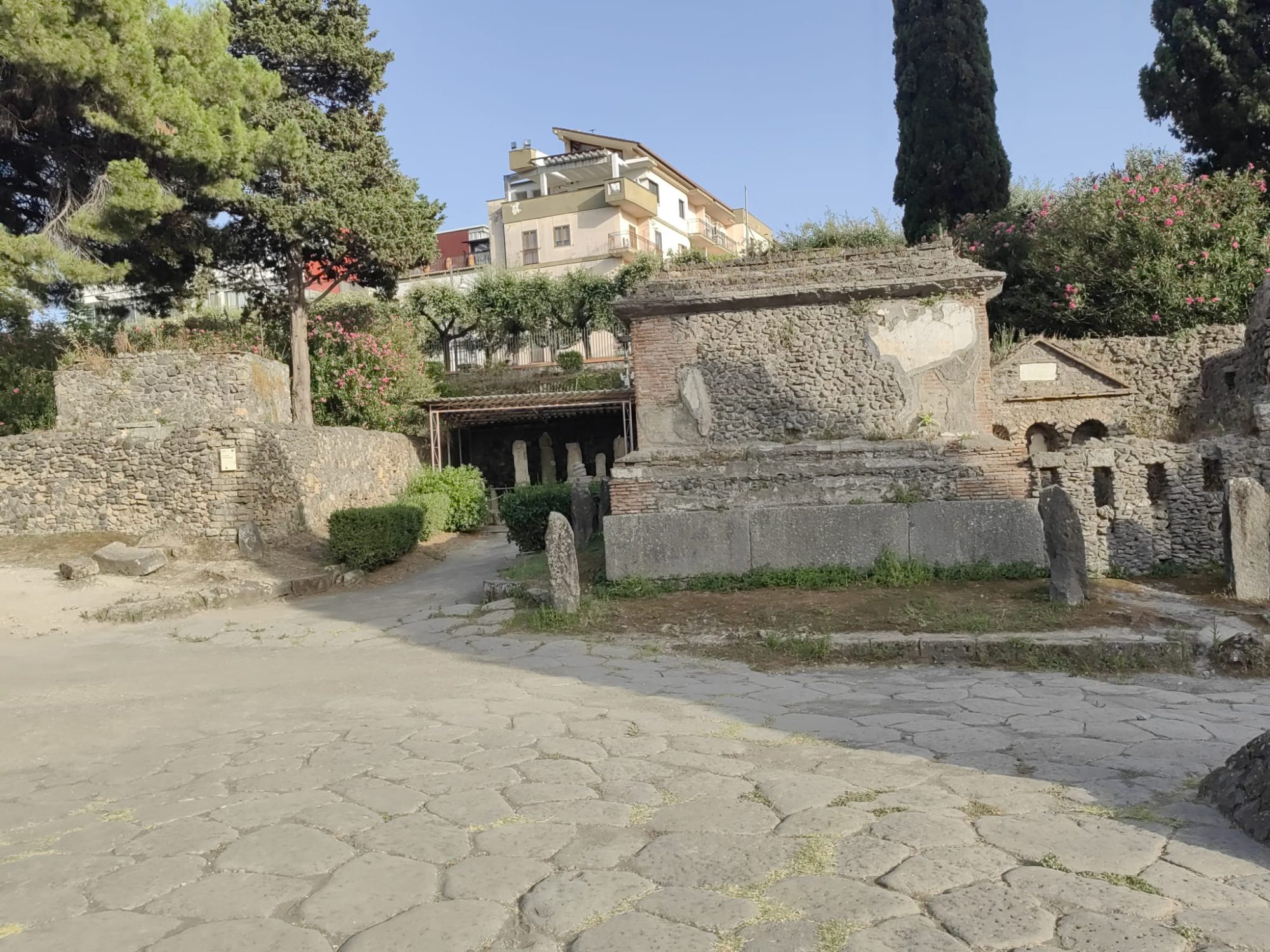
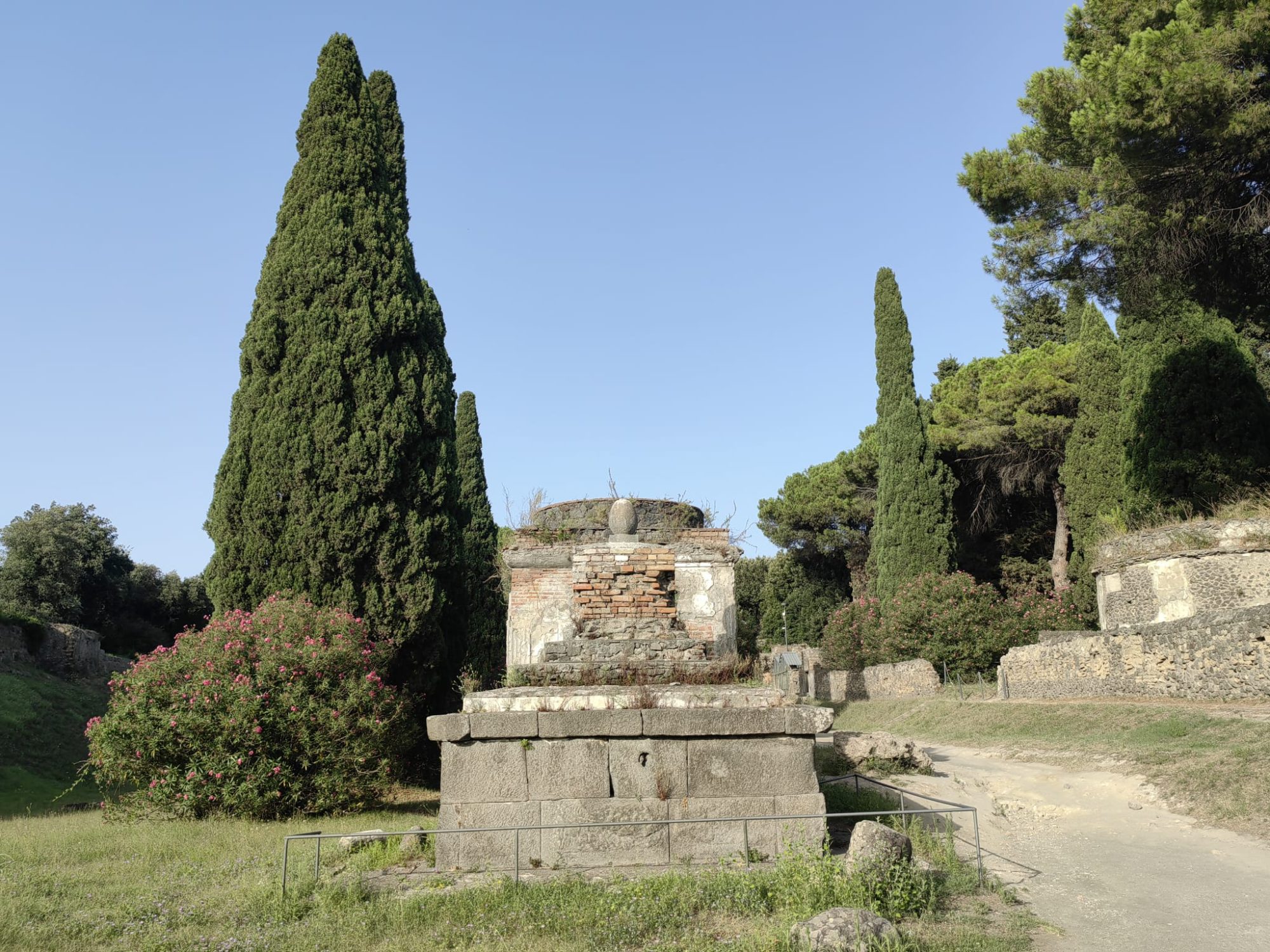
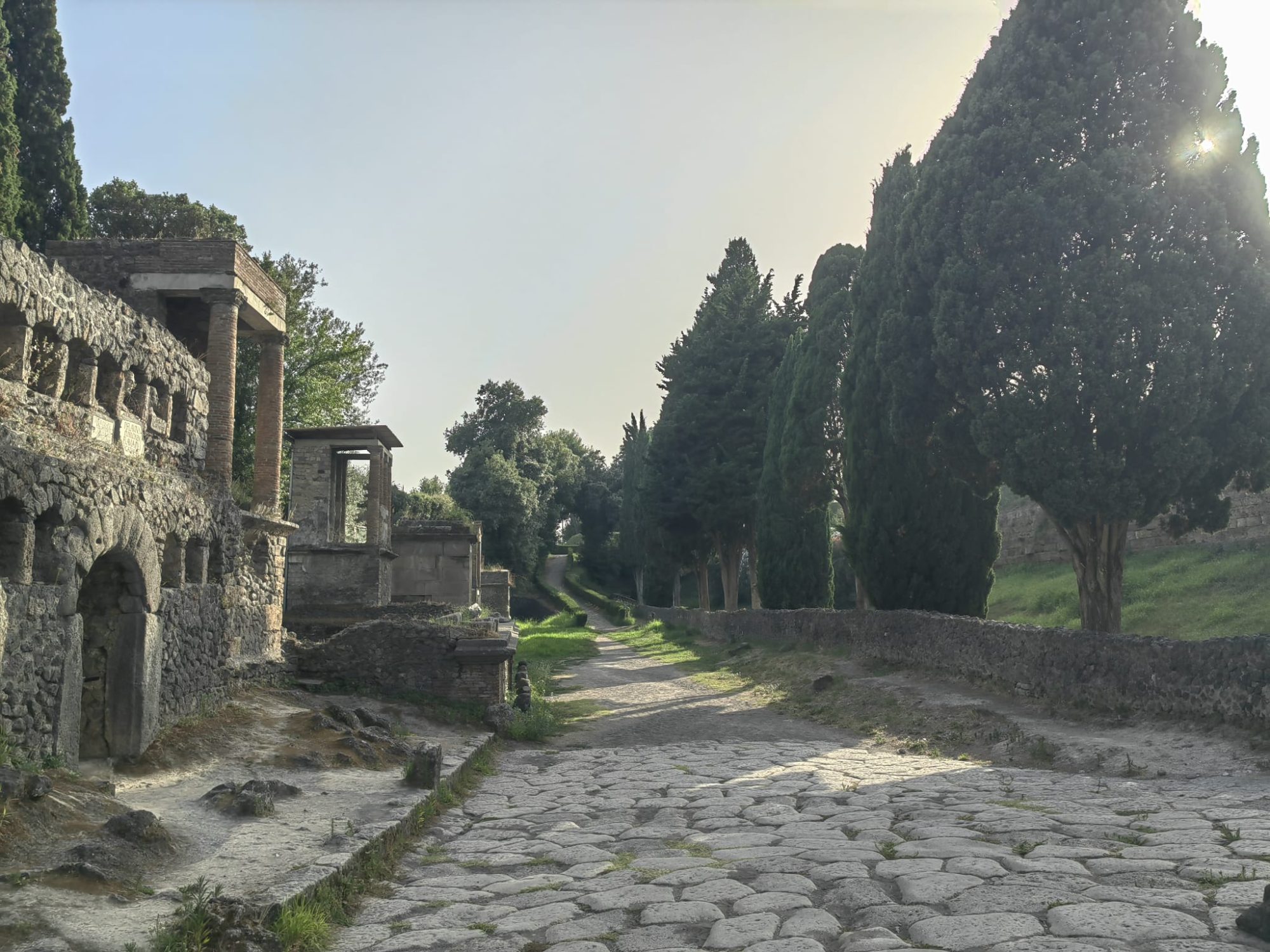
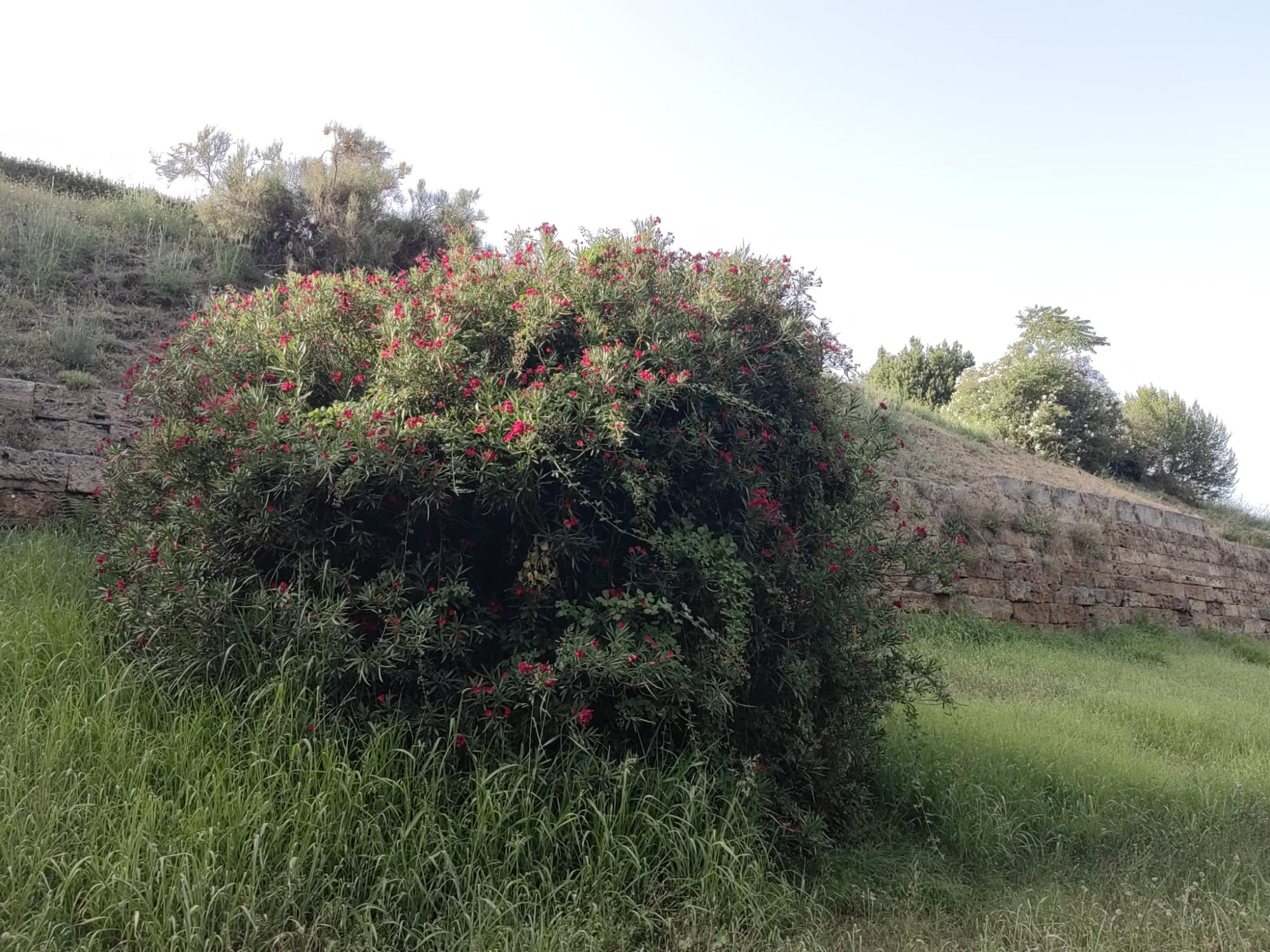
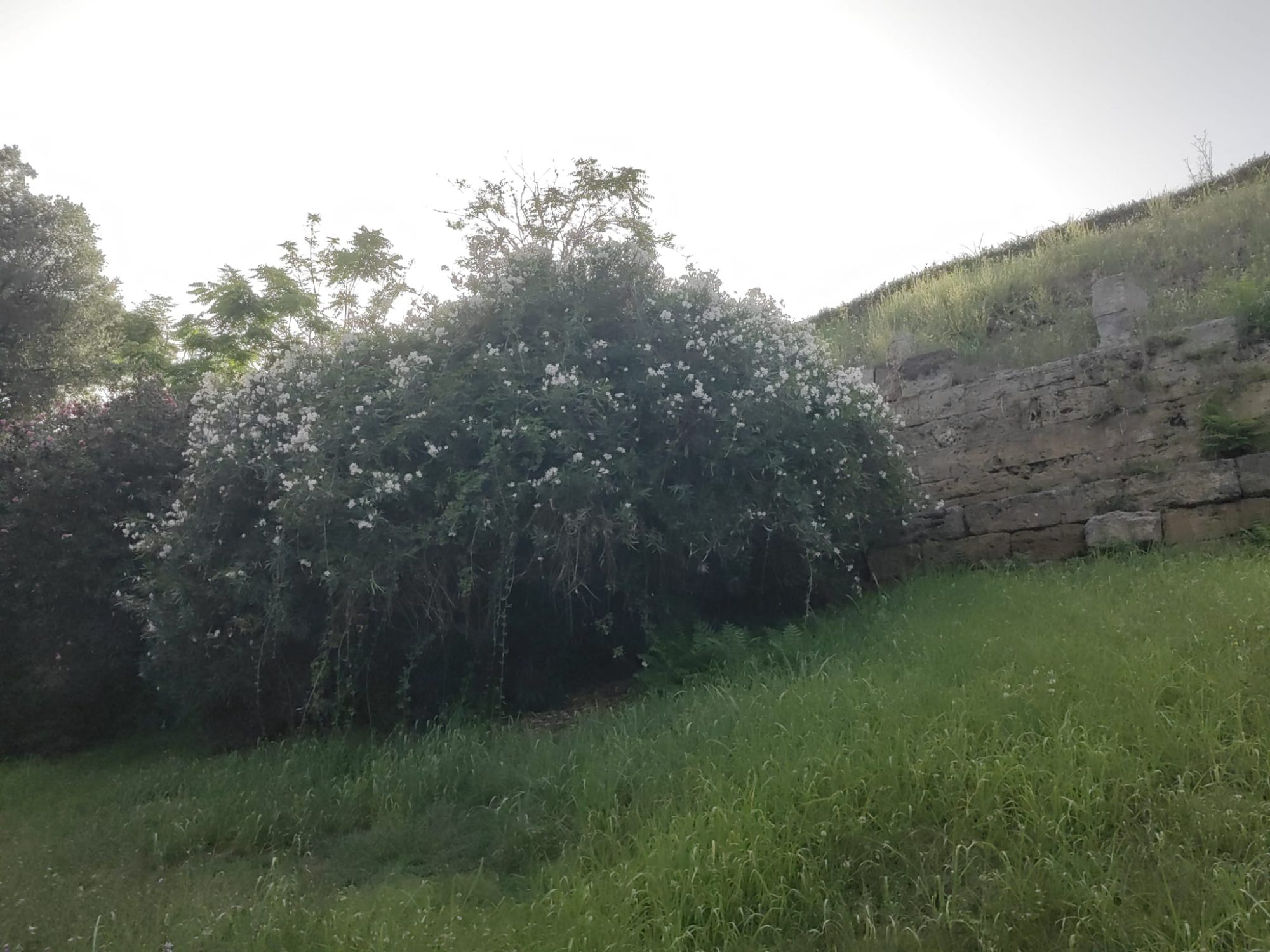
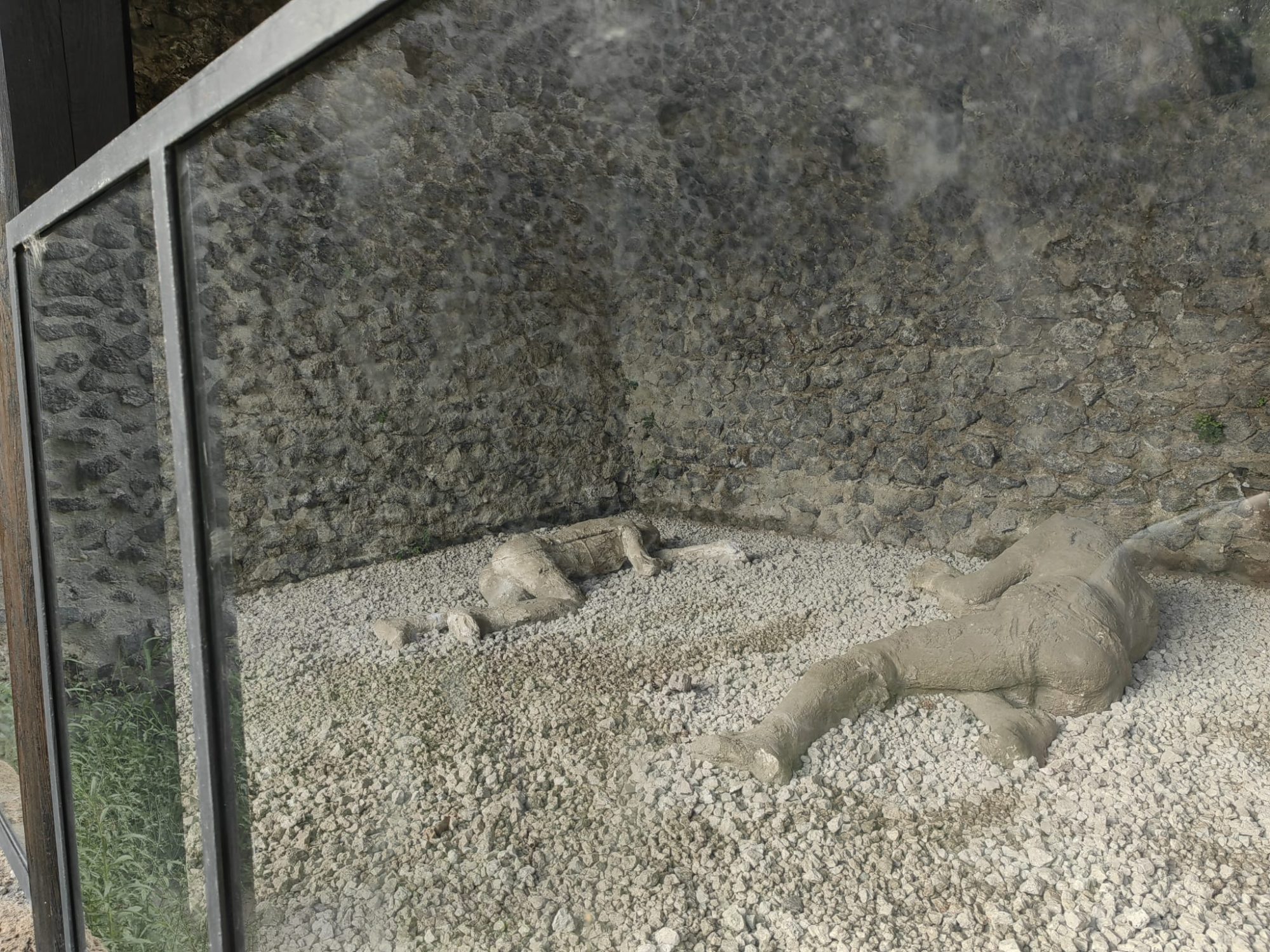
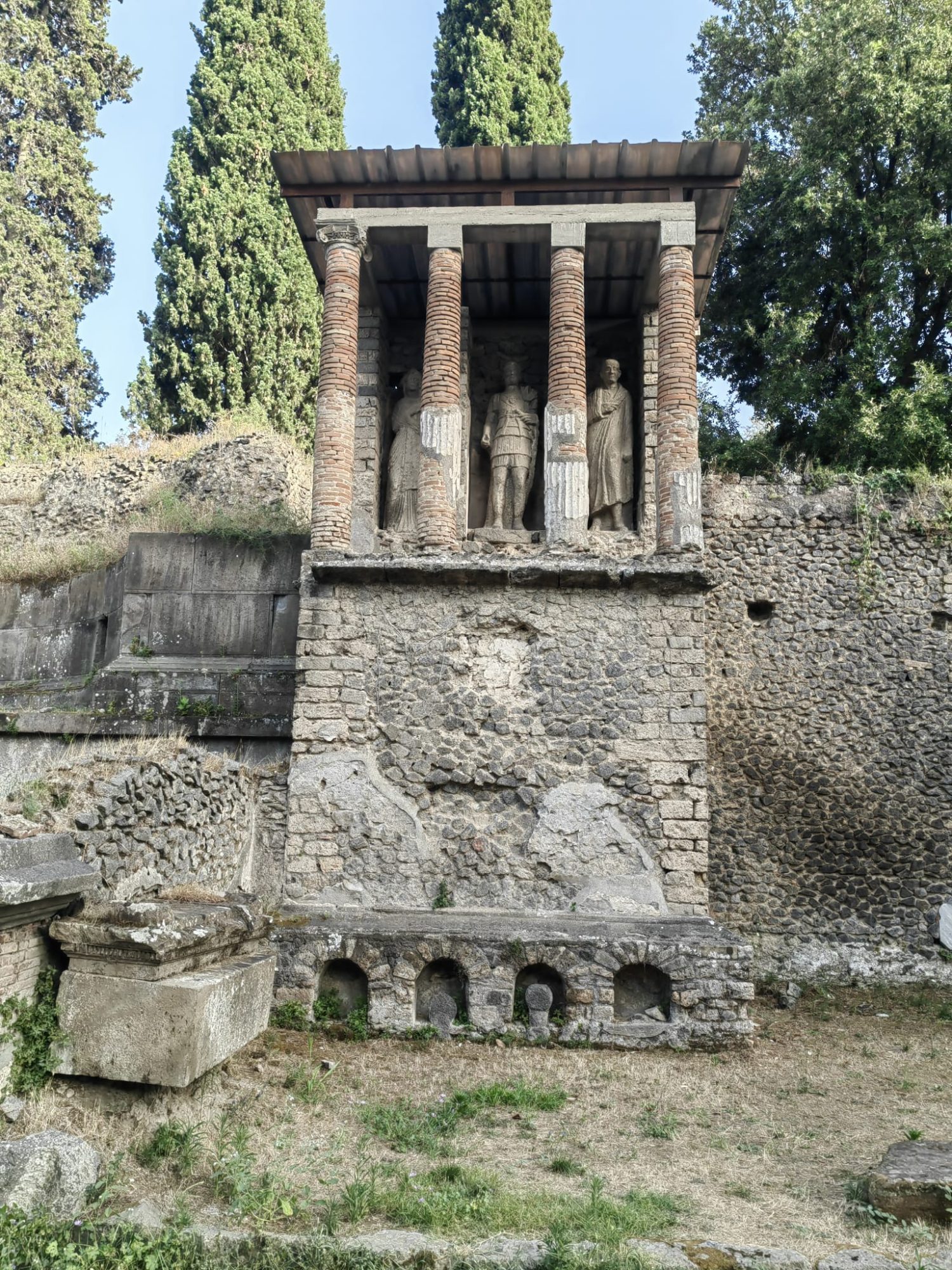
Outside the city walls, monumental tombs line the arterial road—ensuring the deceased remained part of civic life even in the afterlife.Under Roman law, burial within the city walls was forbidden—which is why monumental tombs line the main roads leading out.Headless, but with impeccable posture: Under the protective shelter, the ancient figures patiently await their next appearance.The stone finial still perches right at the top—yet against the tall cypresses all around, the ancient monument seems almost modest.An advanced 3D puzzle: The stonework has been sorted out; it's just the assembly instructions that have been missing for two thousand years.Not a chariot in sight. The ancient paving stones are enjoying a well-earned evening off.The oleander has made itself quite comfortable. The ancient ashlar blocks in the background accept it stoically.The bush has unceremoniously declared the ancient wall a trellis. Apparently, no objections were raised.Plaster casts of the victims from 79 AD: In the 19th century, Giuseppe Fiorelli developed the technique of pouring plaster into the cavities left behind in the solidified pumice.Liquid plaster poured into the voids of solidified ash layers faithfully preserves the postures of the victims during the eruption of Vesuvius.By filling the voids in the compacted ash with plaster, highly detailed casts of the victims of Vesuvius's eruption were created.The cavities in the volcanic tuff made it possible: Plaster casts preserved the precise body contours of those buried alive.Three casts reveal the futile defensive postures of people caught by surprise by the volcano's pyroclastic surge.A covered balcony with its own colonnade: The three stone residents have occupied their box seat for two thousand years.Sheltered behind glass: The plaster cast captures the posture of a victim who fell to the ground in the rain of ash, raising protective arms before their face.Under the sloping canopy, the fresco bravely holds its ground. The rest of the room, however, has been missing for quite some time.Bedded on pumice: The casts show the final moments of two Pompeian residents during the eruption of Vesuvius in 79 AD.Millstones made of porous lava stone in a bakery: Donkeys or slaves once turned the upper runner stone around the fixed cone to grind grain.Along the Via dei Sepolcri, monuments of the upper class lined up: The numerous niches in the facade were designed to hold cinerary urns.The stone table is set. The atrium, however, has been waiting for the dinner guests for a few centuries now.No oncoming traffic for almost two thousand years. Even so, the cypress faithfully keeps watch by the roadside.View across the ancient ruins looking south: In the background, the Monti Lattari mountain range rises on the Sorrento Peninsula.Above the ancient ruins, the ridges of the Monti Lattari rise in the background.Between ancient walls, the sign casually points the way to the nearest pizza.Behind the walls of the archaeological site, the distinctive bell tower of modern Pompei stands out against the mountains.Hallway with a mountain view: Light and vistas already worked like a charm in this Roman house back then.A finger at the top edge of the frame at least provides a little shade for the ancient roofs.The cypresses grow straight as an arrow—as if trying to teach the old walls a thing or two about posture.The characteristically high curbs kept feet dry whenever rainwater washed through the basalt-paved streets.Two thousand years later, renovations are still underway. Good things come to those who wait.The brick-built pediment niche once housed the lararium, where the Roman household made daily offerings to their guardian deities.The fence is modern, but other than that, delightfully little has changed in this neighborhood over the past two millennia.The front door stands wide open, but knocking hasn't been worth the trouble for quite some time.An open-plan living concept, taken to its absolute logical conclusion.The colonnaded quadriporticus once served theatergoers as a foyer; later, the complex was used as gladiatorial barracks.In the leafy peristyle garden of a Roman residence: The colonnaded walkway offered shade and connected the reception rooms.Built around 80 BC, the Odeon of Pompeii was originally fully roofed and mainly used for musical performances and poetry readings.The mosaic still sits neatly on the floor; only the wall paintings have lost a bit of their luster over the millennia.Inside the thermopolium, the ancient cookshop: Clay jars were embedded in the masonry counter to serve and sell food and drinks.A quiet corner off the beaten track, where today mostly grass inhabits the ancient rooms.In the atrium of the Casa di Paquio Proculo: The elaborate mosaic floor frames the central impluvium, which collected rainwater through the open roof.Roman paving at its finest: Every single stone has been in place here for two thousand years. Back then, it probably wasn't particularly gentle on the soles of your feet either.A view over the rooftops of Pompeii. Strictly speaking, mostly over the places where roofs once used to be.The hedge is trimmed with pinpoint accuracy. Whoever looks after this place still takes gardening very seriously.The tiers of the Small Theatre offered seating for around 1,500 spectators. The side parapets of the lower seats of honour are adorned with kneeling figures carved from tufa.Behind the courtyard rises the Large Theatre, built in the 2nd century BC, which once seated around 5,000 spectators.Two small wall niches surrounded by heaps of solid stone. Drafts definitely didn't stand a chance here.Roman interior layout, open-air style. The umbrella pines in the background provide the perfect backdrop.The branches cheekily push into the frame, as if trying to steal the show from the panorama behind them.The walls still stand firmly by the pavement; it's just privacy that's become a bit of an issue.Scaffolding props up the ancient wall, while the grass leisurely reclaims the old path.The walls are holding up bravely; it's just the ceiling height that has become completely open to the sky.Modern protective roofs span parts of the ancient residential quarters to shield uncovered frescoes and walls from decay.The curbstones were remarkably high. Strolling back then clearly required some serious legwork.Beyond the excavated ancient walls, Mount Vesuvius rises on the horizon—its catastrophic eruption in 79 AD sealed the city's fate.The wall on the left showcases Roman opus reticulatum, where diamond-shaped tufa blocks were laid in a net-like pattern.Above the entrance to the ancient thermopolium on Via dell’Abbondanza, Roman deities keep watch, including Mercury as the patron god of commerce.Above the ancient walls, the bell tower of the modern pilgrimage basilica of Pompei emerges on the left, framed by the ridges of the Monti Lattari.Towering above the ancient ruins in the background is the bell tower of modern Pompei, with the Monti Lattari mountain range behind it.The bush at the edge takes its straight lines at least as seriously as the Roman builders next door.