krumbi.de
Deutsch

Gallery · November 2026

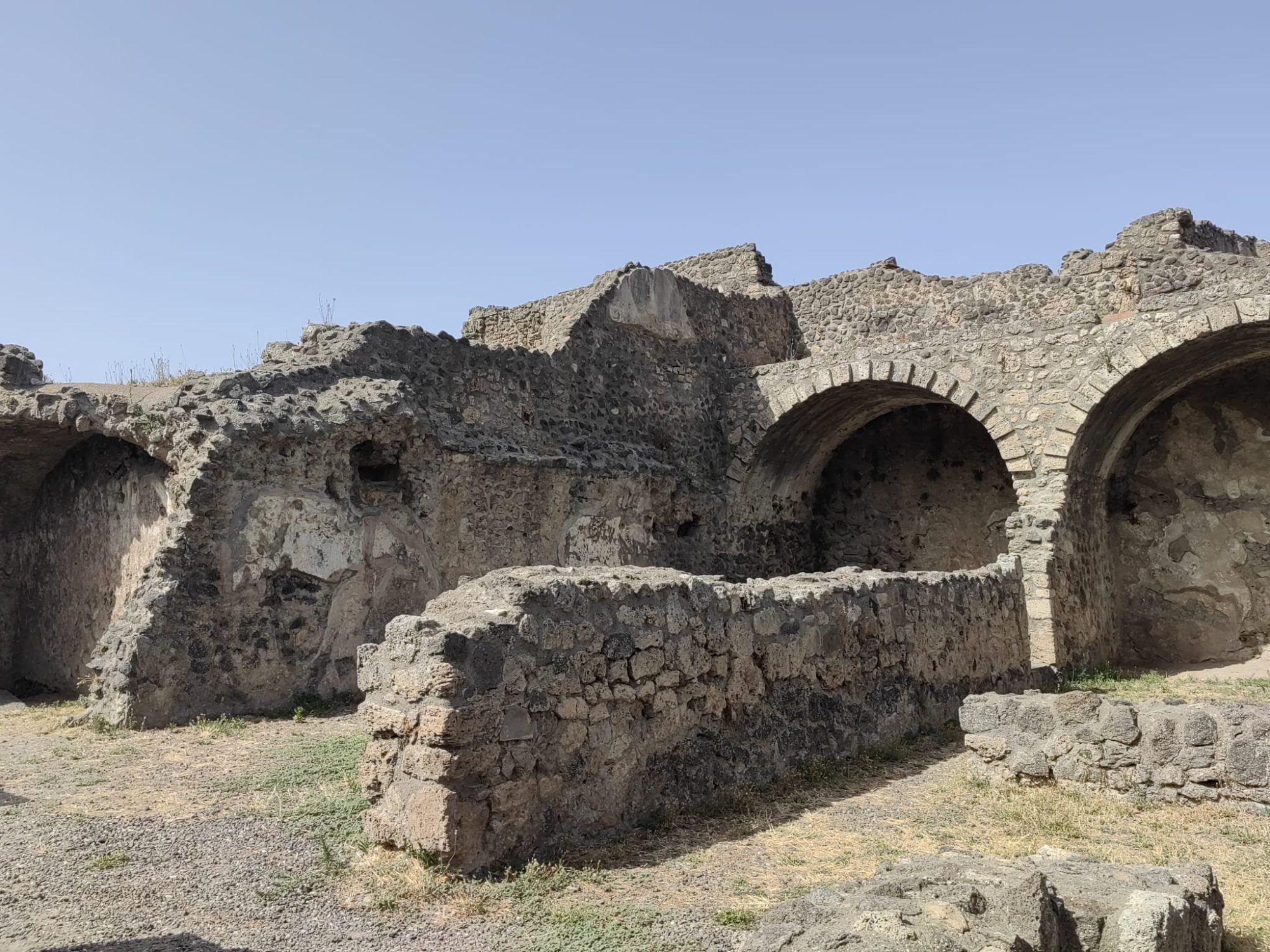
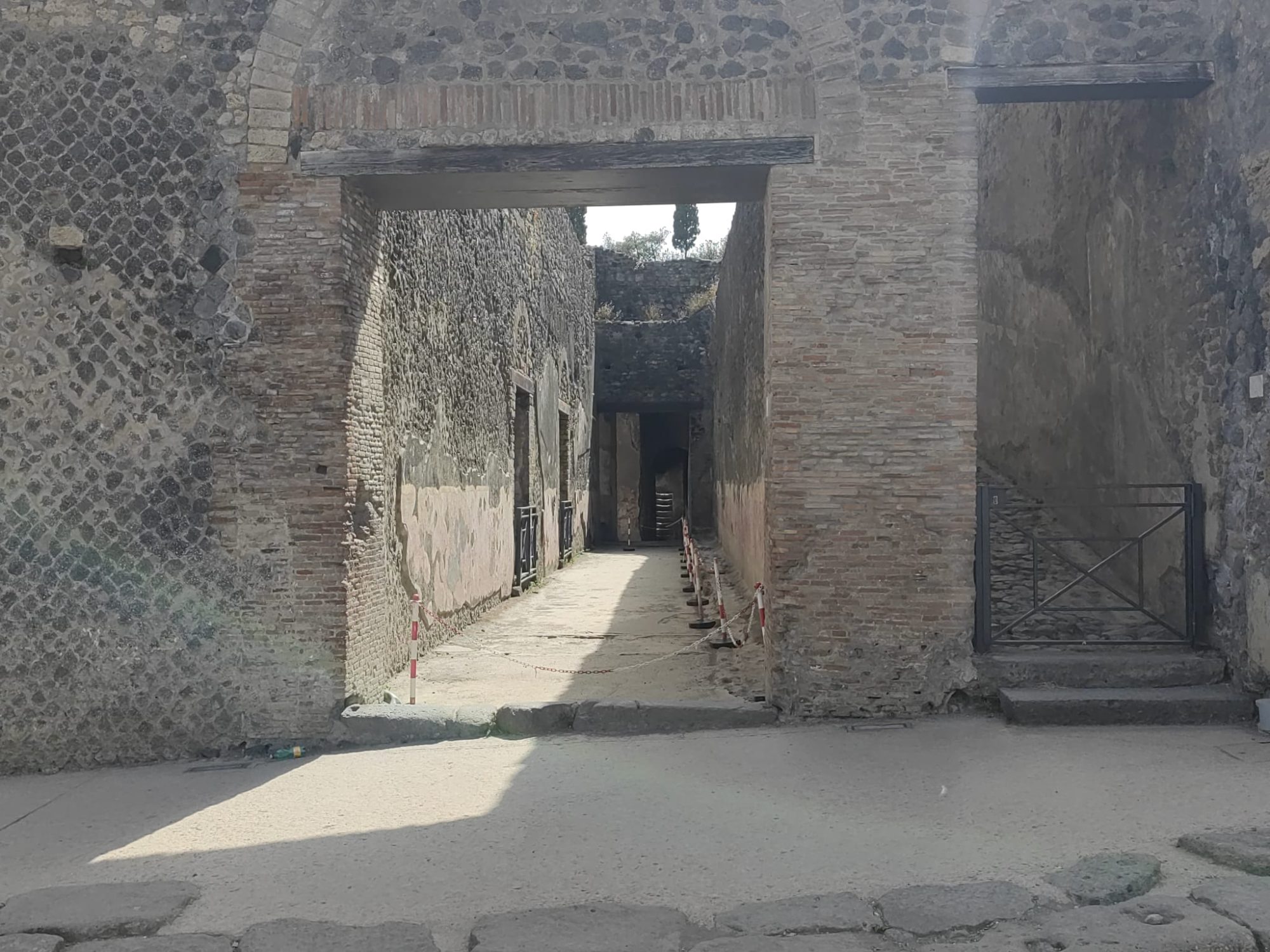
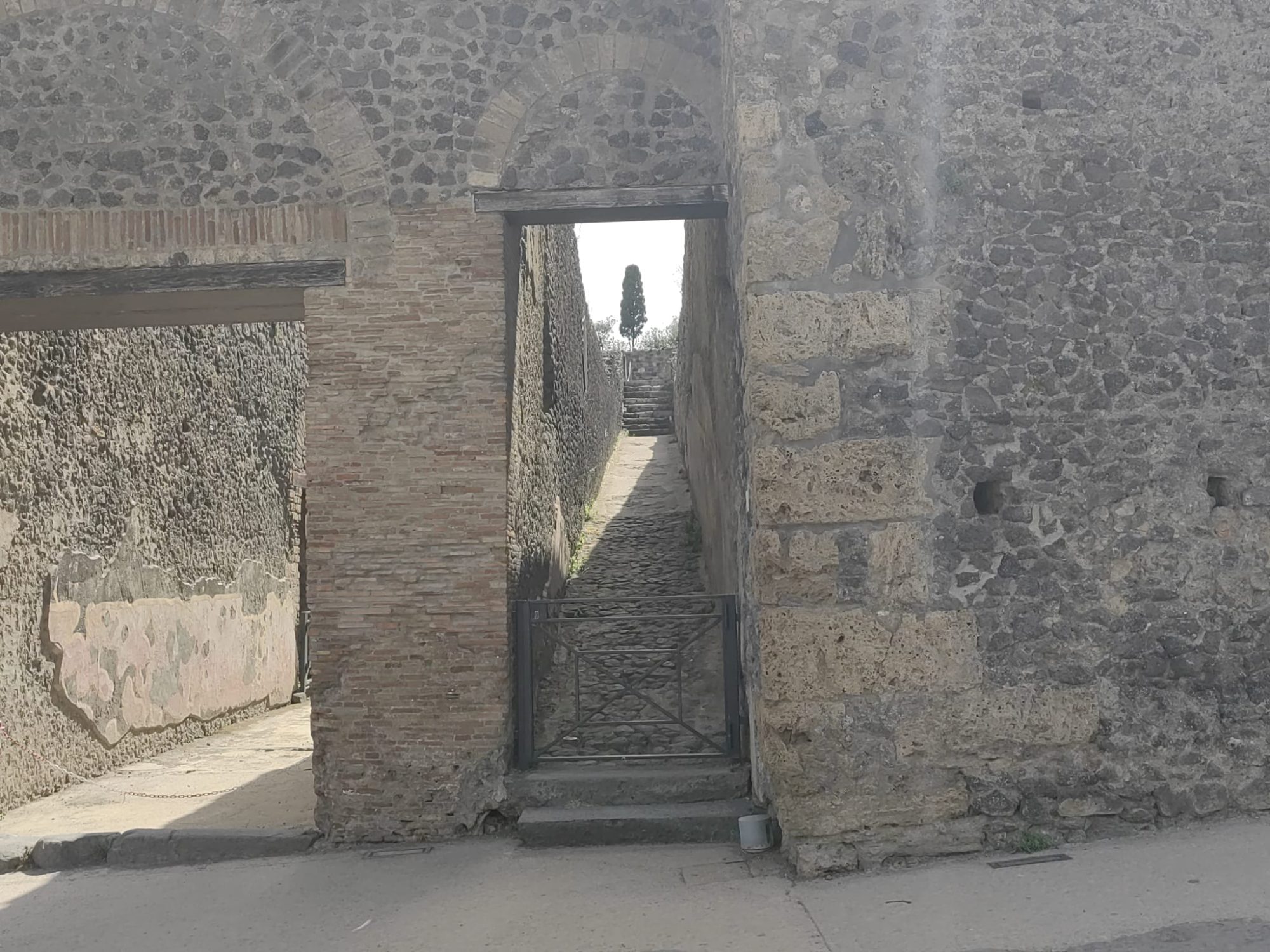
Pompeii

Automatically translated (Gemini). Original in German

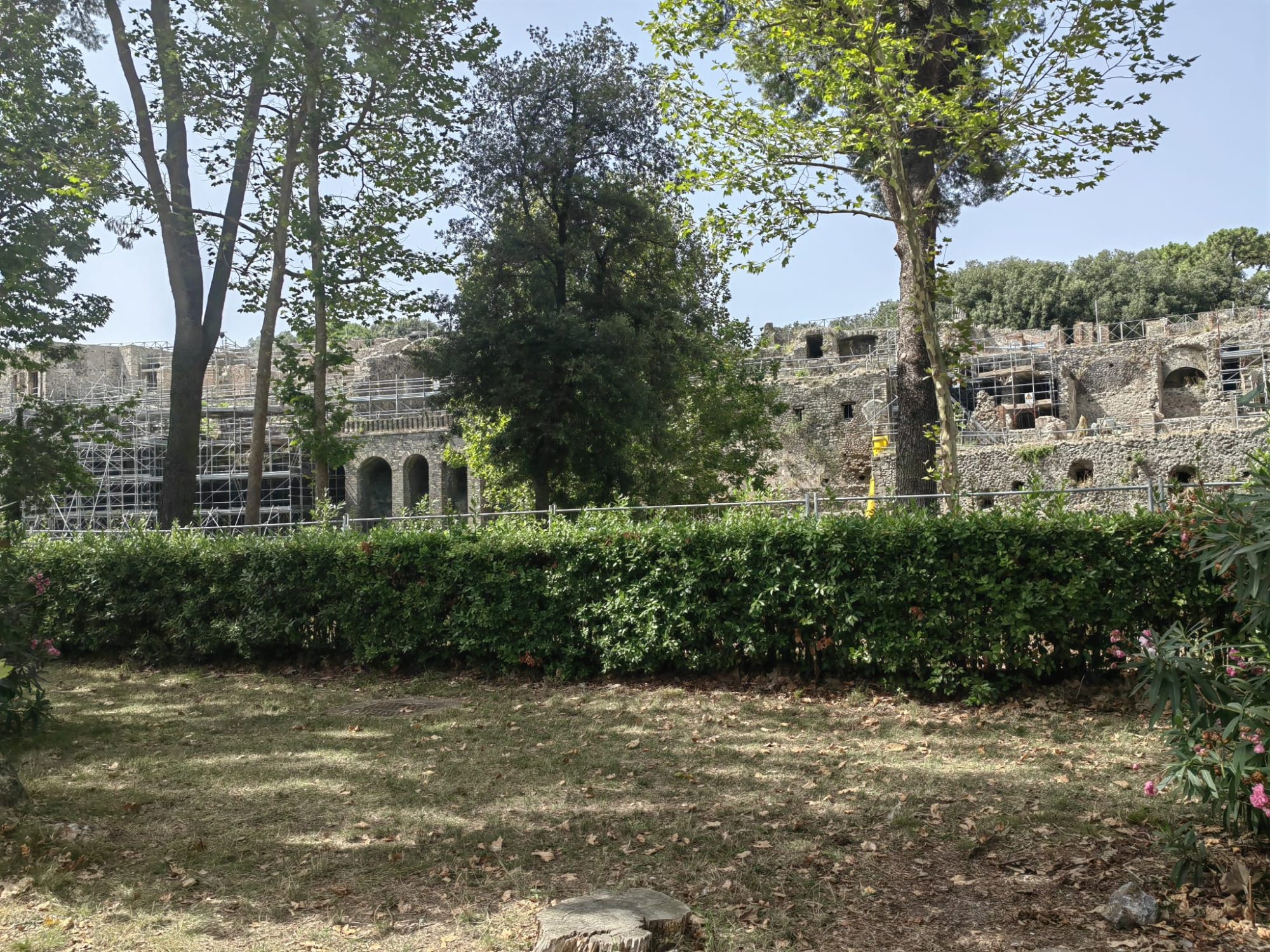
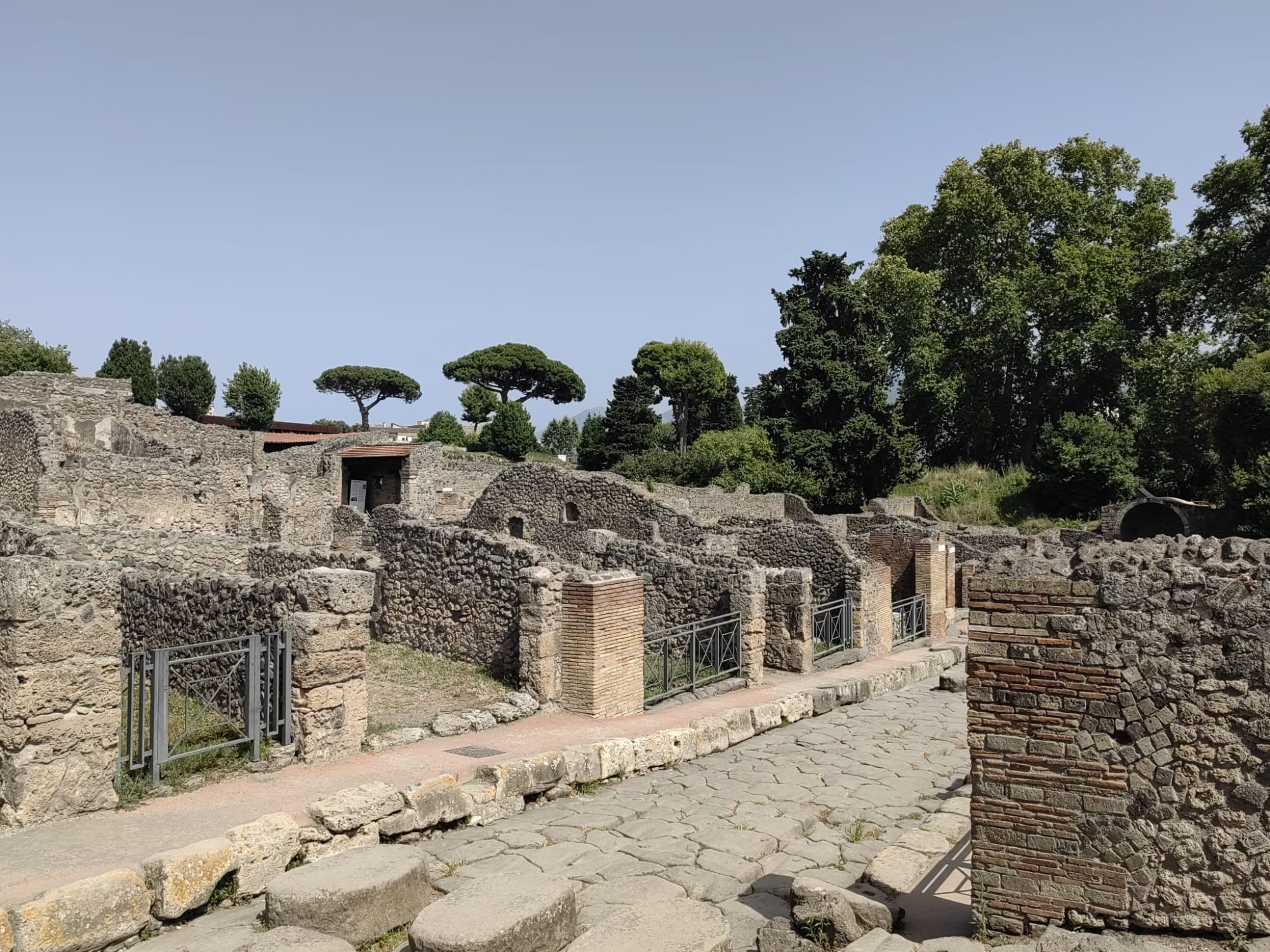
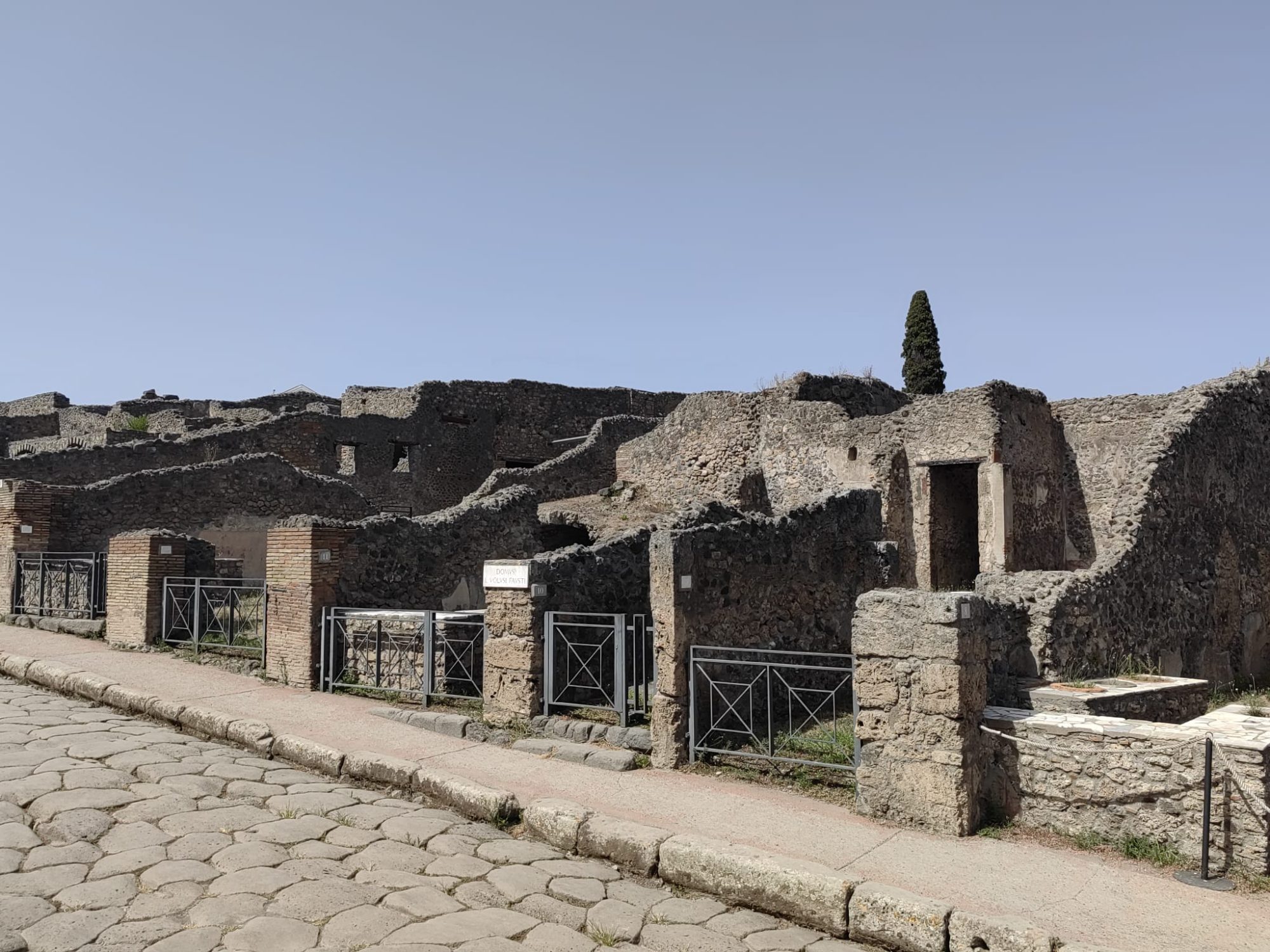
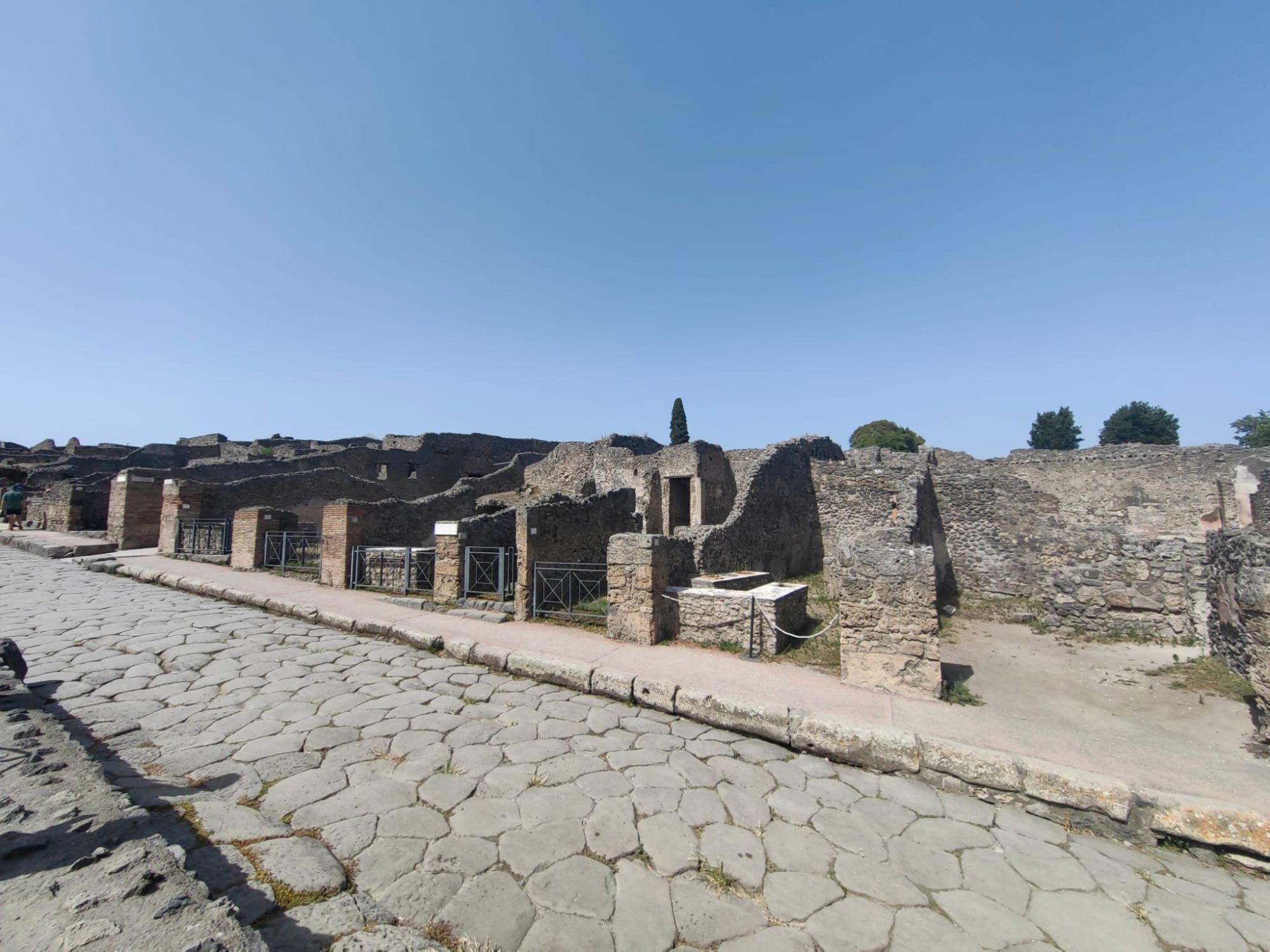
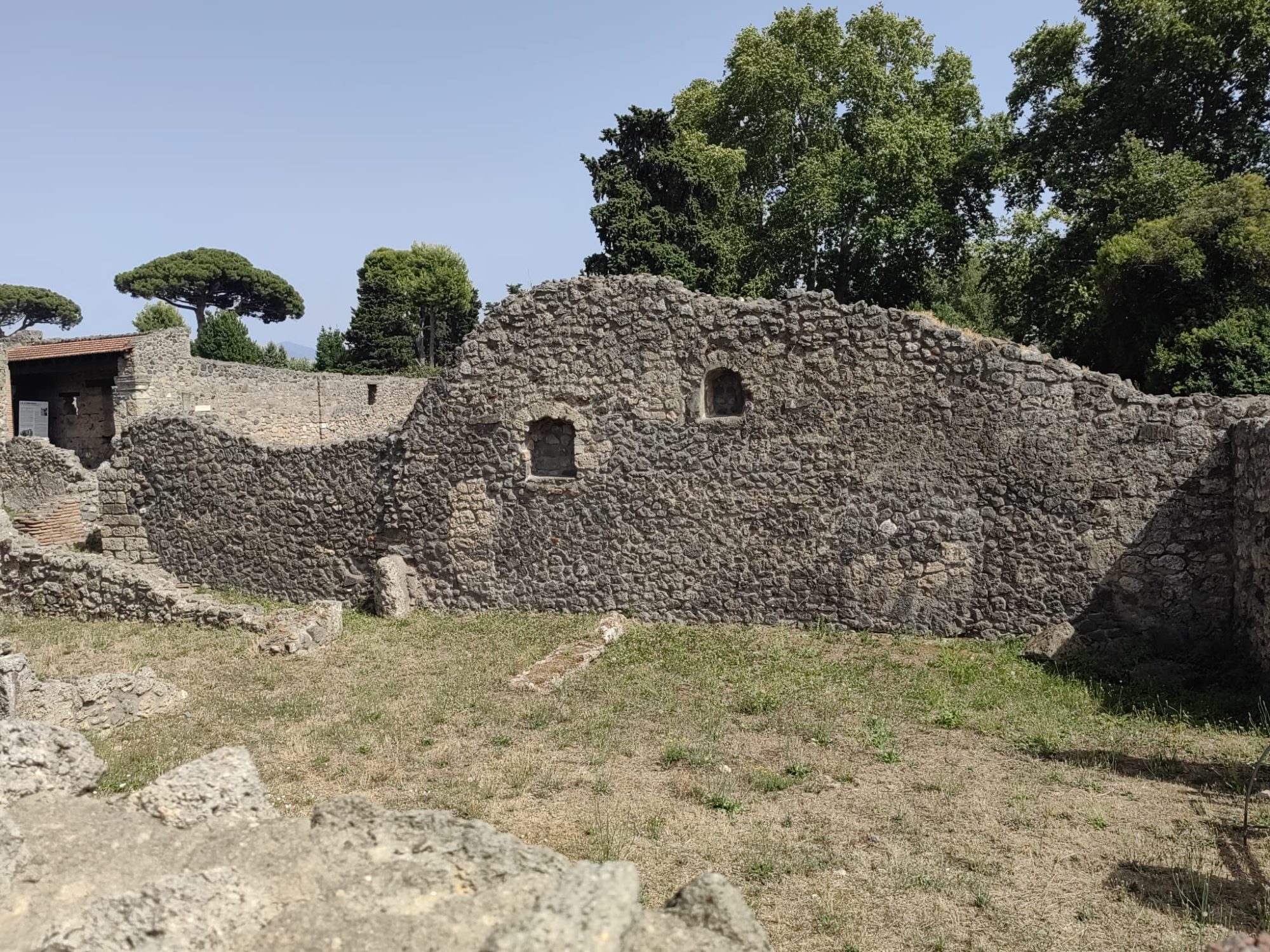
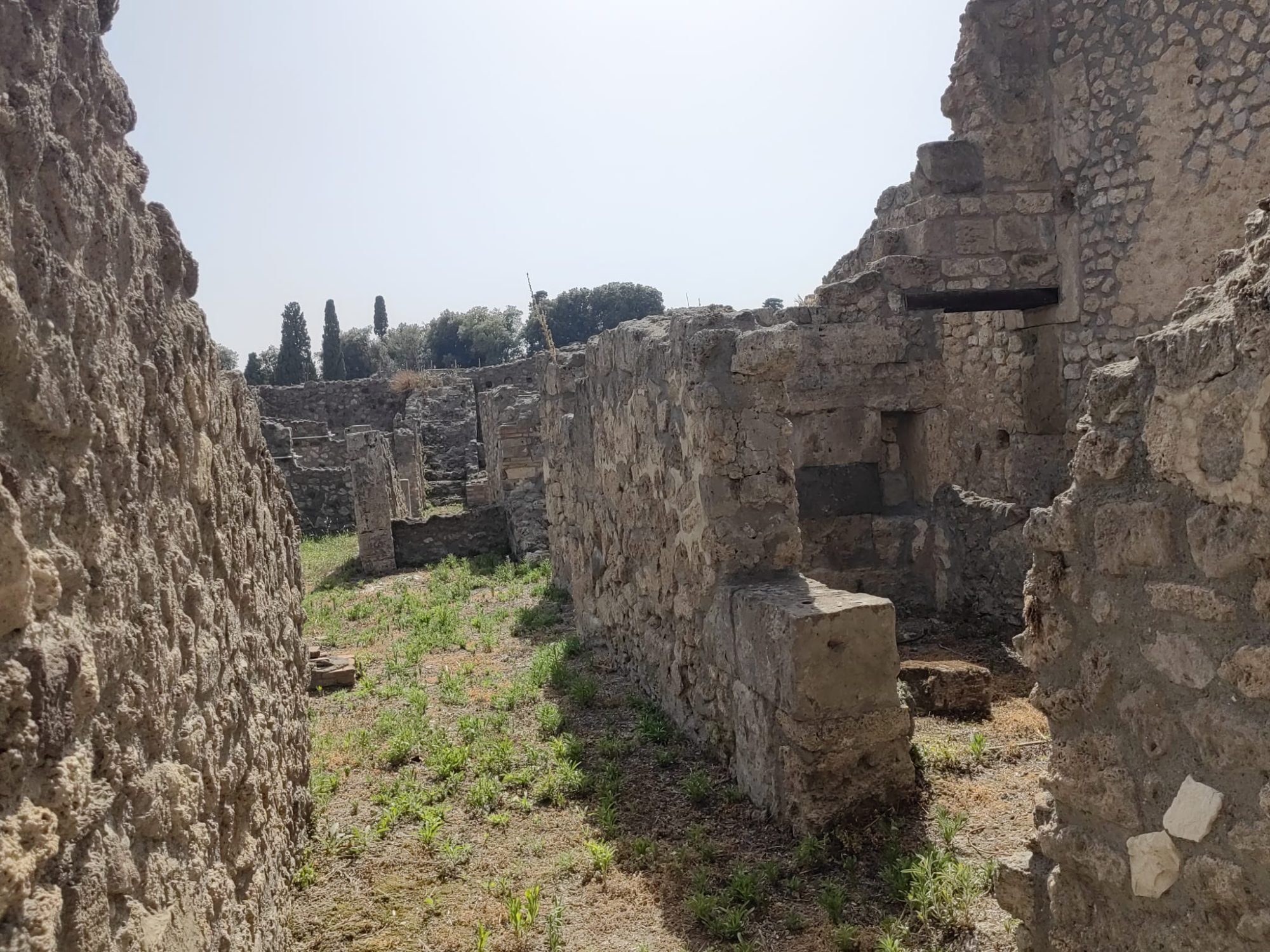
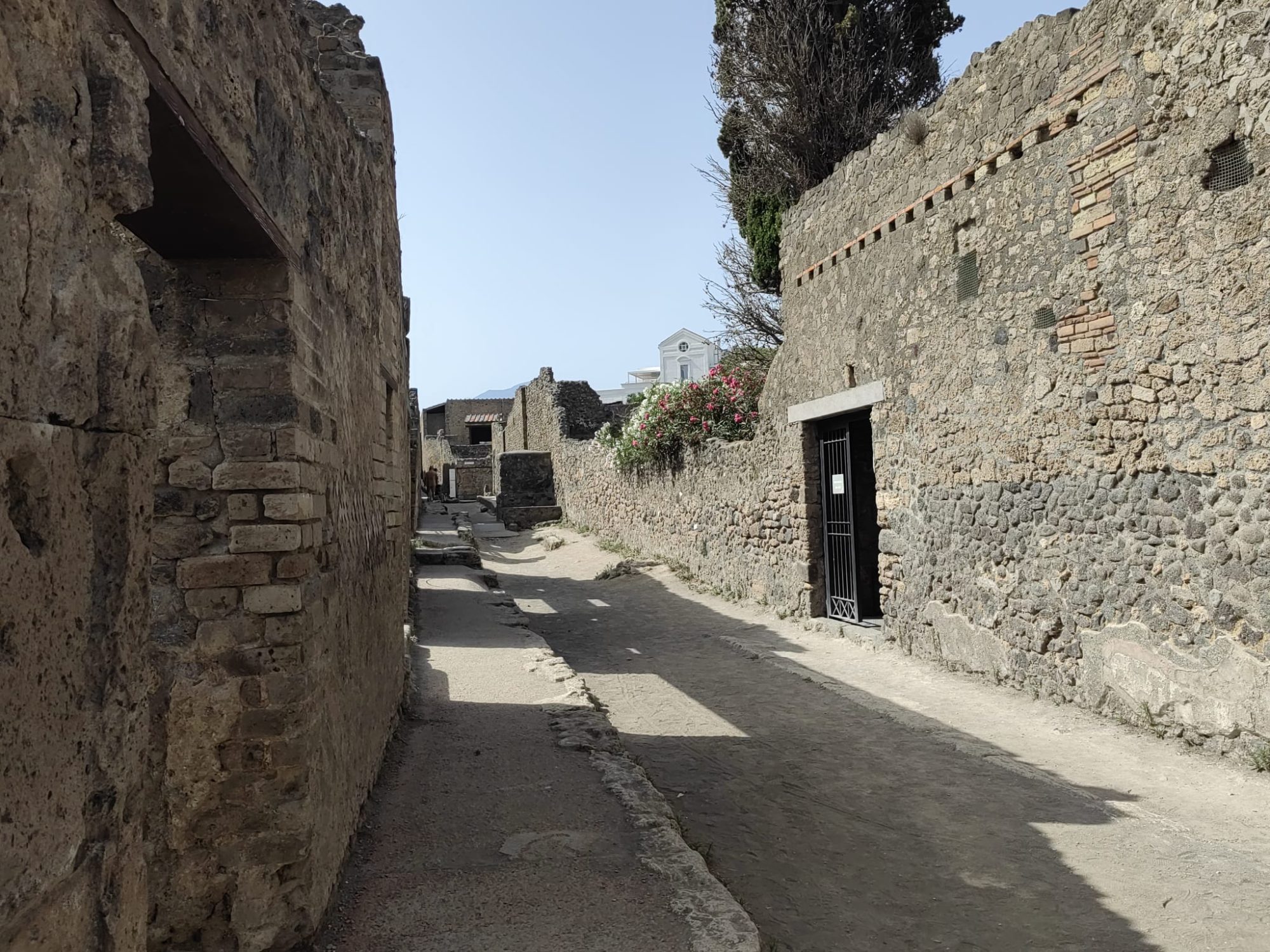
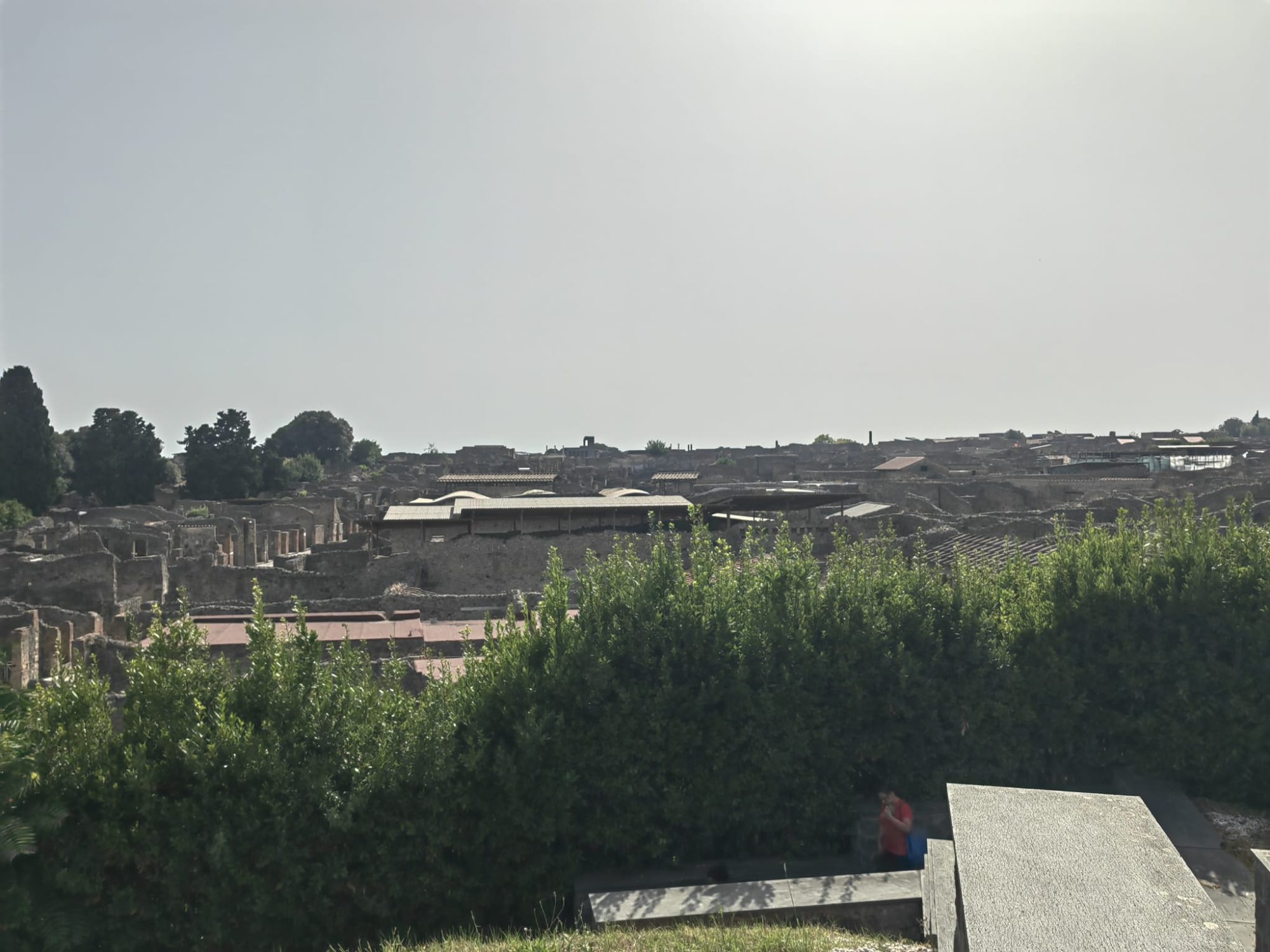
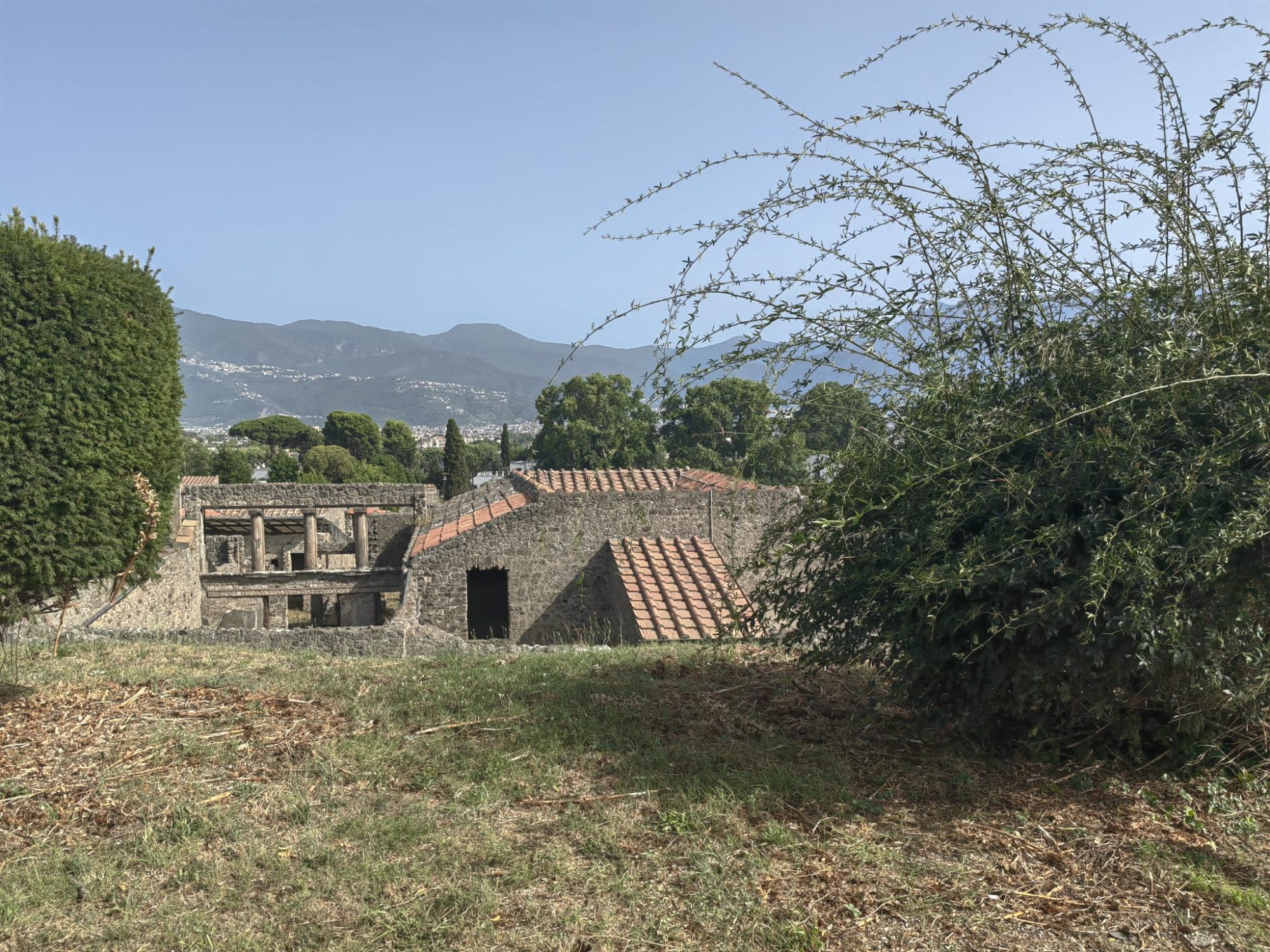
Pompeii is an ancient Roman city near Naples, Italy, that was completely buried under volcanic ash during an eruption of Mount Vesuvius in 79 AD. The city is renowned for its extraordinarily well-preserved ruins and is a UNESCO World Heritage Site, making it one of the most important archaeological sites in the world.

Wikipedia link: https://de.wikipedia.org/wiki/Pompeji
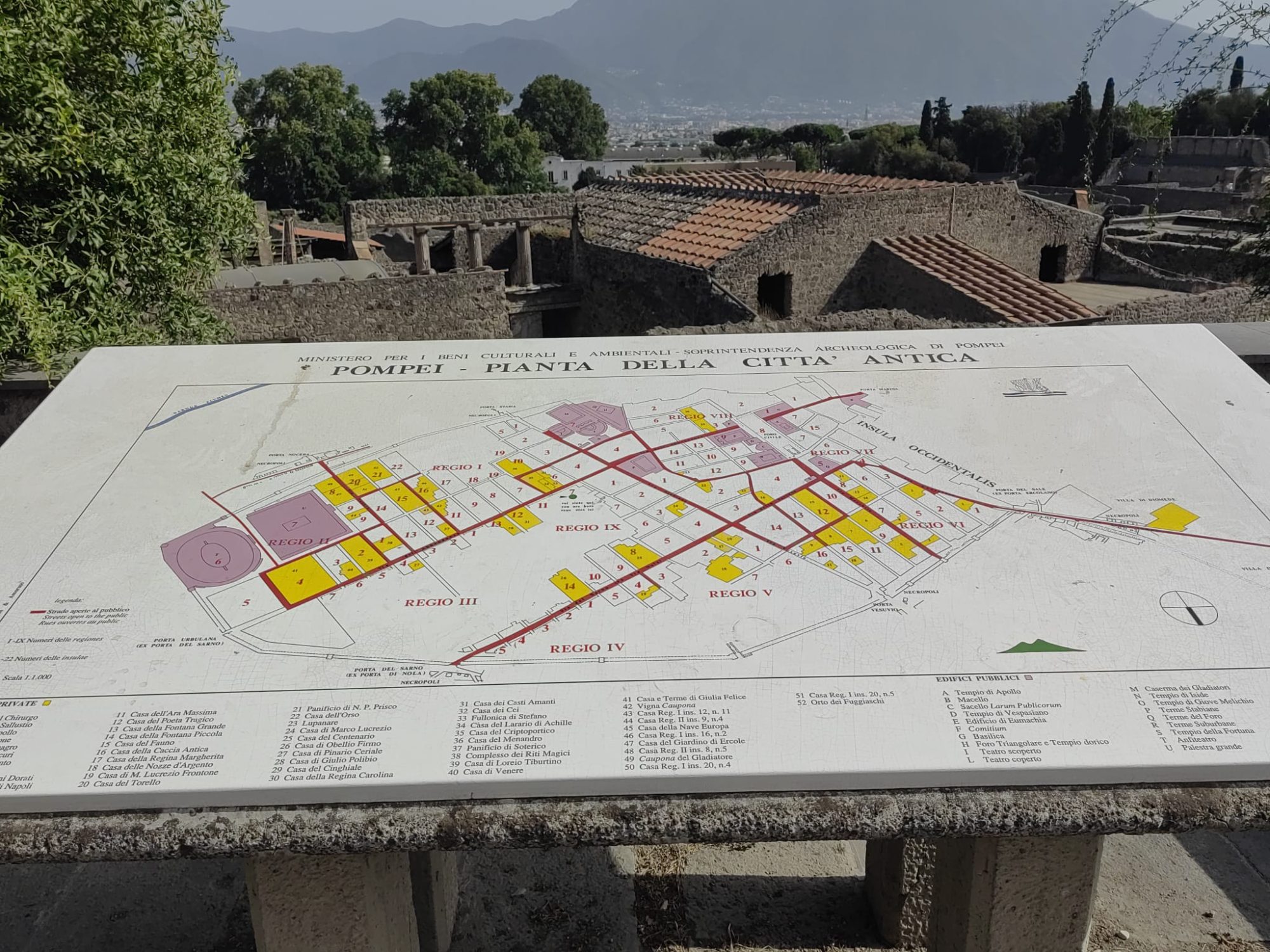
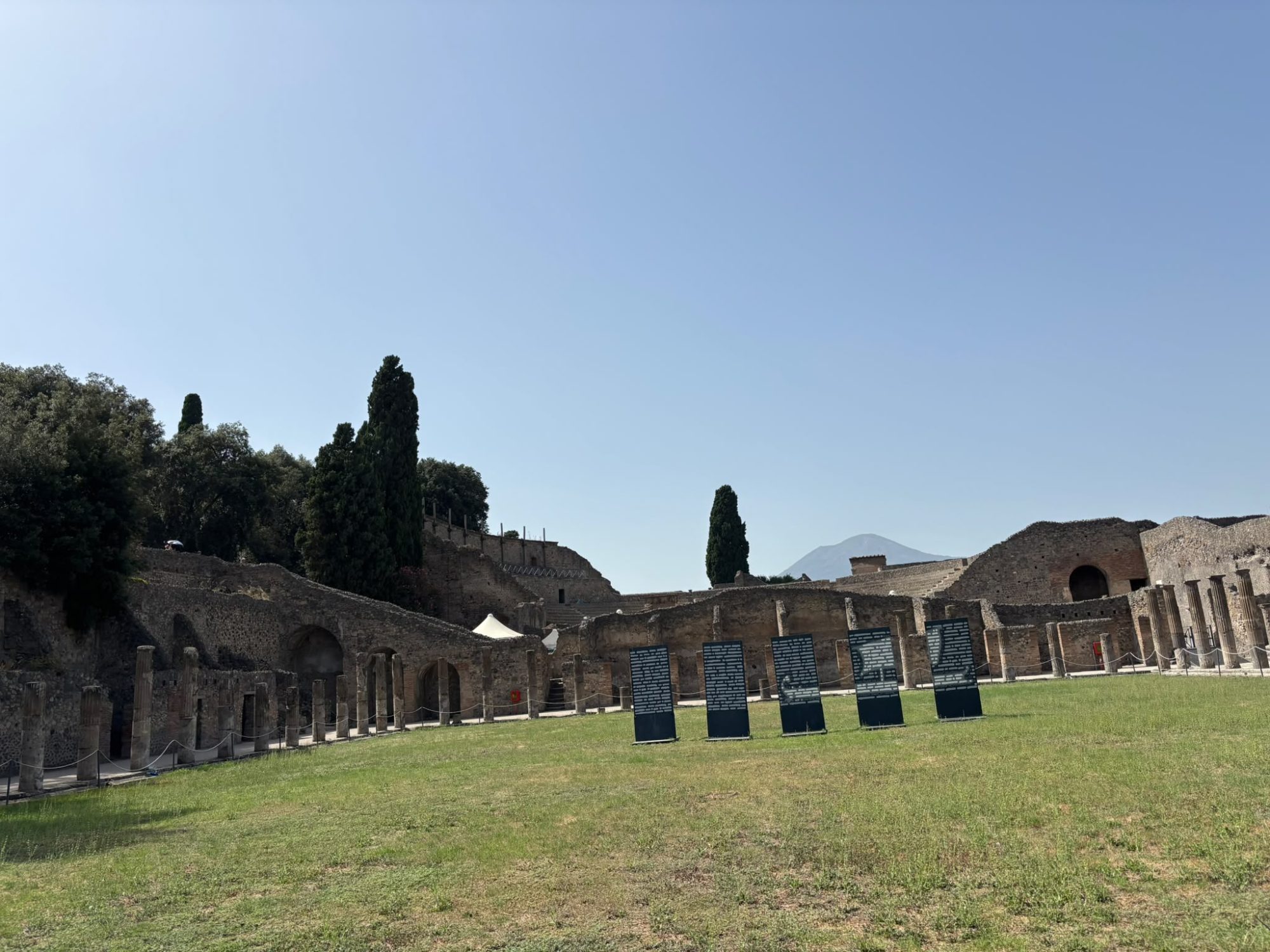
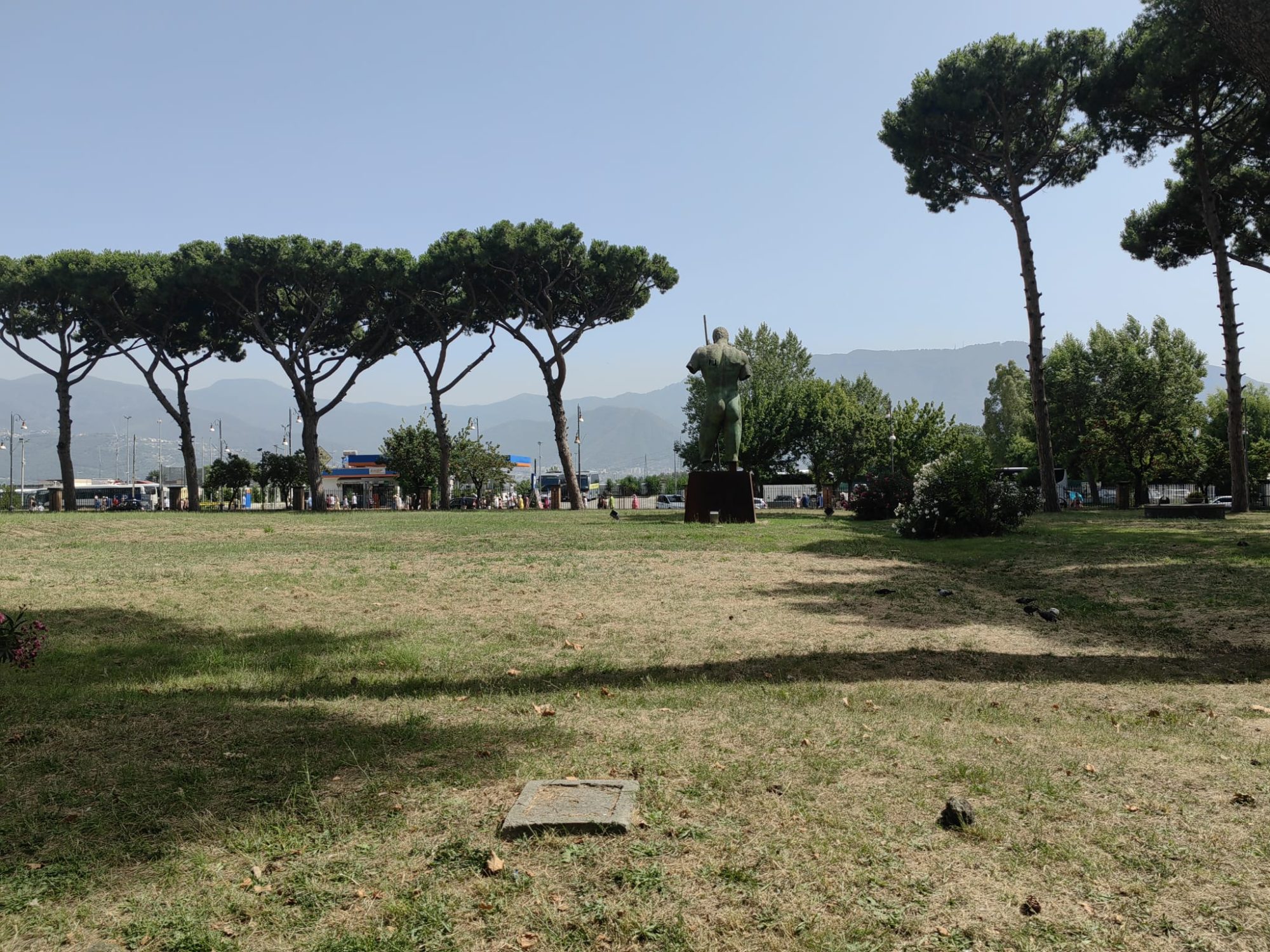
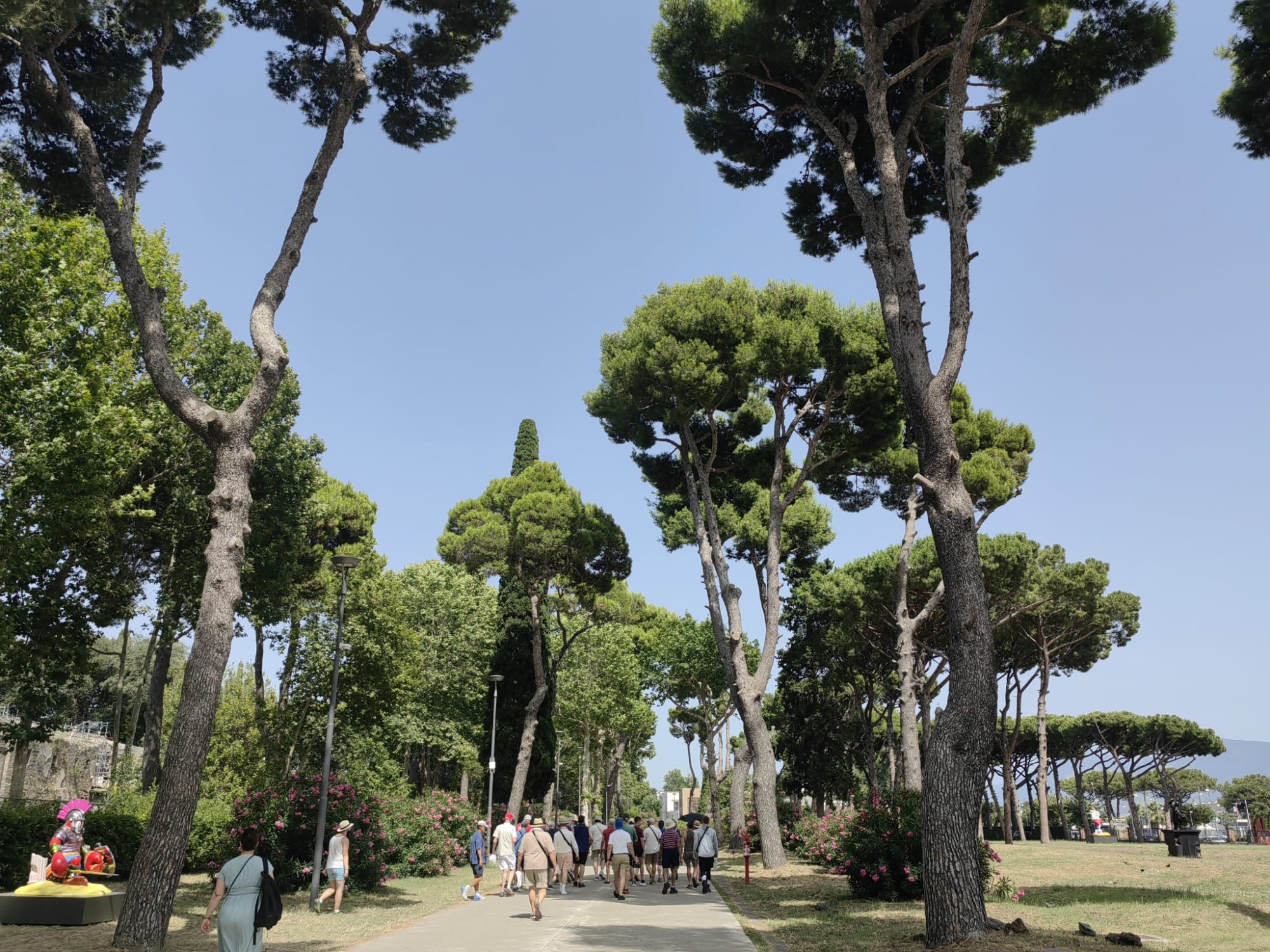
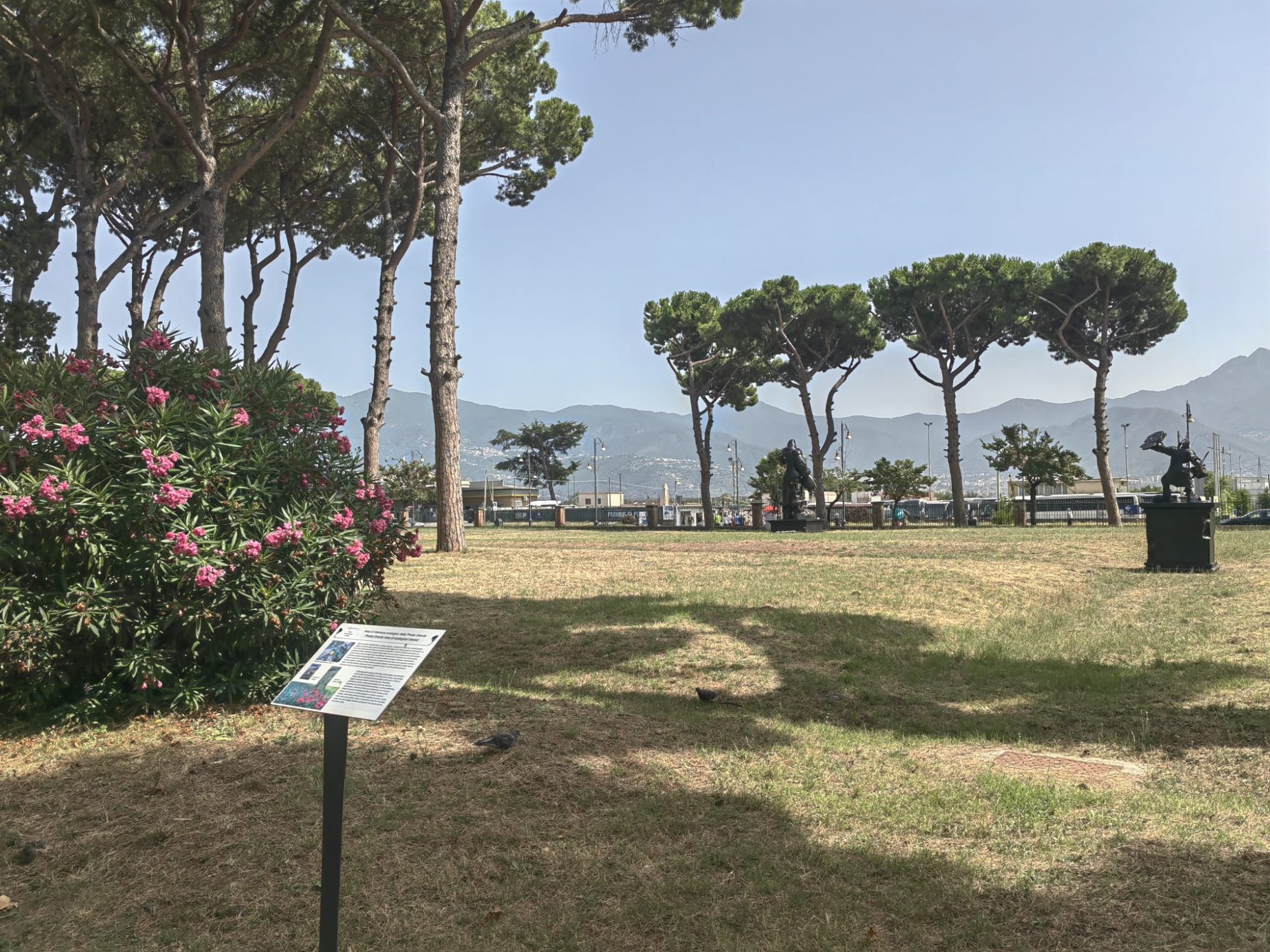
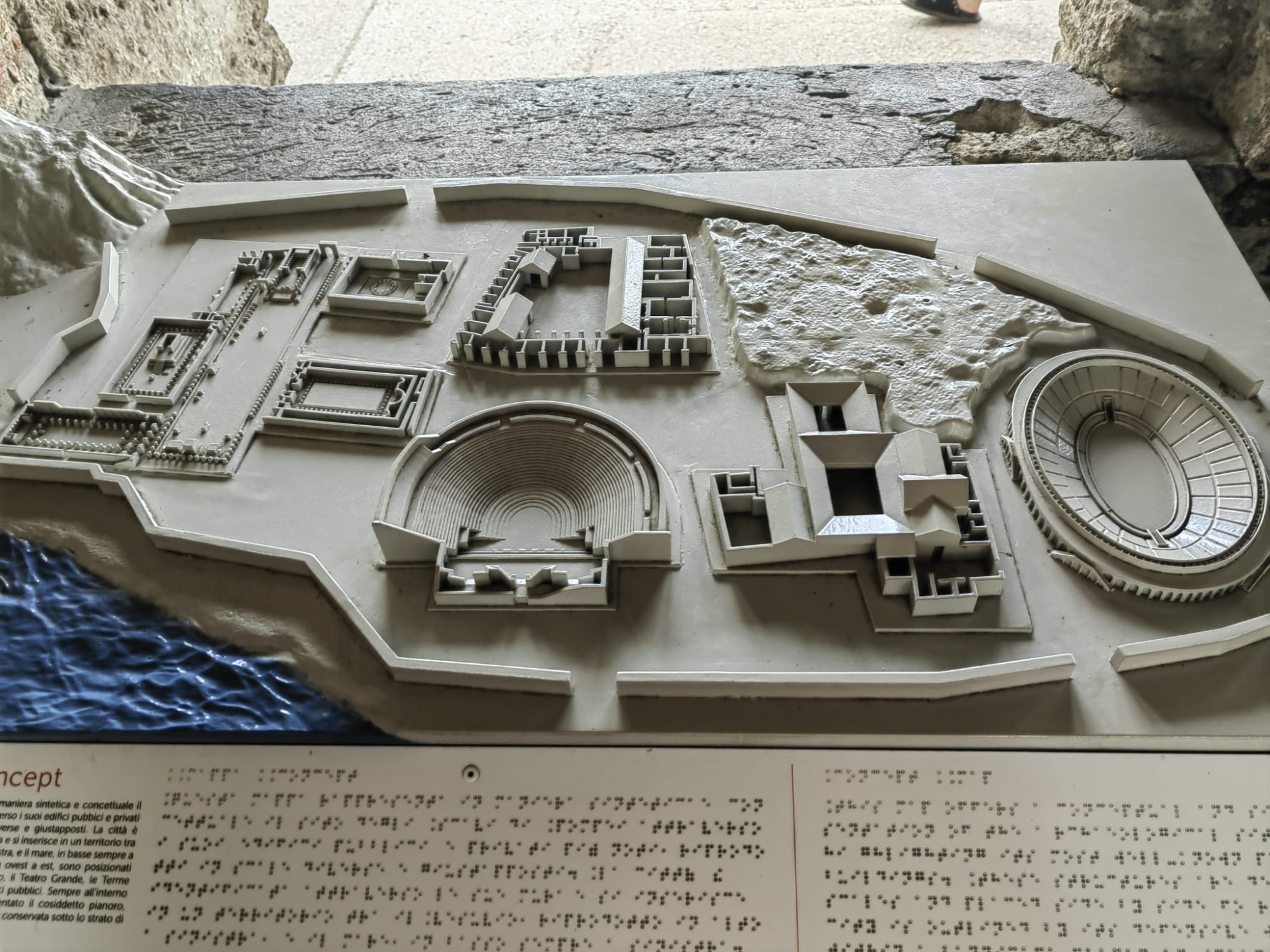
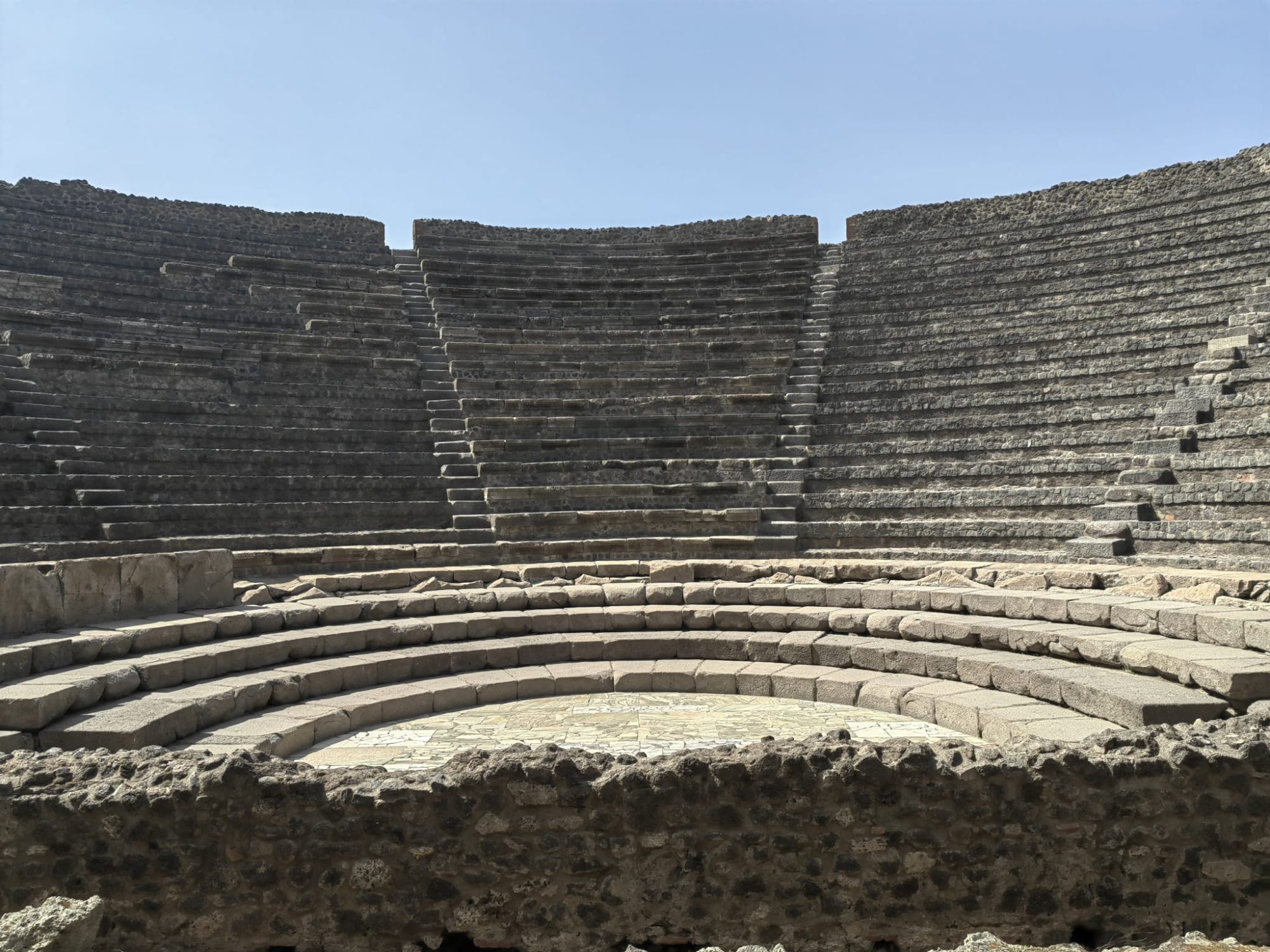
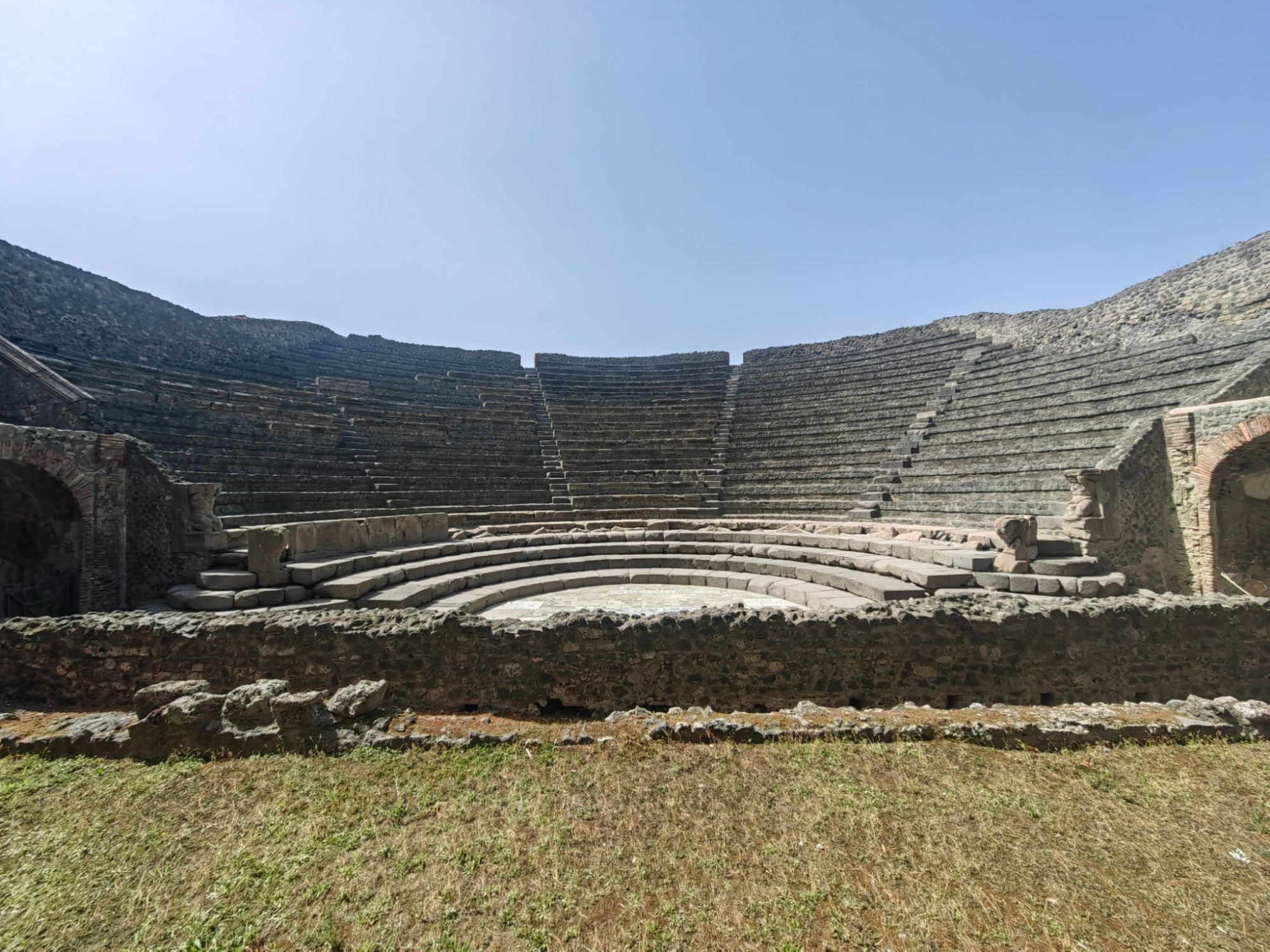
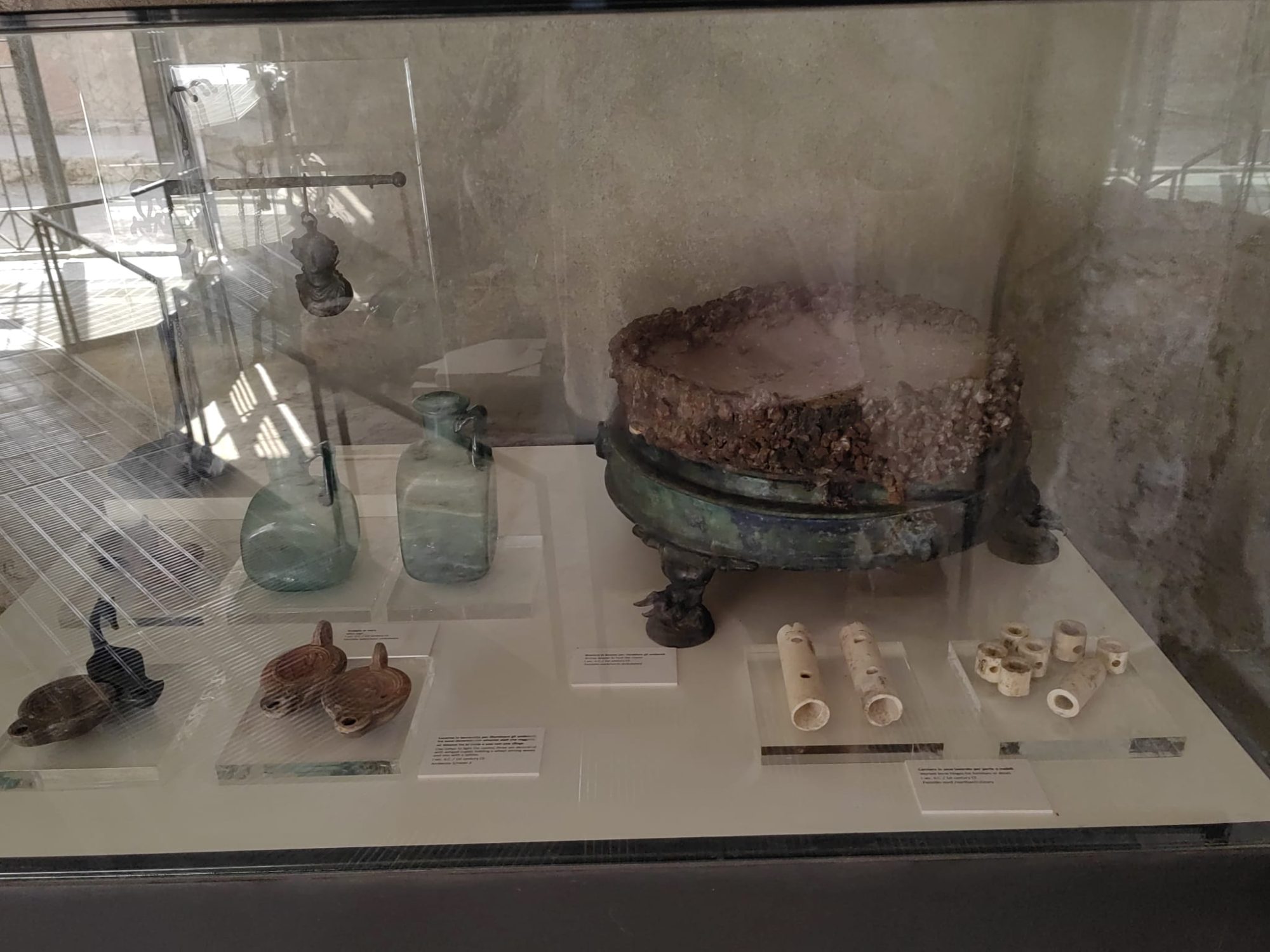
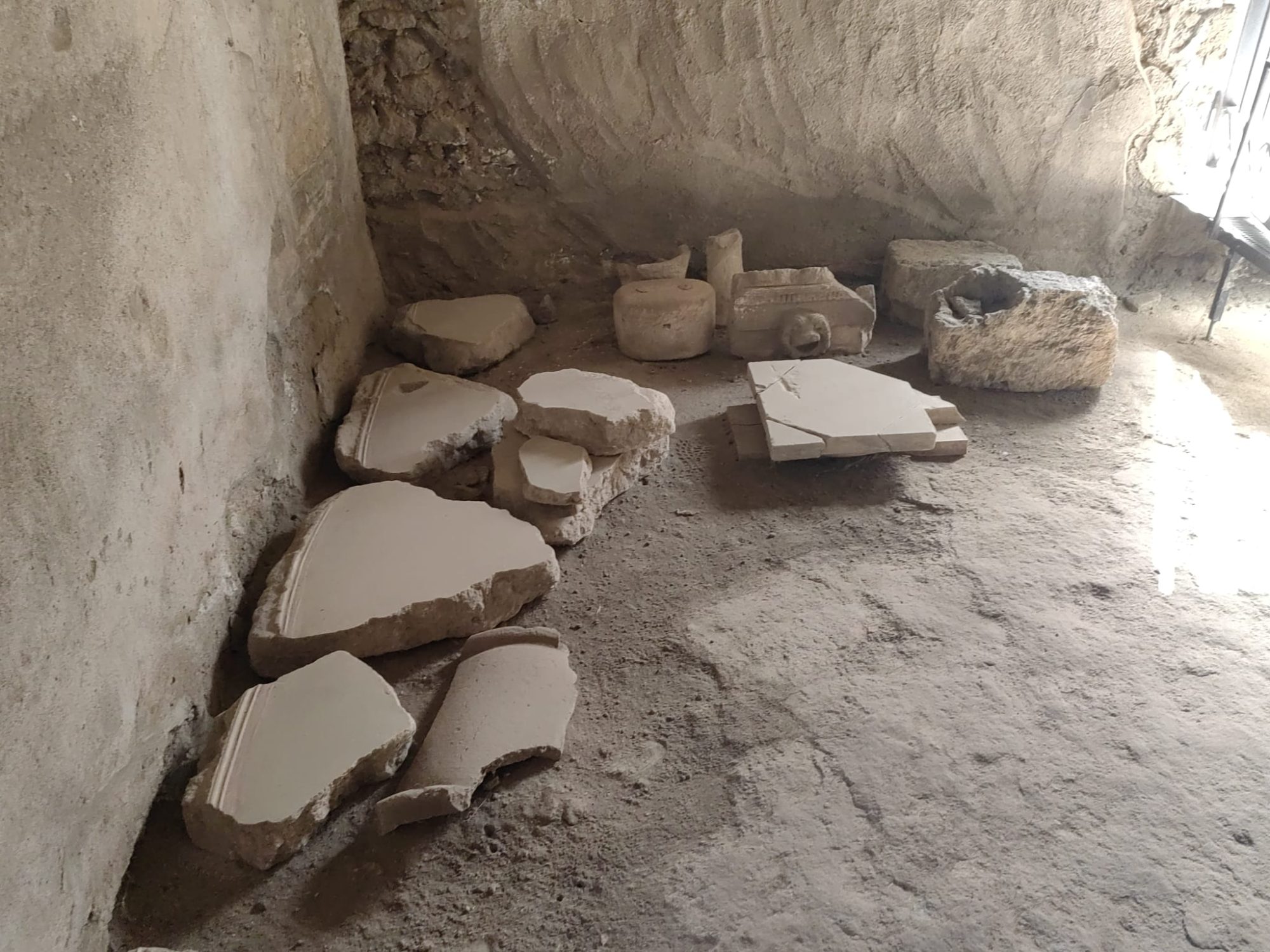
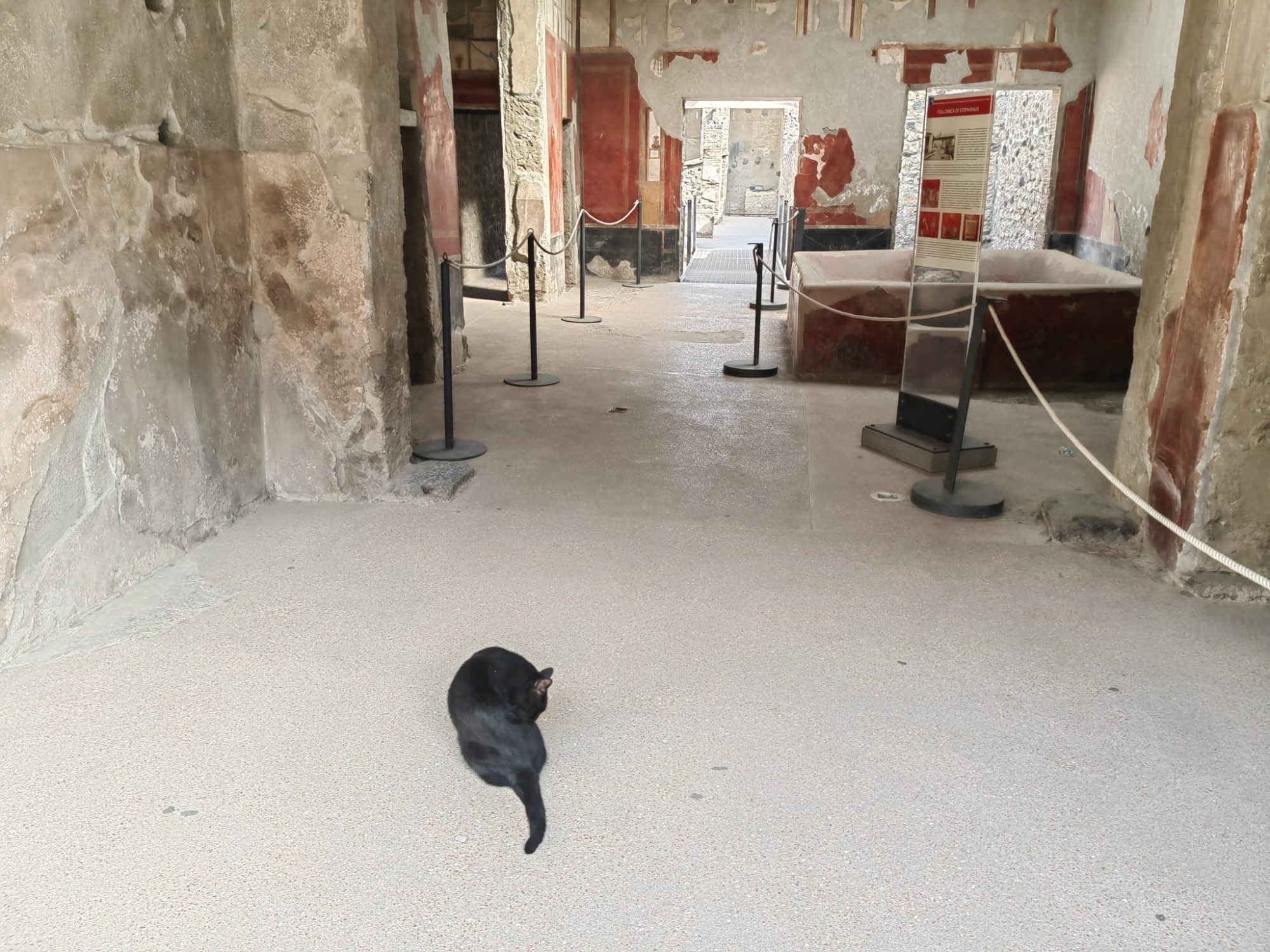
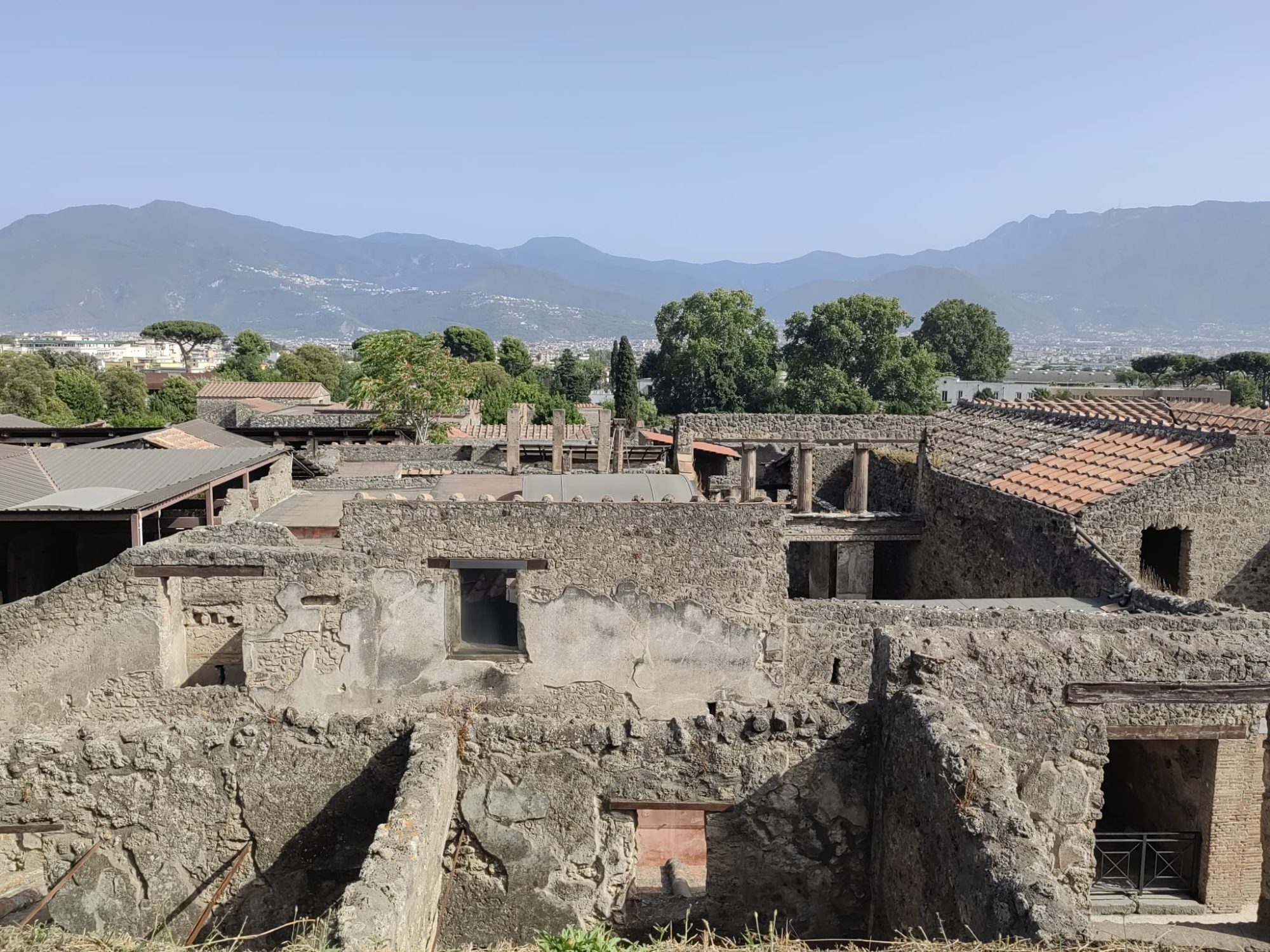
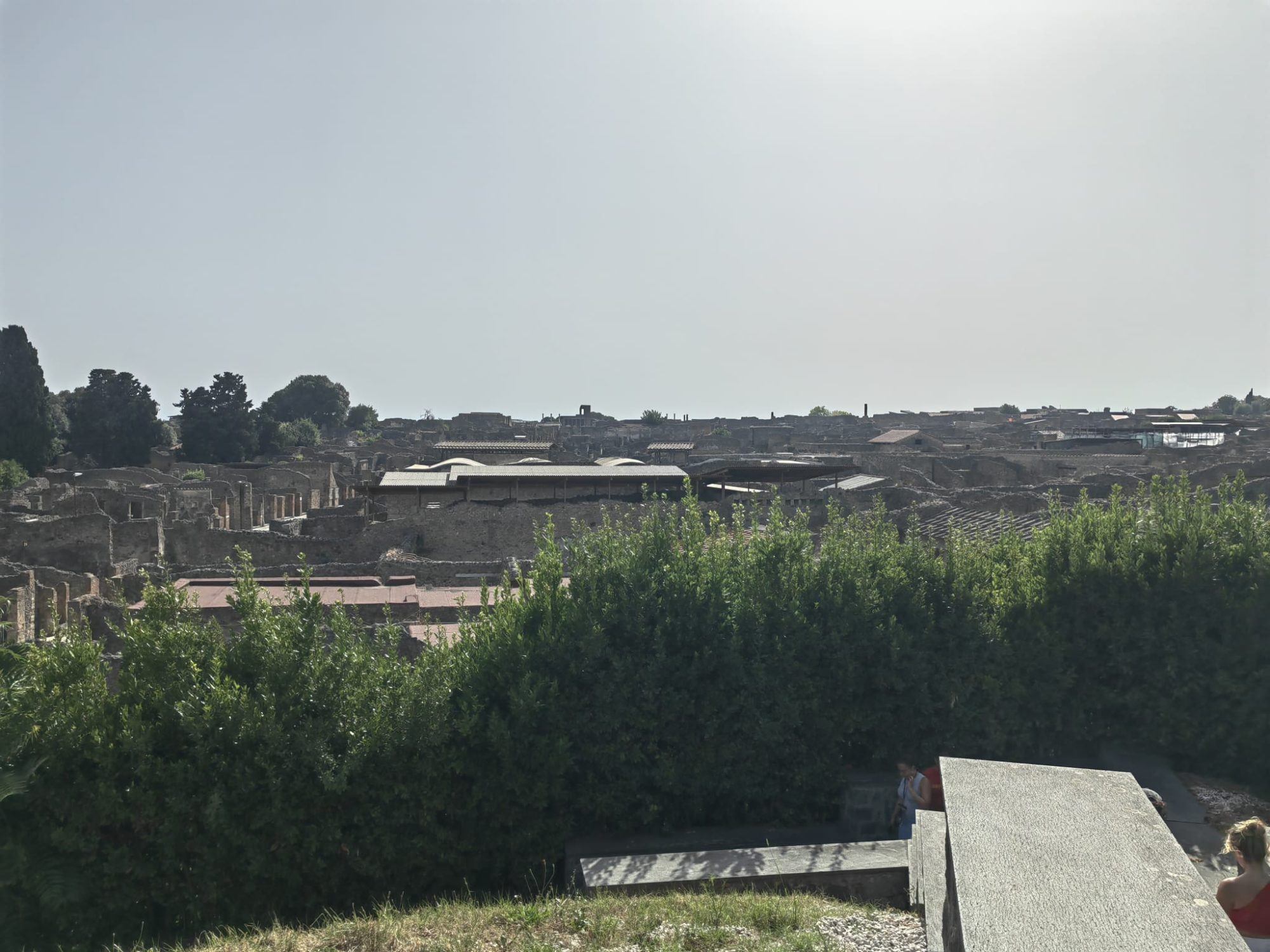
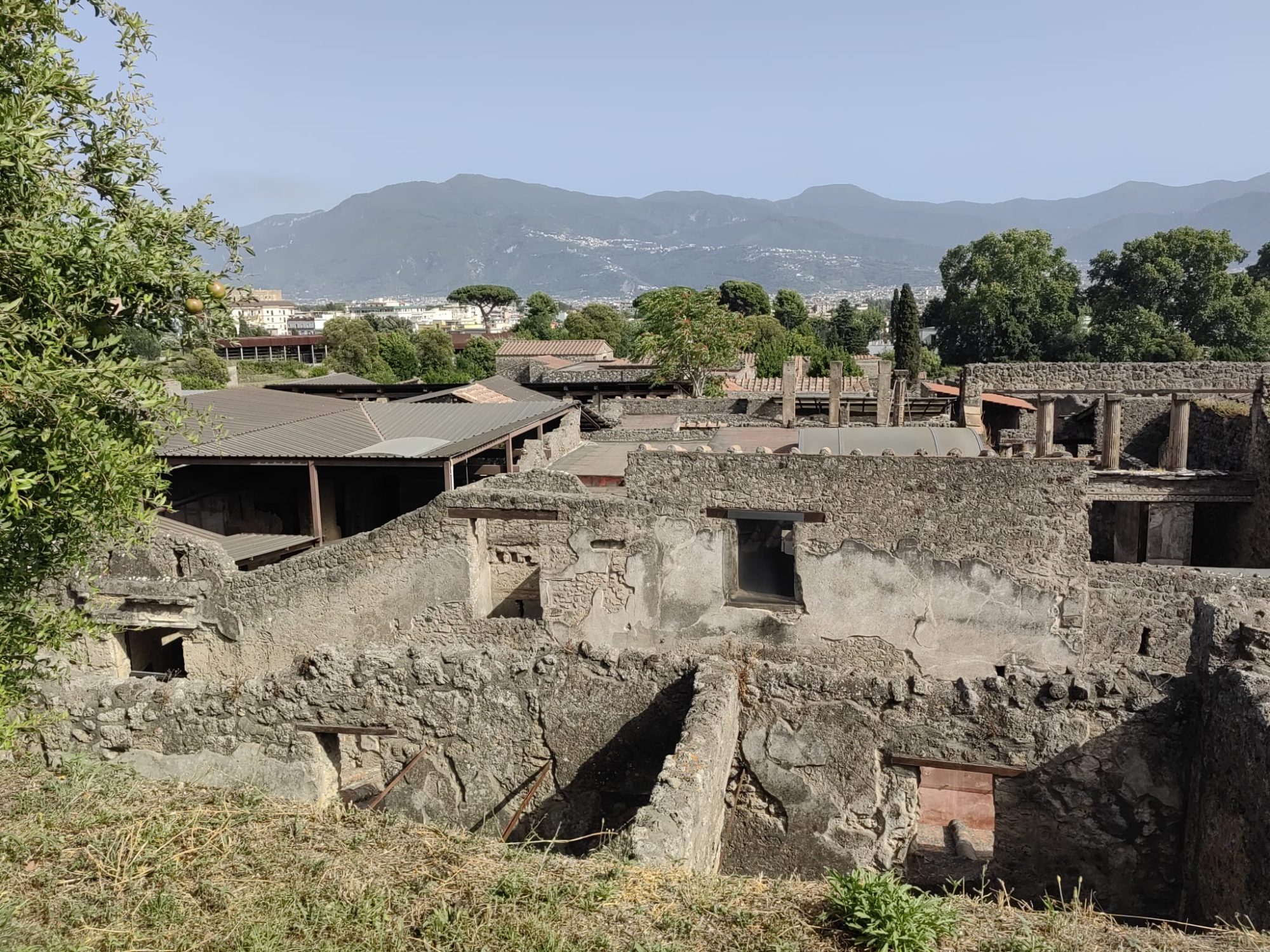
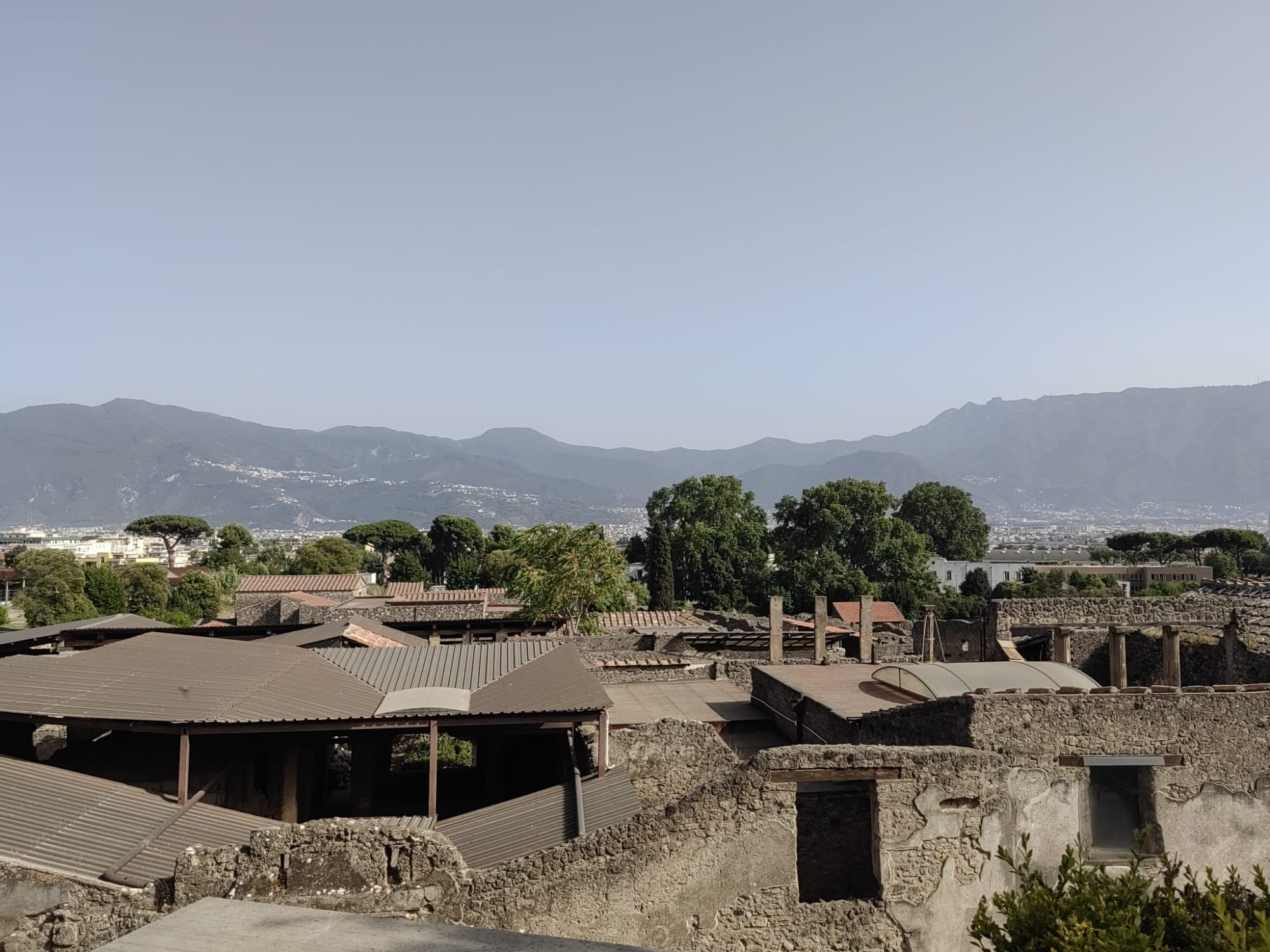
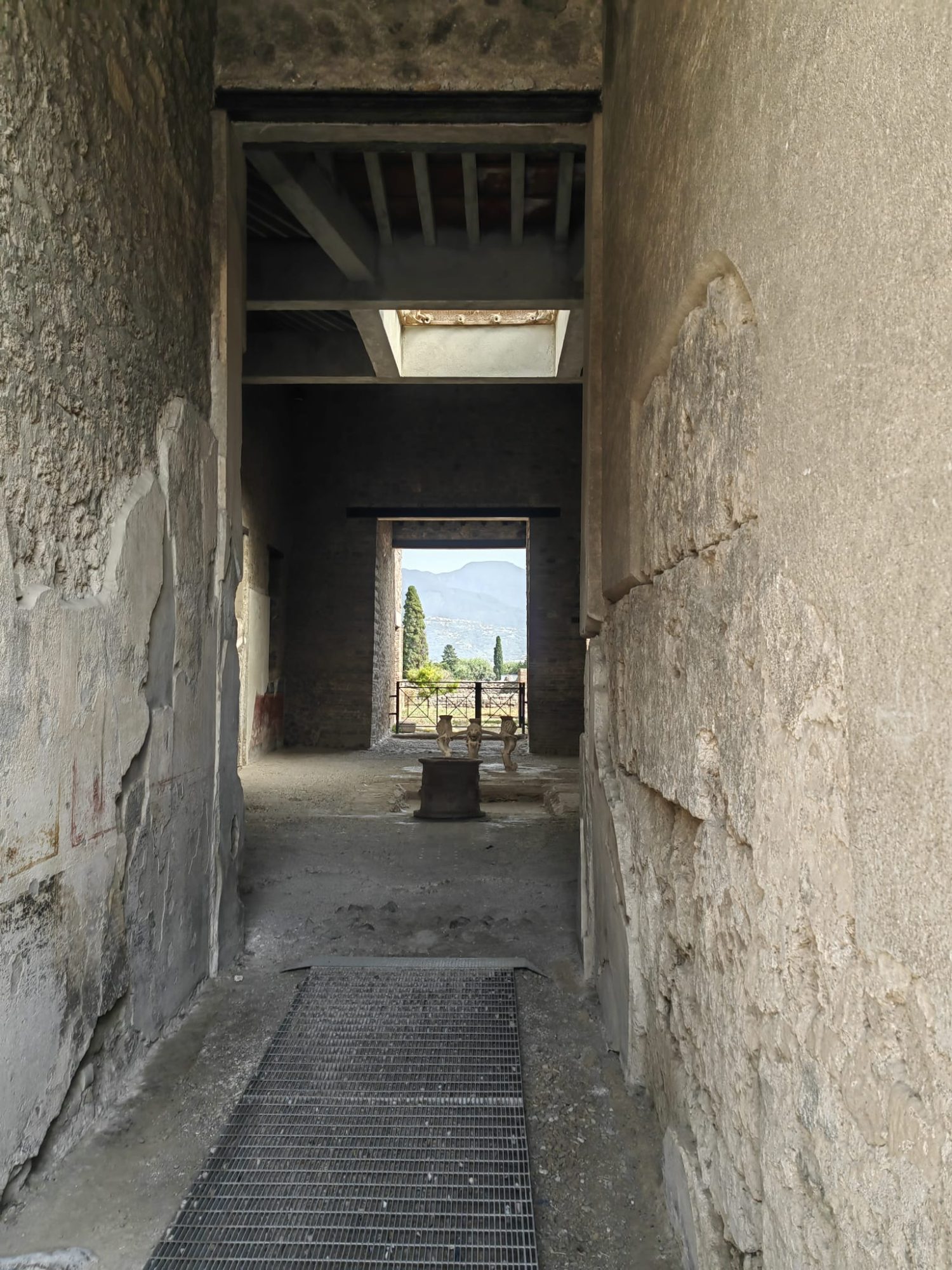
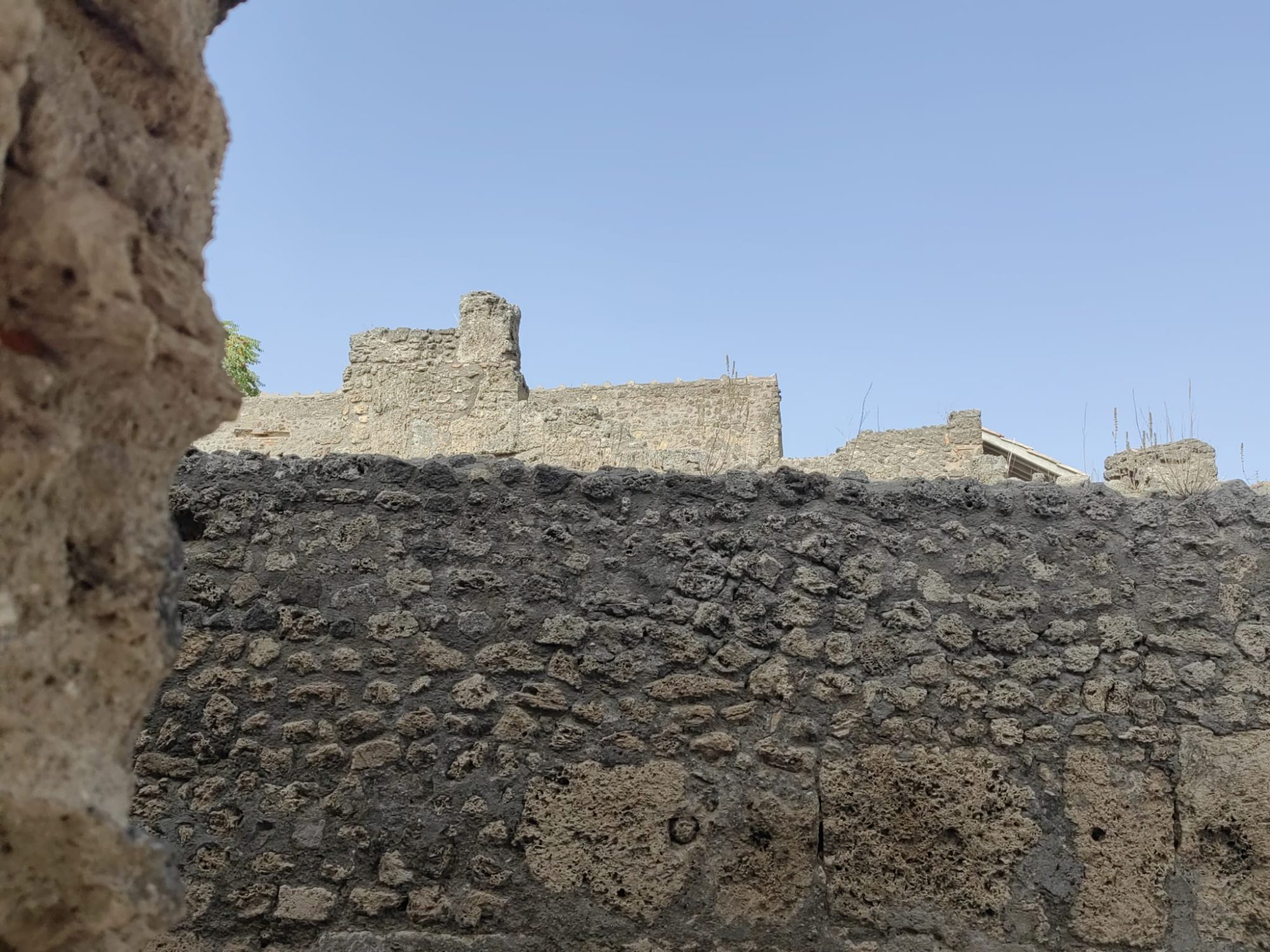
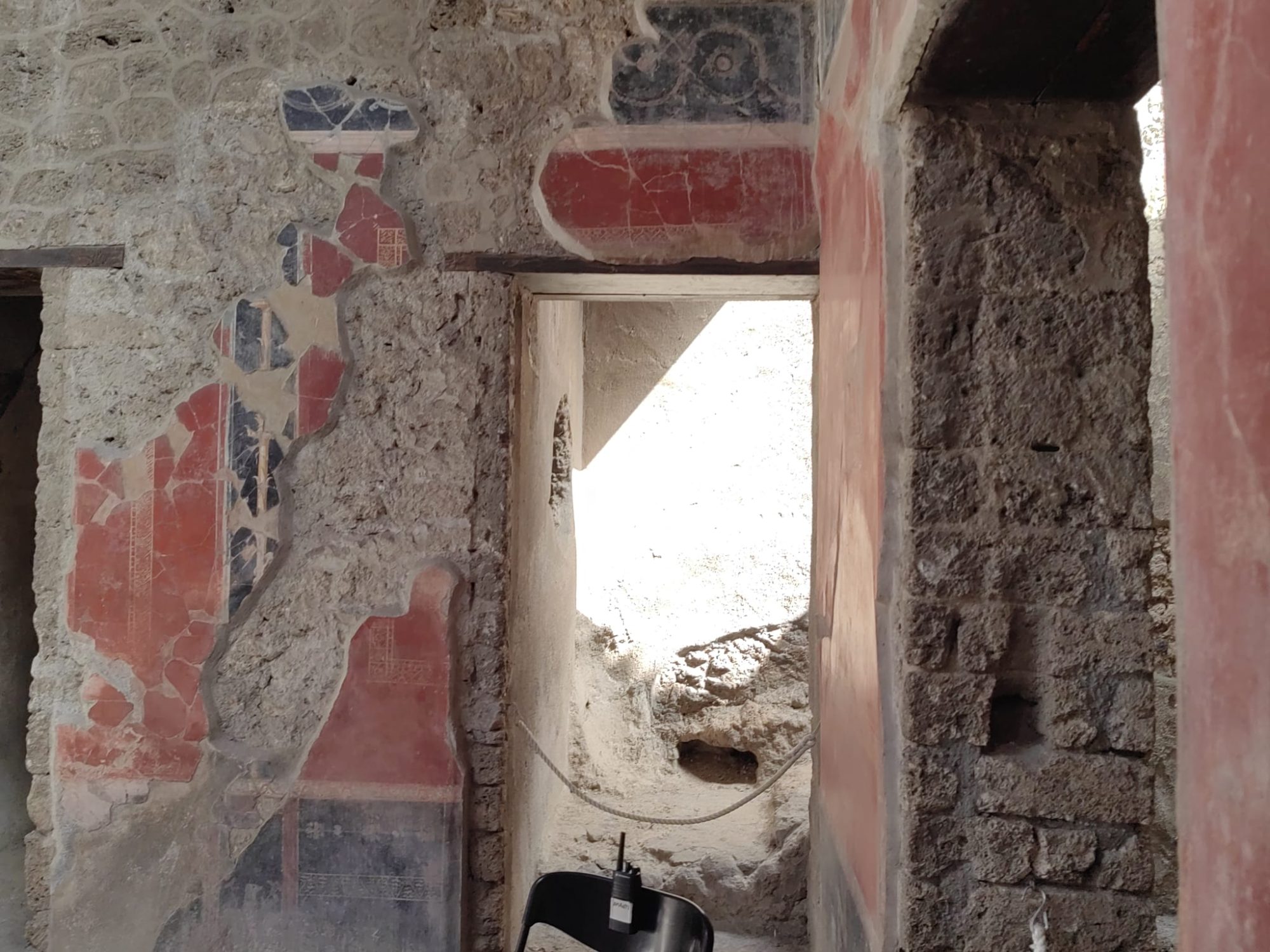
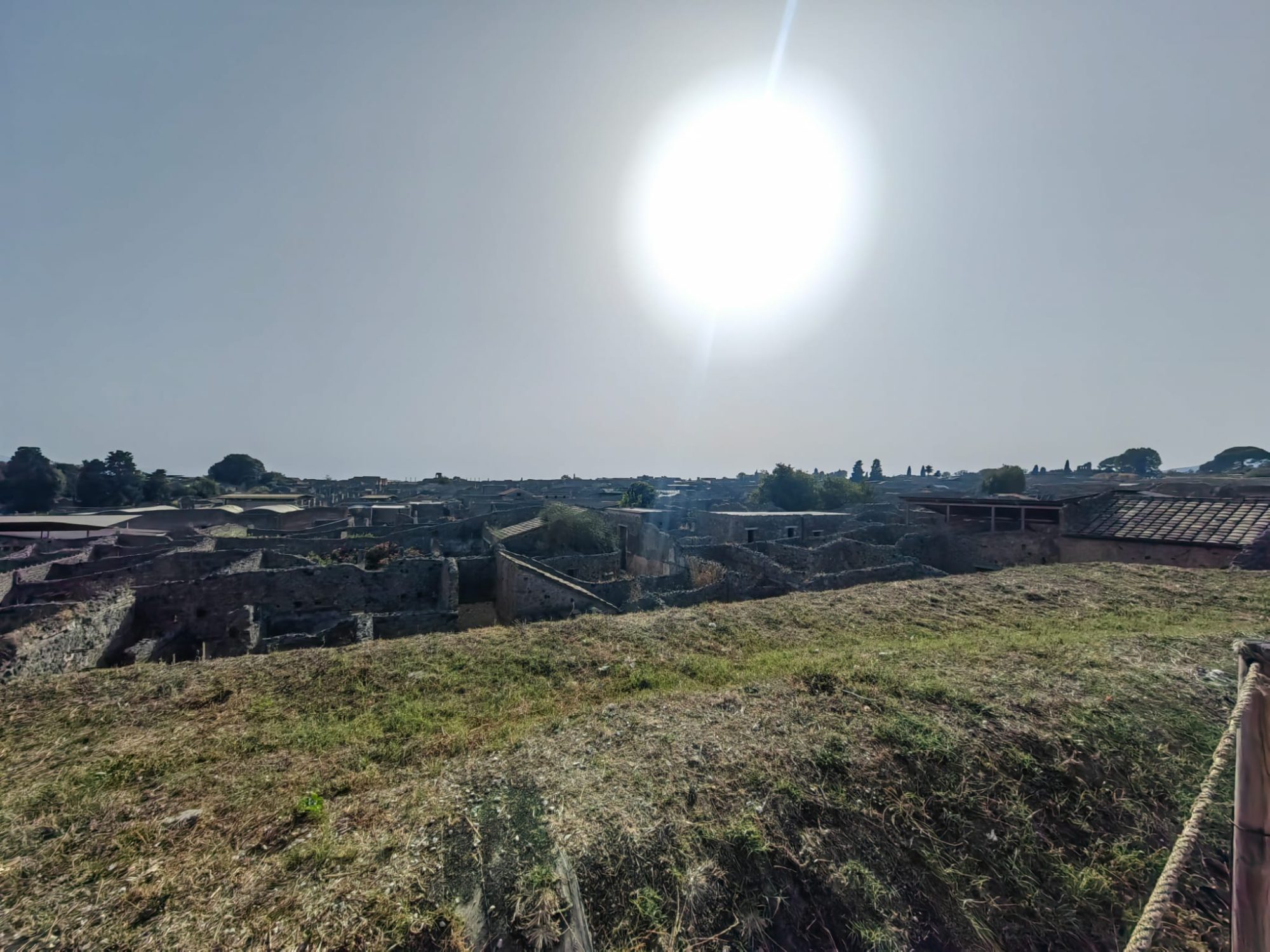
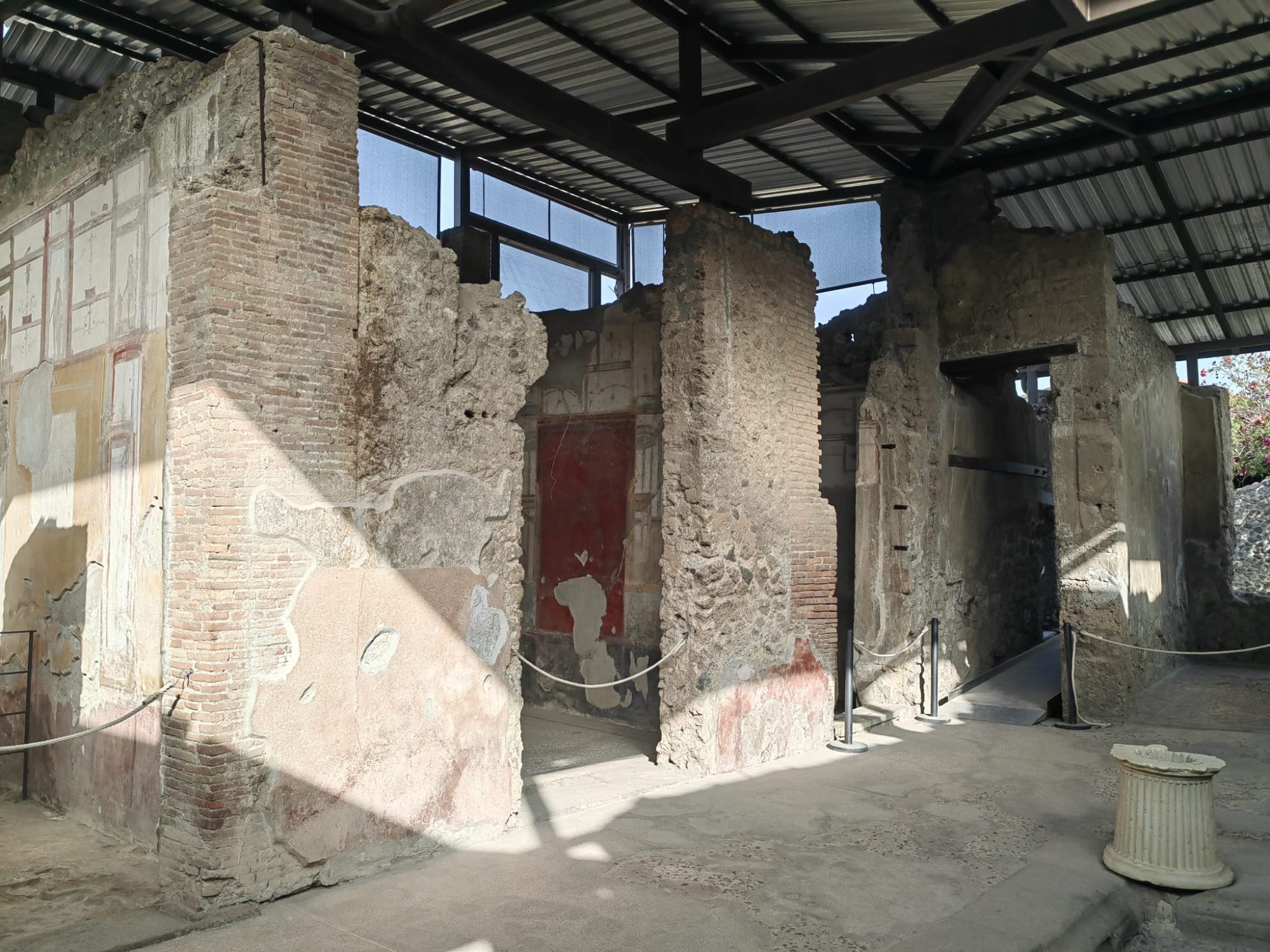
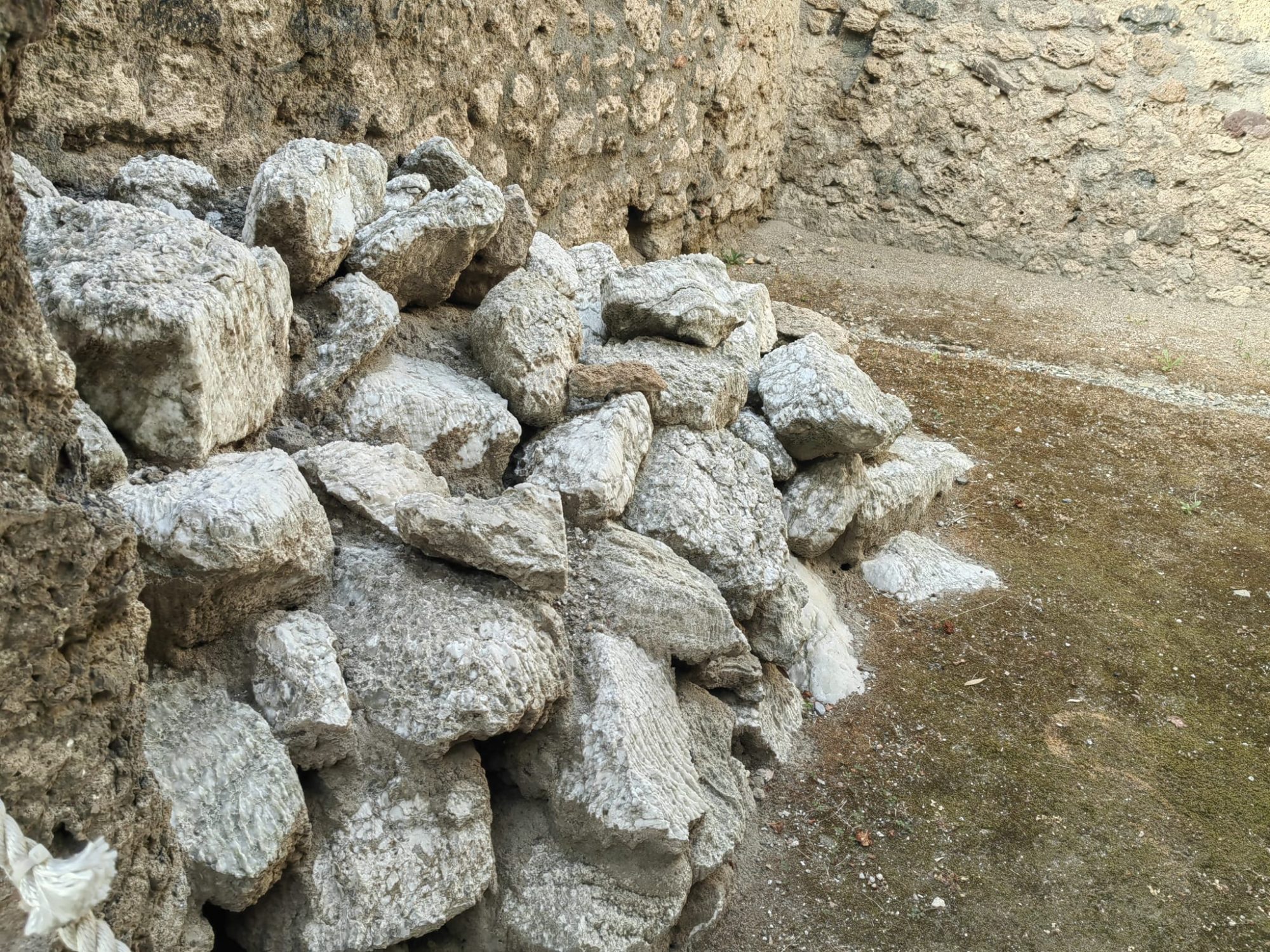
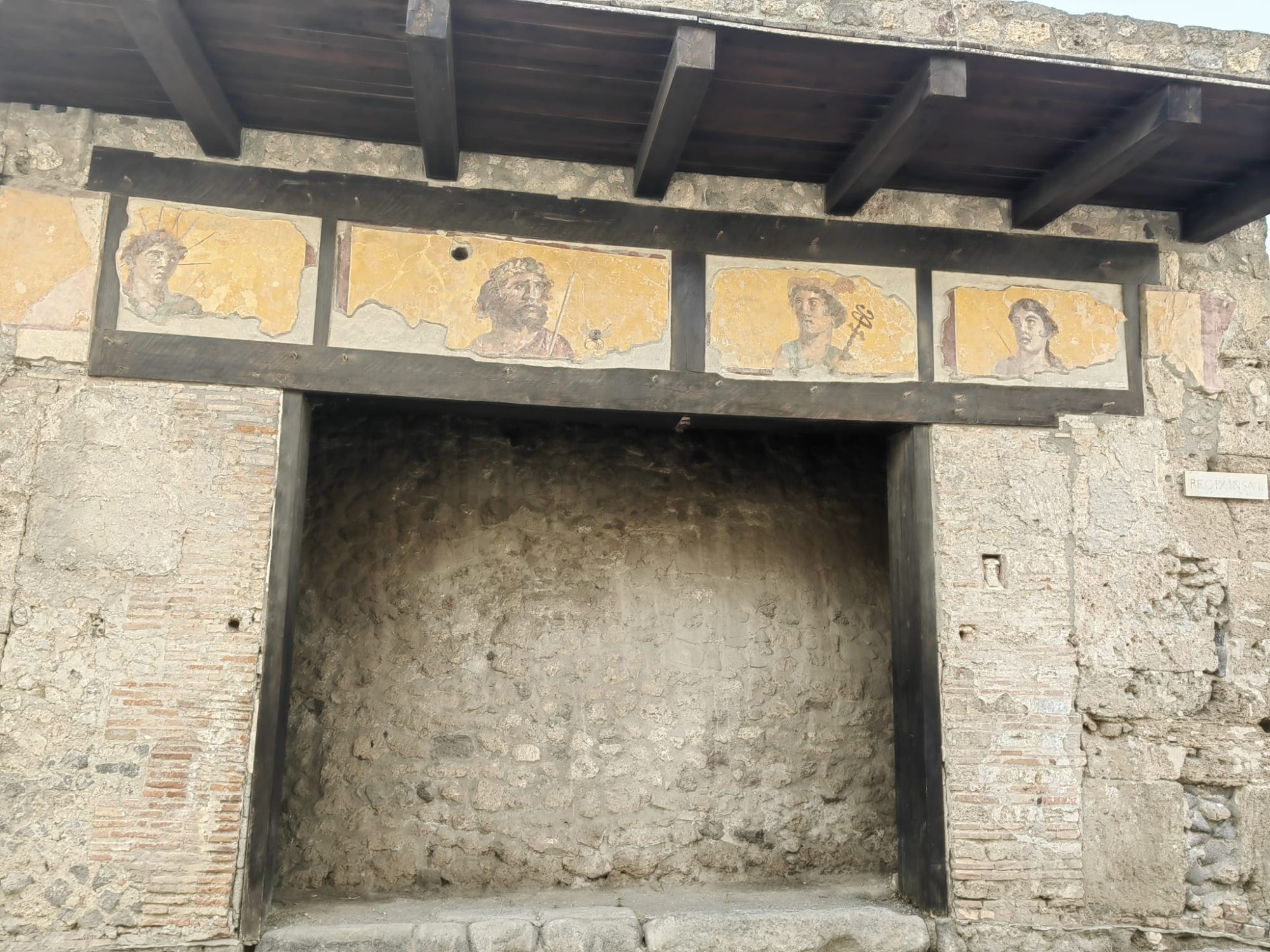
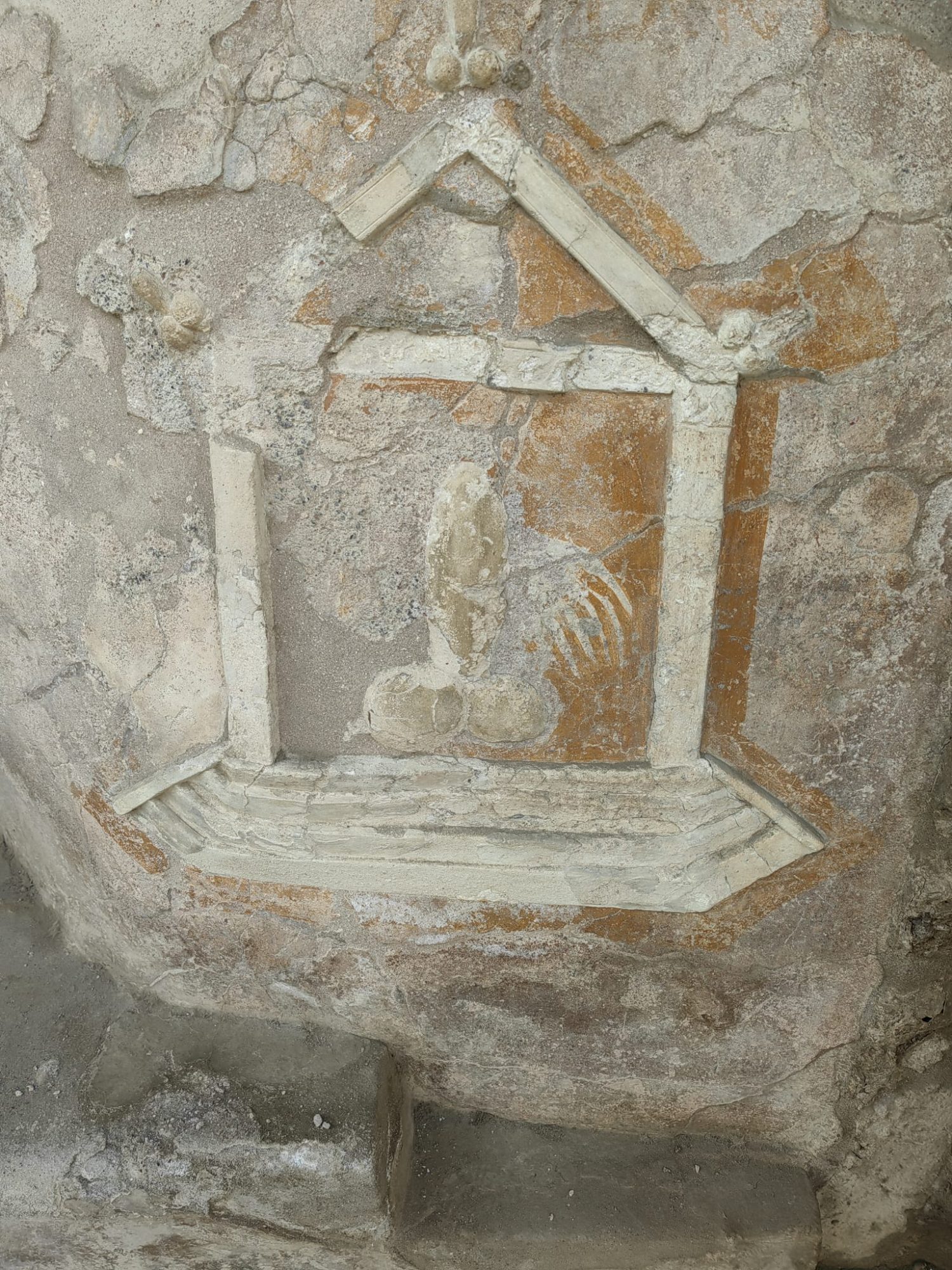
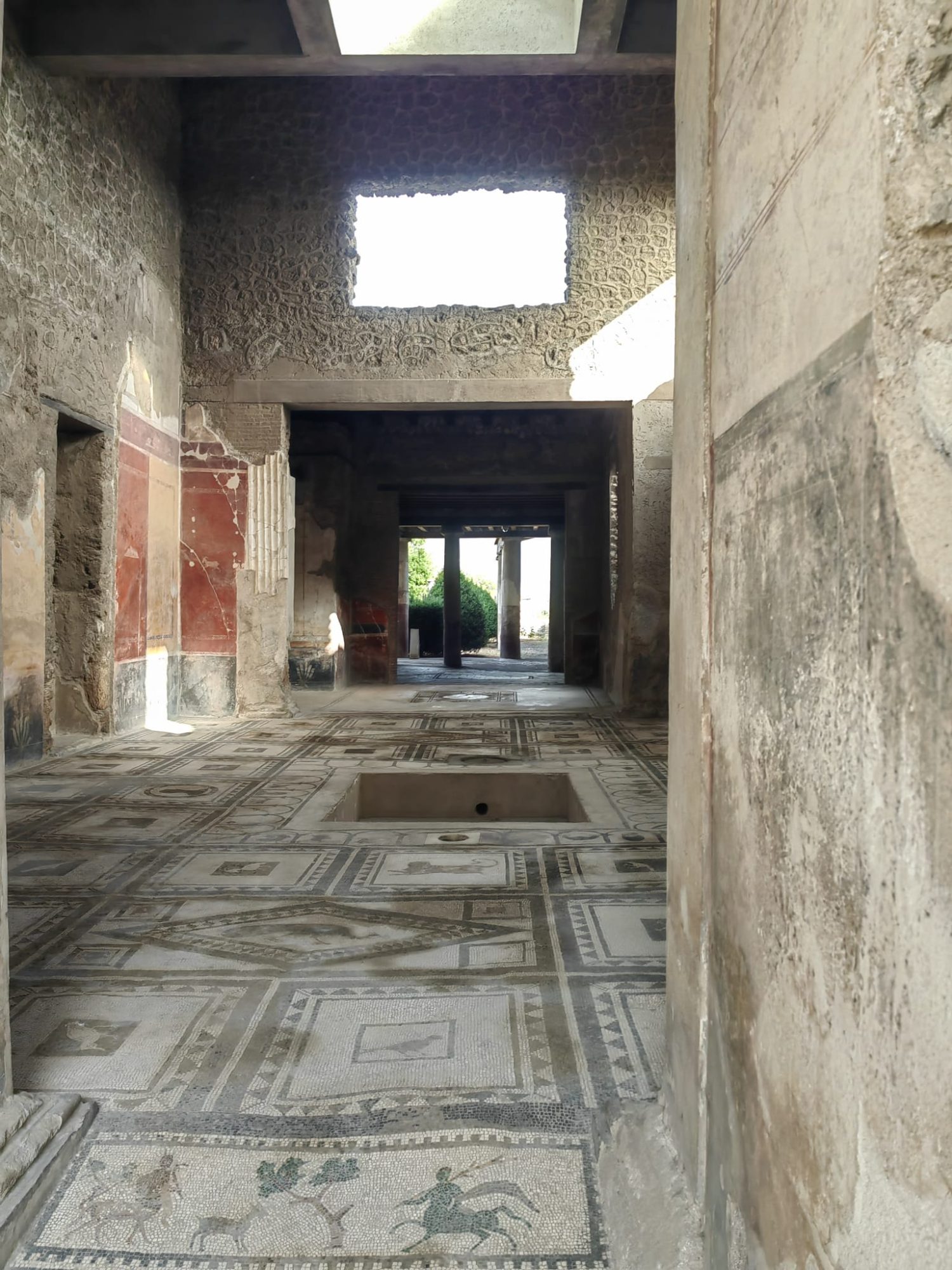
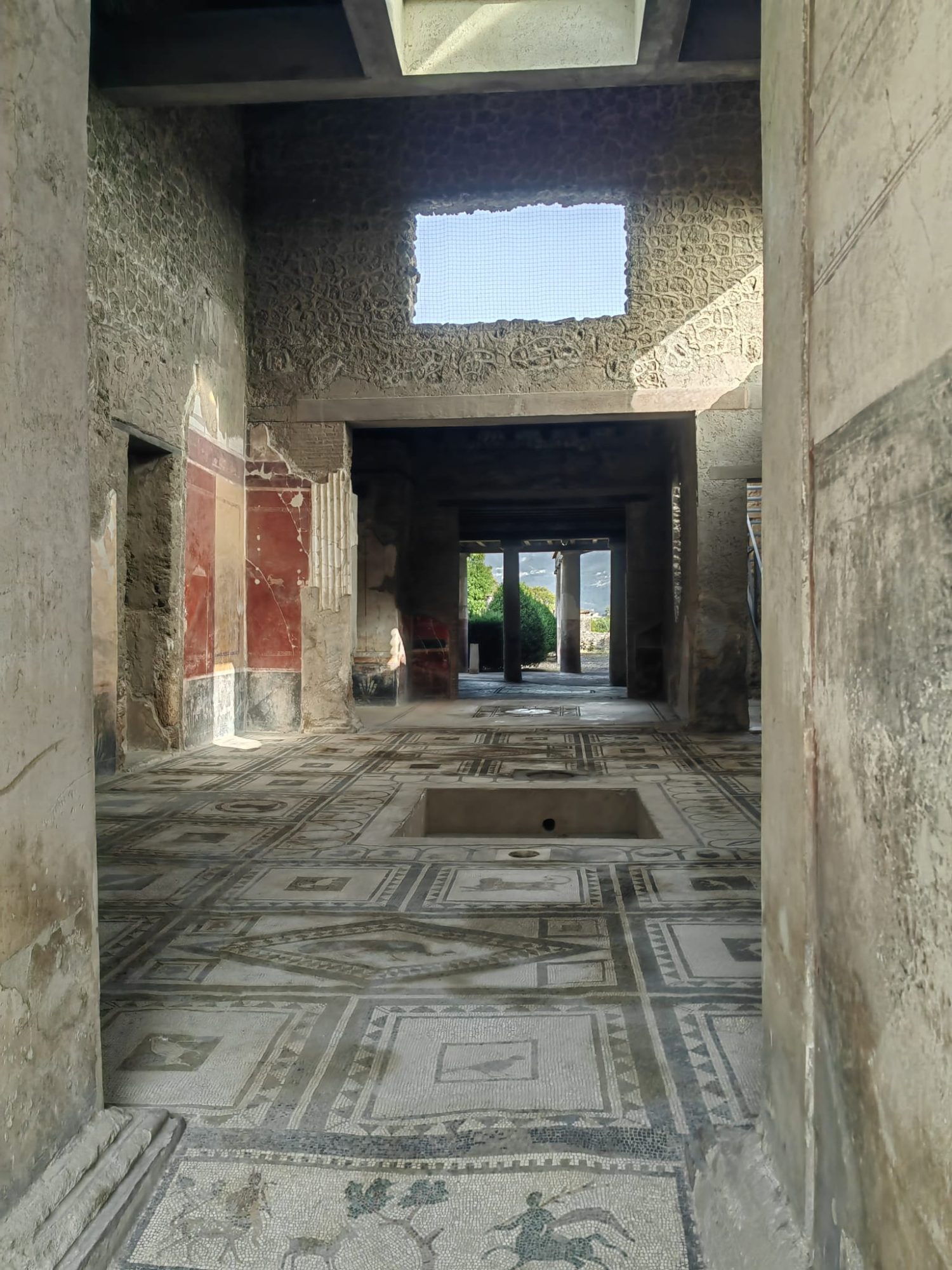
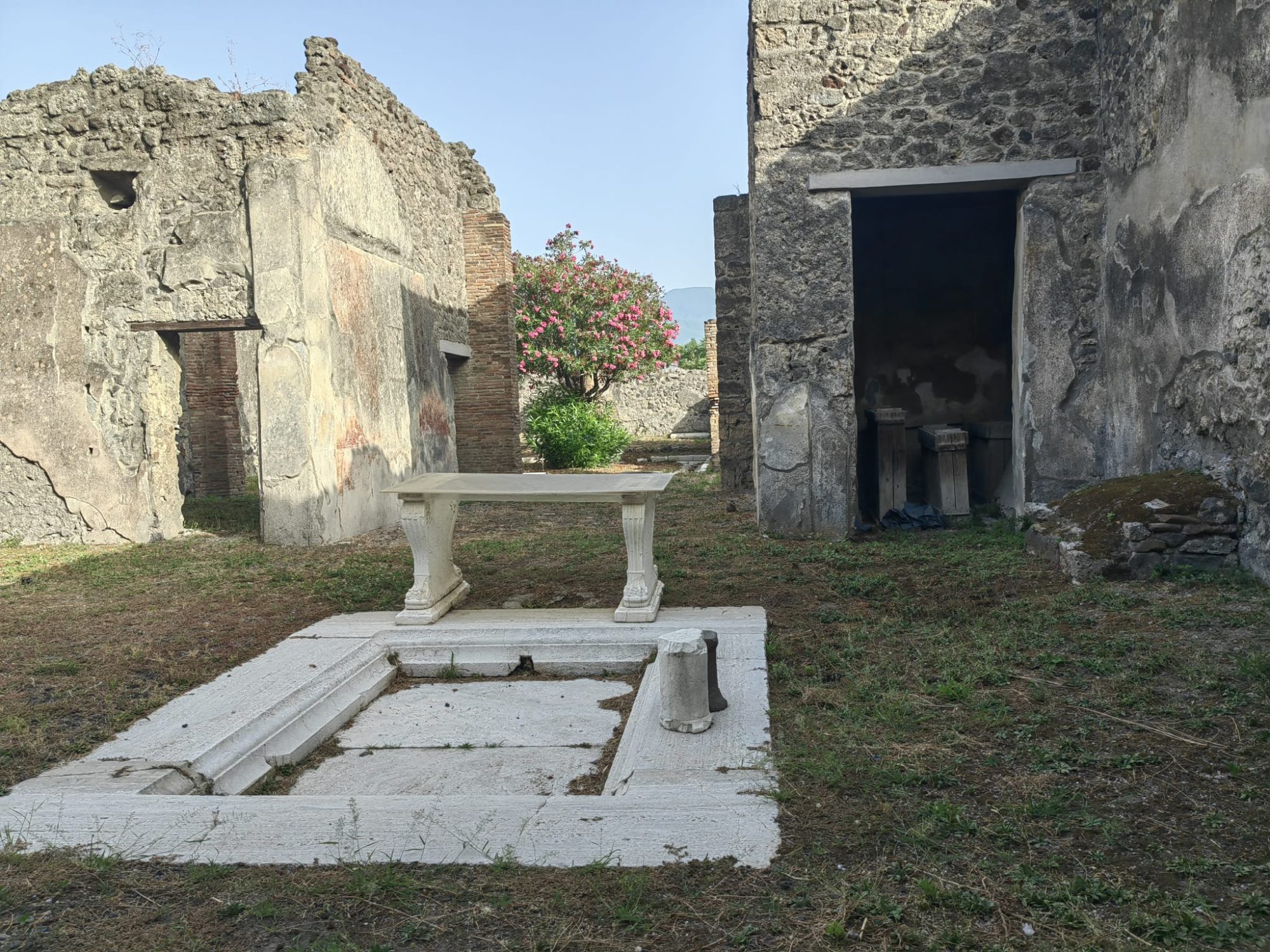
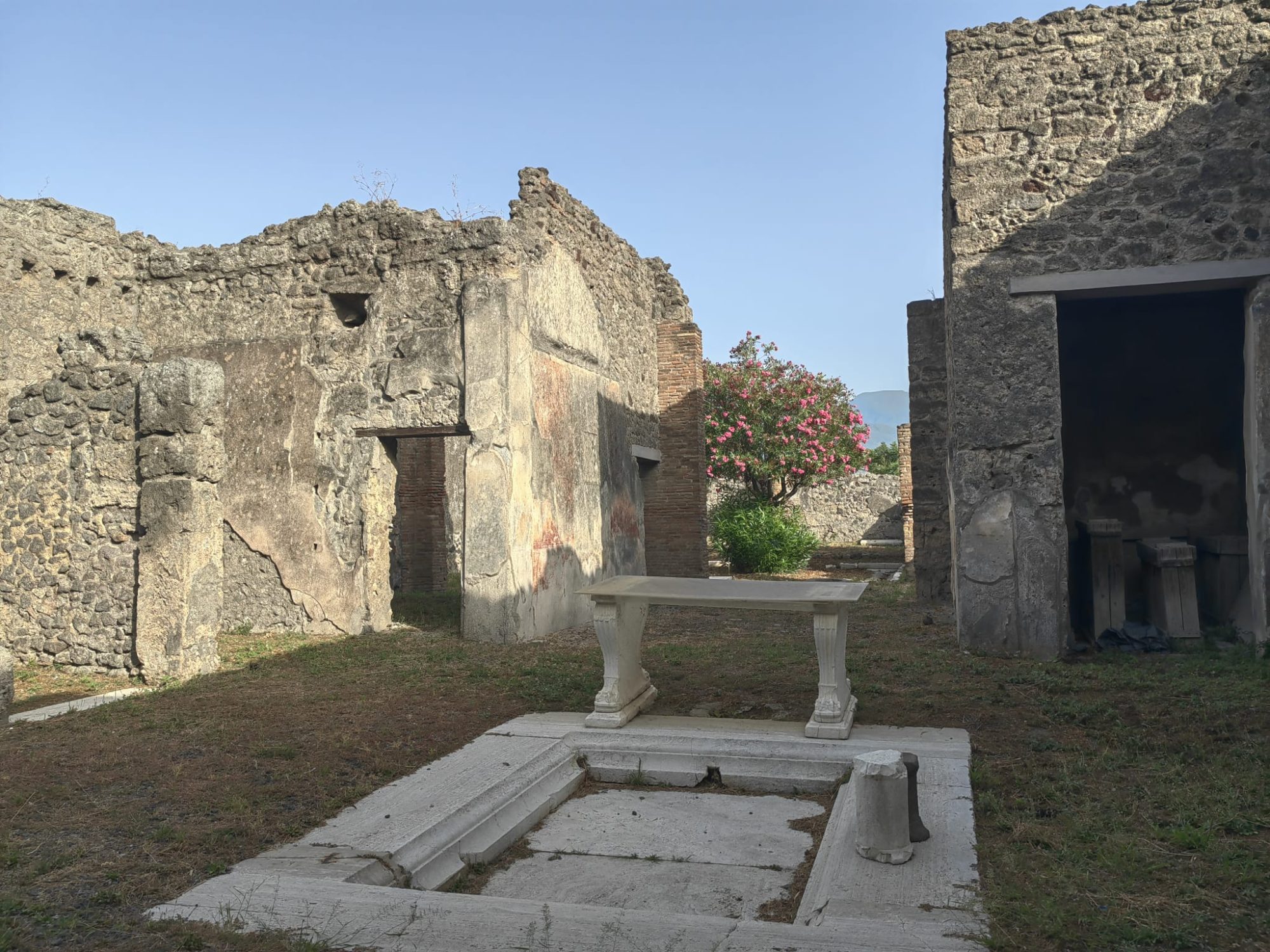
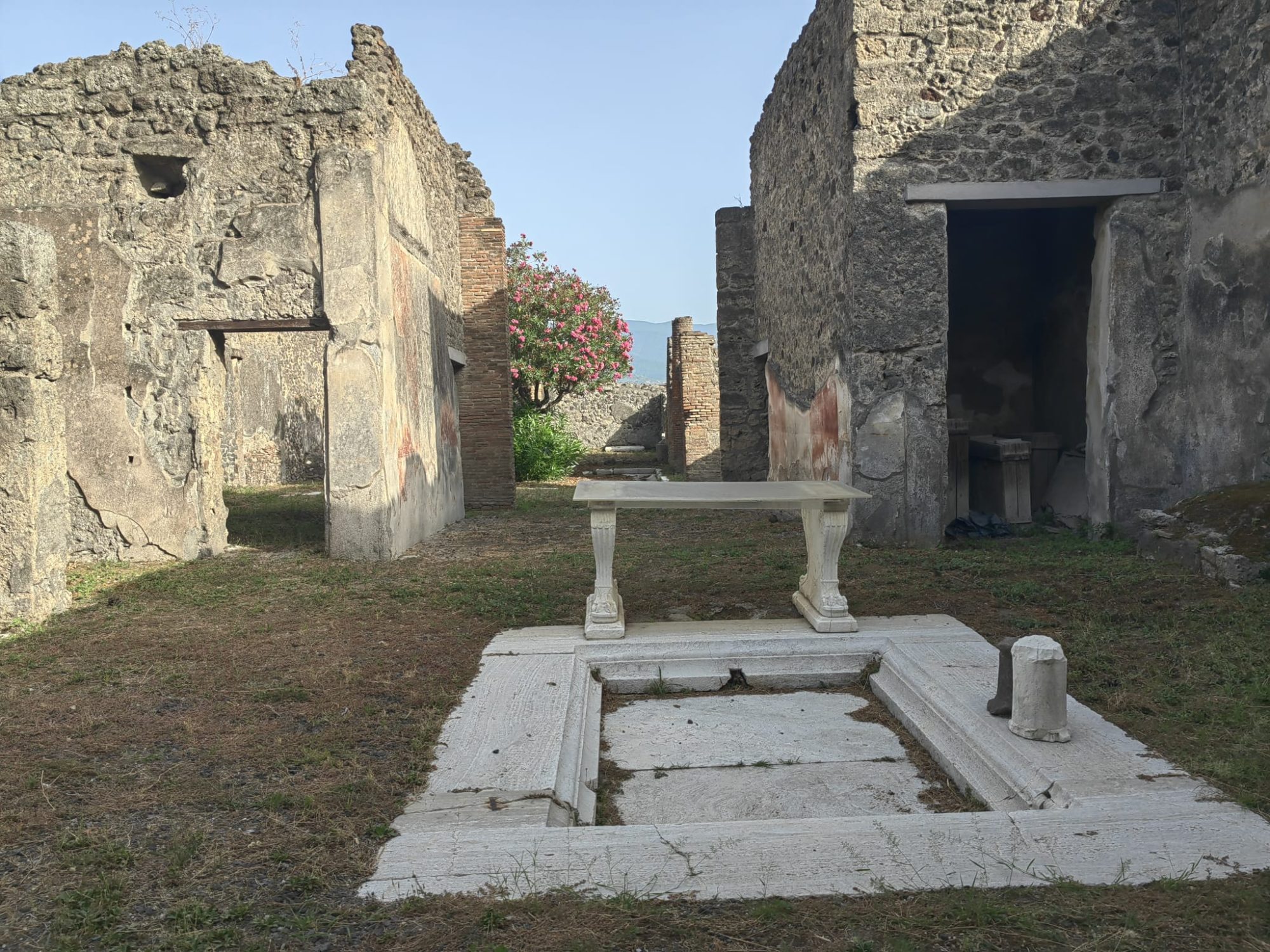
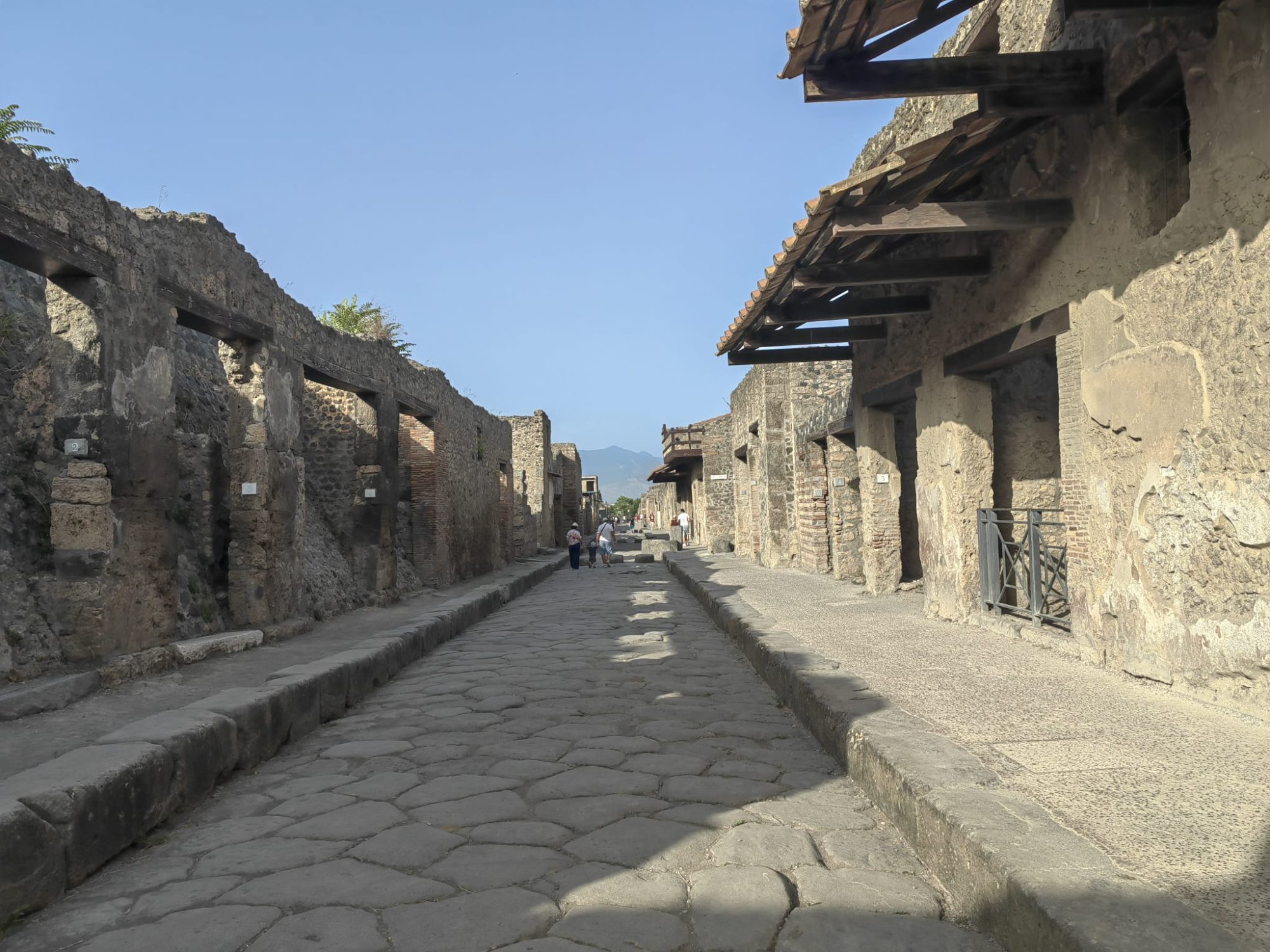
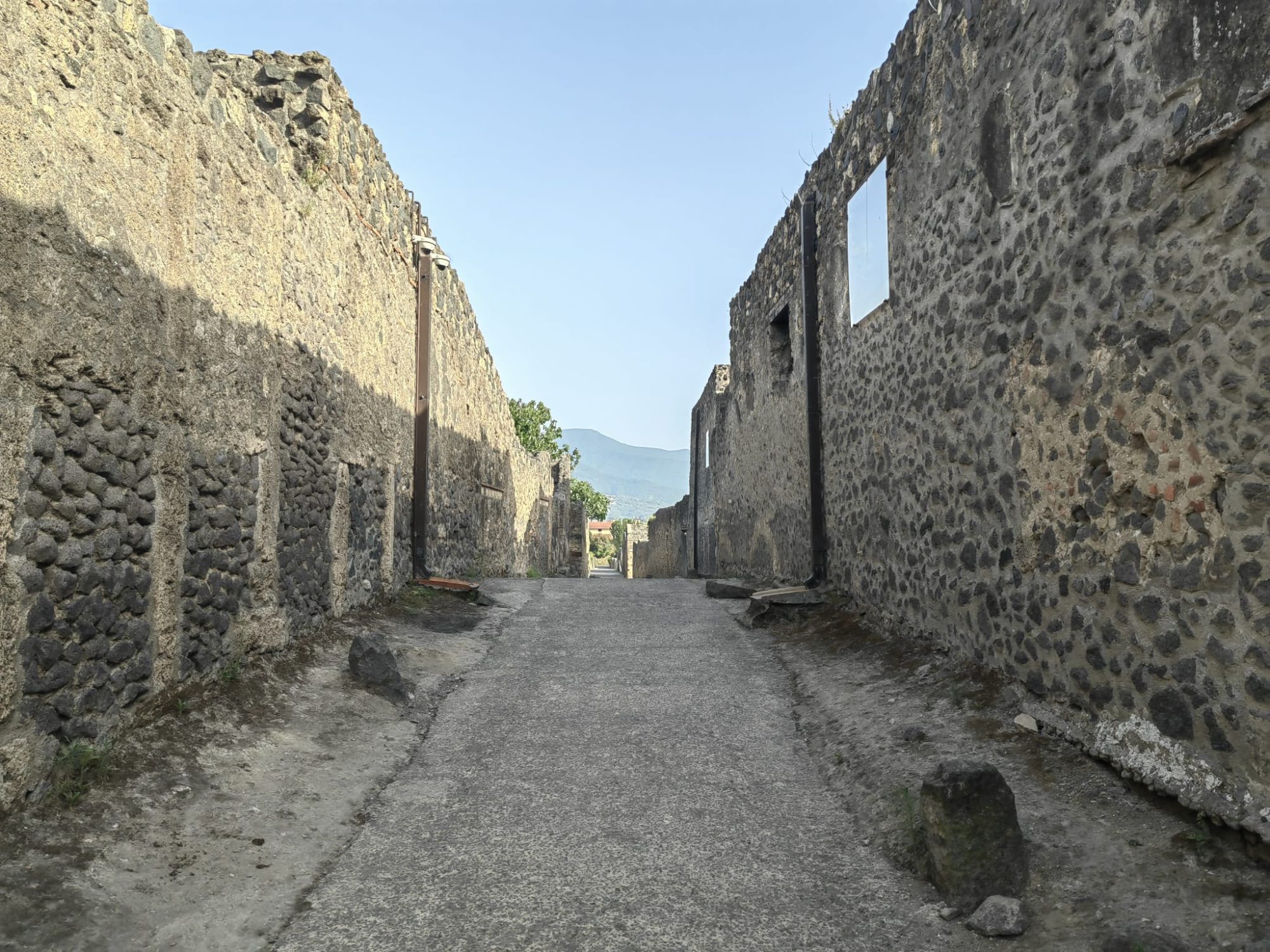
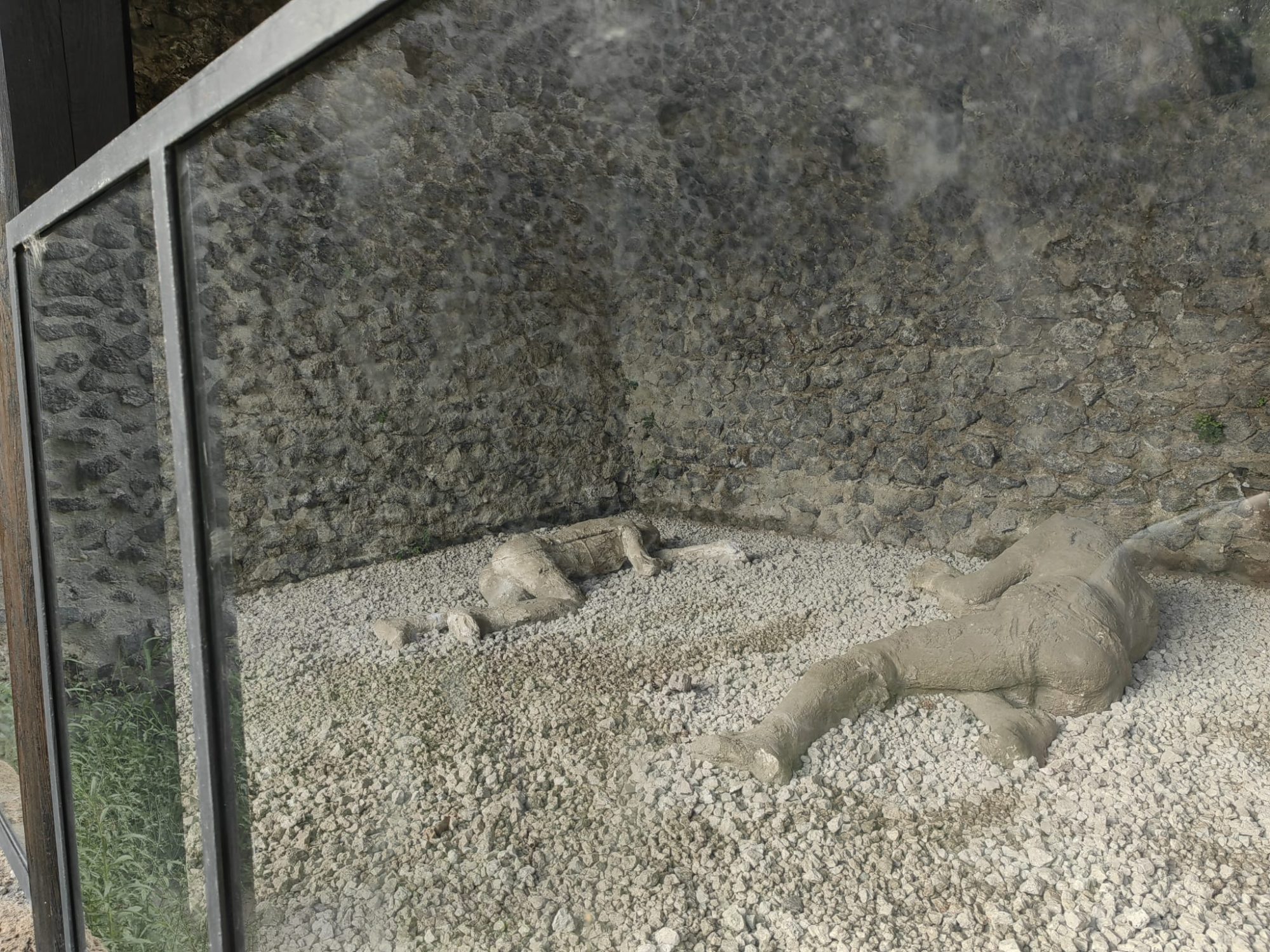
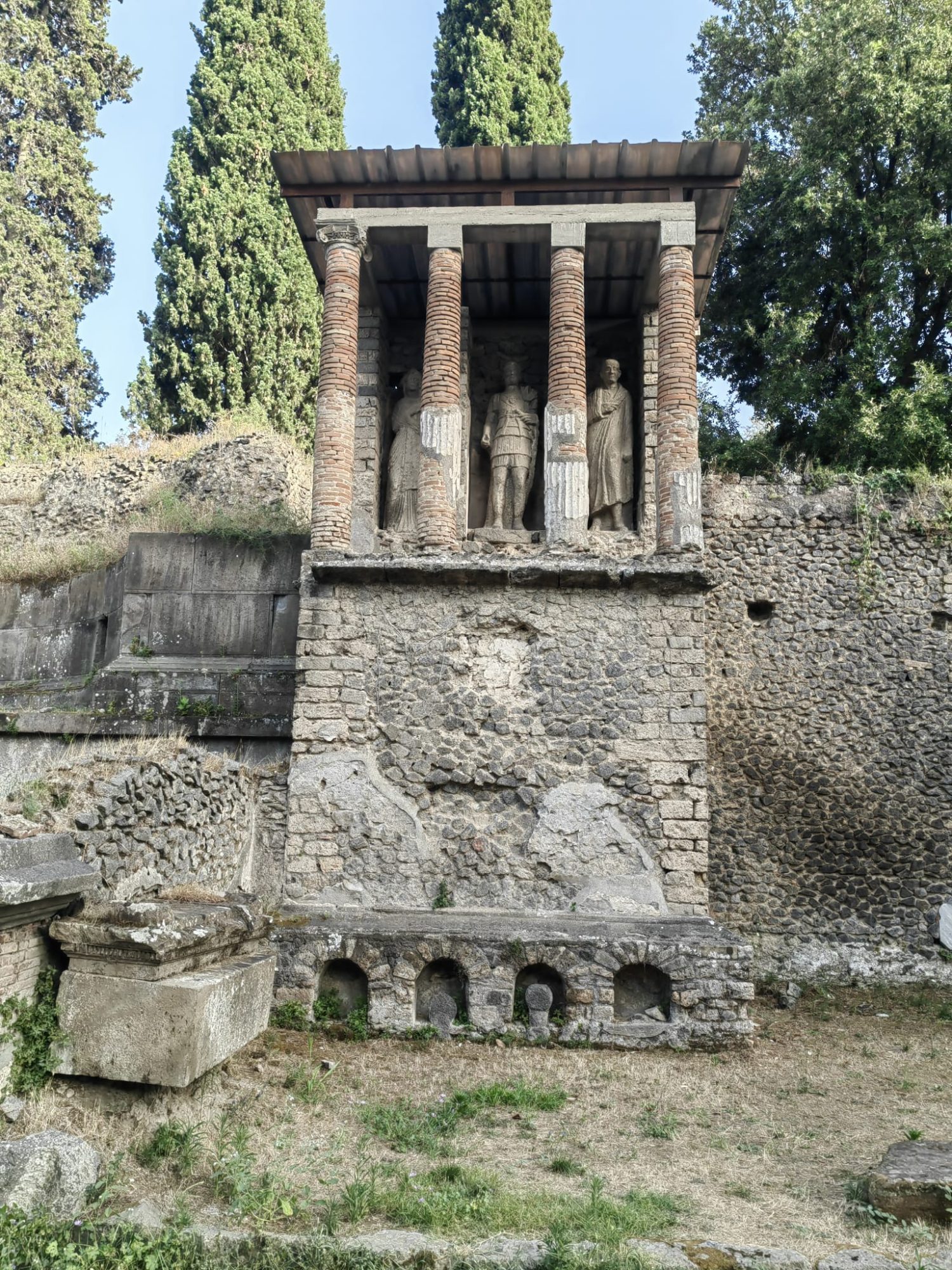
A display table shows the layout of the ancient city with its nine regions. In the background, the ruins stand against a mountain backdrop.Information board for the Casa degli Amanti in Pompeii: The house owes its name to an inscription stating that lovers, like bees, lead a life as sweet as honey.Roman amphorae in a niche: With their tapered base, these earthenware vessels could be stored space-efficiently in sand or wooden racks.Ancient amphorae built into the ceiling structure: Empty clay vessels were often used in Roman vaulting to reduce the dead weight of the masonry.Atrium of a Roman house in Pompeii: In front of the passage to the garden lie the shallow basin of the impluvium and a sculpted antique table support.Rising above the roofs and ruins of the archaeological site is Mount Vesuvius, standing 1,281 meters tall with its characteristic double peak.On the horizon above the partly covered ruins of Pompeii looms Mount Vesuvius, whose eruption in 79 AD buried the ancient city.Ancient billboard advertising: Painted in red directly onto the plaster and not pasted over for nearly two thousand years.A classic Roman vista: From the entrance, the line of sight extends across the atrium with its roof opening (compluvium) straight out to the surrounding mountains.Information boards in the courtyard of the former gladiator barracks. In the background rise the tiers of the Large Theatre, with Mount Vesuvius towering behind.The colonnades of the quadriporticus originally served as a promenade for theatregoers before the courtyard was converted into gladiator barracks.Mount Vesuvius lingers discreetly in the background, as if it had nothing at all to do with the ruins in front of it.A monumental bronze sculpture by Igor Mitoraj gazes out between umbrella pines toward the mountain backdrop of the Campanian plain.Stone pines (Pinus pinea) line the pathways in the park of Pompeii. With their umbrella-like canopies, these conifers have shaped the landscape around Mount Vesuvius since antiquity.A monumental bronze sculpture by Igor Mitoraj looks across the lawn at a row of umbrella pines along the edge of the Pompeii excavation site.The sculpture keeps a vigilant watch over the lawn, while the birds peck unimpressed in the shade.Two pigeons resting in the shade of a pine tree, completely ignoring the information board beside them.Sometimes the present quietly sneaks ahead of antiquity.The umbrella pines simply reach for the sky, as if there were nothing ancient to see down below.The umbrella pines provide shade while the sculptures patiently enjoy the mountain view.The sculptures opted for the box seat between oleander bushes and mountain views.Behind blooming oleanders, antiquity is currently getting a little cosmetic touch-up.The oleander confidently insists on taking center stage in front of the ancient ruins.A tactile scale model with Braille script helps visually impaired visitors experience Pompeii's ancient structures, including the theatre and amphitheatre.The Romans built for eternity, but upkeep still calls for modern scaffolding.Ancient history is all well and good, but this shady spot clearly took priority.In the steep tiers of Pompeii's Odeon, up to 1,500 spectators once listened to musical performances and poetry readings.Where gladiators once trained, display boards and a velvet rope now hold the fort.Once a foyer for theatregoers, later barracks for gladiators: the sprawling quadriporticus overlooking distant Mount Vesuvius.The Small Theatre of Pompeii was once fully covered as a theatrum tectum. The front parapets are flanked by kneeling atlantes.An ancient thermopolium in Pompeii: Clay jars for hot food and drinks were embedded directly into the masonry counter.The large stepping stones in the street paving served as ancient crosswalks: pedestrians could cross with dry feet while carts passed through the gaps.The front door has been missing for nearly two thousand years, but the security gate takes its job very seriously.The paving has held up for two thousand years. Only the through traffic has noticeably dropped off.The sign marks Regio VIII, Insula VII: In the 19th century, Giuseppe Fiorelli divided Pompeii into nine regions and numbered city blocks to aid navigation.Two small niches in the stone wall. Plenty of space for ancient knick-knacks.The walls have been standing strong for two thousand years. Only the roof could use a little patching up sometime soon.Nearly two thousand years of wind and weather, yet the red wall paint still stubbornly refuses to fade.In any case, no one has complained about property boundaries around here for a very long time.A paved walkway between two-thousand-year-old walls. You certainly won't get lost here.Remnants of the ancient marble paving are still preserved in the semi-circle of the orchestra. This is where guests of honor once sat on movable chairs.View along the Via di Stabia toward the Porta Stabia, the oldest surviving city gate of the ancient town.The remarkably high curbs protected the sidewalks from rainwater and waste that drained down the paved street.Unlike its large neighbor, the Odeon (Small Theatre) of Pompeii was once completely roofed and seated around 1,500 spectators.Deep ruts worn into the basalt stones bear witness to the heavy cart traffic of everyday Roman life.Wide sidewalks, solid basalt paving, and guaranteed no more rush hour.The round arches are soldiering on bravely, even if the upper floor moved out long ago.The brick arches provide reliable shade. For a nap, however, the floor is a bit on the rustic side.No entry to the construction site. Then again, after nearly two millennia, the completion date hardly matters anymore.A cypress perfectly framed. As if the Roman architects had factored it right into the blueprints back then.No through traffic – a rule everyone around here has been following for quite some time.Where suites of rooms once stood, the grass has now quietly taken over the floor plan.The modern downpipe is visibly trying its best to blend in among the ancient stones.No point in breaking in: The doorway may be firmly barred, but the roof has been missing for nearly two thousand years anyway.Little glass vials, oil lamps, and carved bones. Sometimes ordinary everyday trinkets outlast entire epochs.Between the high walls, the hustle and bustle stays outside – and the shade leisurely wanders from one side of the street to the other.An ancient jigsaw puzzle for advanced players. Sadly, the instruction manual was lost nearly two thousand years ago.Through the reconstructed compluvium in the atrium roof, not only did daylight once stream in, but also rainwater into the catchment basin below.Ochre-yellow panels, dark bases, and clean lines: Ancient interior design did just fine without wallpaper or picture frames.Filigree candelabra and delicate ornaments on plaster. There certainly was no need for a change of wallpaper here for a very long time.The topiary is trimmed to perfection. For ancient ruins, this green courtyard looks remarkably move-in ready.Columns across two levels framing a small garden: in the ancient townhouse, they were already thinking remarkably vertically.Grass grows leisurely between the sun-warmed stones. No one has been in a hurry here for a very long time.As a colonnaded courtyard, the peristyle provided light, fresh air, and space for a carefully planted garden at the heart of the ancient house.A neat row of beam holes in the wall still reveals quite precisely where the upper floor once began.Deeply notched into the hard basalt rock: carts were already running on rails here two thousand years ago.Spaciously laid out, sunny location, and guaranteed good ventilation. The ceiling, however, could do with a little touch-up.A passageway with a built-in vista. With a view like that, there was really no need to hang pictures on the walls.High curbstones separated sidewalks from street level, where wastewater and carts flowed; stepping stones allowed for a dry crossing.The large storage jars are still standing by the entrance. Though no one has refilled them in a very long time.Not a single pothole repaired in nearly two thousand years—and the road surface is still holding up.Two-thousand-year-old paving stones, and the cat unerringly found the shadiest spot.A delightfully quiet neighborhood, and even after two thousand years, the pavement is still remarkably even.Seamlessly laid paving between high walls: there was definitely no room intended for oncoming traffic in this alley.In the Fullonica di Stephanus, the ancient proprietors simply converted the atrium into a commercial laundry, complete with wash basins.A wall on the left, a wall on the right, and a mountain view at the end. Roman traffic calming in its purest form.Whatever was once painted on the wall here in red: the deadline has definitely passed by now.History or no history: the fur has to look just right first.Looking across the archaeological site into the sun. Pompeii is keeping discreetly to the shadows today.An entire ancient city quarter at a glance—though you largely have to imagine the roofs.In this backlight, the ancient city gracefully steps back and lets the sun take center stage.A solid roof overhead and unobstructed views of the mountains. Even back then, there was little to complain about with this location.Without ceilings and roofs, even the most labyrinthine Roman residential complex looks remarkably clear.A tree neatly trimmed into a box shape. After all, order is a must, even amidst ancient ruins.A few new roof tiles on ancient walls: some renovations just need a little more lead time.The hedge in the foreground does its level best to steal the show from two thousand years of urban history.Window frames without glass and an unobstructed view of the mountains. With a vista like this, curtains weren't needed anyway.Modern protective roofs shelter the ancient masonry from the elements. In the background, the Monti Lattari mountain range emerges.View across the ruins of Pompeii towards the Monti Lattari; in the background rises the 80-meter-high bell tower of the modern Marian shrine.Above the partially reconstructed roofs of the ancient city, the Monti Lattari massif stands out in the background.View over the ruins of Pompeii towards the Monti Lattari. On the horizon to the left, the bell tower of the modern neighboring town rises.Modern protective roofs over the excavated Roman houses shelter delicate frescoes and stucco elements from the elements.A sweeping view across the ancient rows of houses. Completely free of through traffic, the neighborhood has become noticeably more peaceful.Open-plan living, Roman style: the old chambers certainly don't lack fresh air anymore.From this perspective, the ancient city looks like a gigantic, open floor plan beneath the open sky.Even after two millennia, these walls still know exactly where the hallway ends and the room begins.The tabletop didn't survive the centuries, but the stone lion feet bravely continue to hold their ground.A sightline drawn as straight as a ruler: the Roman master builders definitely knew how to craft an impressive sense of space.The stone lions have been guarding the passage for nearly two thousand years without ever looking away.Looking right through the house all the way to the mountains: to this day, there is nothing to improve about the Roman sightline.Solidly layered from volcanic rock: build like this, and you won't have to worry about the next renovation anytime soon.The ancient red still radiates on the wall. History politely keeps silent about the whereabouts of the rest of the ceiling.Not repainted in almost two thousand years, and the wall color is still holding up surprisingly well.The paint may be peeling a bit, but even after two millennia, there's nothing to fault about Pompeian red.Around 44 hectares of the ancient city have been excavated so far. To this day, the vast sea of houses lies beneath the open sky, almost entirely without roofs.Above the excavated walls, Mount Vesuvius rises in the background, its eruption in 79 AD having buried the city under volcanic ash.A few modern protective roofs lend a helping hand, but most of the masonry stands upright without any support at all.The modern protective roof may not quite match antiquity stylistically, but it reliably shelters the ancient frescoes from the next shower.Entry denied, view granted. The vista through the shady hallway all the way to the distant hills certainly cannot be locked out.Behind the ancient walls, life simply continues to bloom, utterly unfazed by two millennia of history.Two-thousand-year-old stone walls bother the oleander very little when it comes to blooming.A blooming oleander in the ancient courtyard. Two thousand years of history clearly don't bother it in the slightest as it grows.Construction was briefly interrupted in the year 79. The building materials have been patiently waiting to be used ever since.Above the house entrance, four ancient deities look down—among them Mercury, who traditionally watched over commerce and travelers with his herald's staff.In ancient Rome, the phallus was considered an effective ward against misfortune and the evil eye—which is why it appeared as a relief on many house walls.In the atrium, the sunken impluvium caught rainwater from the roof opening. The detailed mosaic floor with animal motifs remains almost entirely intact to this day.In the atrium of the Casa di Paquio Proculo, the intricate mosaic floor with its animal motifs around the central impluvium has been preserved almost entirely intact.In the atrium of a Roman house, the impluvium caught rainwater. Behind it stood the impressive stone table, the so-called cartibulum.The marble table is still standing in the exact same spot—only the roof and the guests went missing along the way.The marble cartibulum behind the basin once served Roman masters of the house as a display table to show off their fine tableware.Two thousand years without oncoming traffic. At the end of the ancient alley, the mountain view reliably awaits.The marble-clad counter in the Thermopolium of Asellina. In ancient fast-food joints like this, Pompeians picked up hot food and drinks.The deeply grooved basalt streets also served as drainage channels during rain, which is why the sidewalks were built noticeably elevated.Quiet residential area, no through traffic. The neighborhood has been pleasantly silent for nearly two millennia.Between the millennia-old walls, the present day blinks nonchalantly at the end of the alley.Entrance to the Casa di Trebio Valente on Via dell'Abbondanza. Numerous ancient electoral slogans and announcements have been preserved on the estate's exterior walls.A peek through the barrier gate: The checkered wall in the courtyard proves that some patterns are simply timeless.Grass has long grown over the past, yet the walls stoically hold their ground.The columns stand ready, just in case someone still wants to deliver a roof.The columns are still standing at attention, even if they haven't had anything to hold up for a very long time.The furniture is stripped down to the bare essentials. On the upside, the open floor plan impresses with plenty of natural light.Flawless ventilation and a single small pedestal for decoration. Really, a tidy hallway doesn't need much more than that.The Pompeian red is holding up bravely. Time took a few liberties with the rest of the room, though.The ancient streets of Pompeii were paved with large polygonal blocks of volcanic rock, flanked by raised curbs.Two thousand years without road repairs, and the pavement still looks as good as new.The walls stubbornly flank the way, guiding travelers without a single street sign.An archway built for eternity—though the matching wooden door was lost somewhere down the centuries.The cypresses shoot straight toward the sky, while the ancient stone blocks beneath them leisurely sit out the centuries.Between ancient tombs and modern balconies lie just a few cypresses and two thousand years.The Street of Tombs outside the Herculaneum Gate: Monumental tombs of wealthy families line the ancient arterial road beyond the city walls.Outside the city walls, monumental tombs line the arterial road—ensuring the deceased remained part of civic life even in the afterlife.Under Roman law, burial within the city walls was forbidden—which is why monumental tombs line the main roads leading out.Headless, but with impeccable posture: Under the protective shelter, the ancient figures patiently await their next appearance.The stone finial still perches right at the top—yet against the tall cypresses all around, the ancient monument seems almost modest.An advanced 3D puzzle: The stonework has been sorted out; it's just the assembly instructions that have been missing for two thousand years.Not a chariot in sight. The ancient paving stones are enjoying a well-earned evening off.The oleander has made itself quite comfortable. The ancient ashlar blocks in the background accept it stoically.The bush has unceremoniously declared the ancient wall a trellis. Apparently, no objections were raised.Plaster casts of the victims from 79 AD: In the 19th century, Giuseppe Fiorelli developed the technique of pouring plaster into the cavities left behind in the solidified pumice.Liquid plaster poured into the voids of solidified ash layers faithfully preserves the postures of the victims during the eruption of Vesuvius.By filling the voids in the compacted ash with plaster, highly detailed casts of the victims of Vesuvius's eruption were created.The cavities in the volcanic tuff made it possible: Plaster casts preserved the precise body contours of those buried alive.Three casts reveal the futile defensive postures of people caught by surprise by the volcano's pyroclastic surge.A covered balcony with its own colonnade: The three stone residents have occupied their box seat for two thousand years.Sheltered behind glass: The plaster cast captures the posture of a victim who fell to the ground in the rain of ash, raising protective arms before their face.Under the sloping canopy, the fresco bravely holds its ground. The rest of the room, however, has been missing for quite some time.Bedded on pumice: The casts show the final moments of two Pompeian residents during the eruption of Vesuvius in 79 AD.Millstones made of porous lava stone in a bakery: Donkeys or slaves once turned the upper runner stone around the fixed cone to grind grain.Along the Via dei Sepolcri, monuments of the upper class lined up: The numerous niches in the facade were designed to hold cinerary urns.The stone table is set. The atrium, however, has been waiting for the dinner guests for a few centuries now.No oncoming traffic for almost two thousand years. Even so, the cypress faithfully keeps watch by the roadside.View across the ancient ruins looking south: In the background, the Monti Lattari mountain range rises on the Sorrento Peninsula.Above the ancient ruins, the ridges of the Monti Lattari rise in the background.Between ancient walls, the sign casually points the way to the nearest pizza.Behind the walls of the archaeological site, the distinctive bell tower of modern Pompei stands out against the mountains.Hallway with a mountain view: Light and vistas already worked like a charm in this Roman house back then.A finger at the top edge of the frame at least provides a little shade for the ancient roofs.The cypresses grow straight as an arrow—as if trying to teach the old walls a thing or two about posture.The characteristically high curbs kept feet dry whenever rainwater washed through the basalt-paved streets.Two thousand years later, renovations are still underway. Good things come to those who wait.The brick-built pediment niche once housed the lararium, where the Roman household made daily offerings to their guardian deities.The fence is modern, but other than that, delightfully little has changed in this neighborhood over the past two millennia.The front door stands wide open, but knocking hasn't been worth the trouble for quite some time.An open-plan living concept, taken to its absolute logical conclusion.The colonnaded quadriporticus once served theatergoers as a foyer; later, the complex was used as gladiatorial barracks.In the leafy peristyle garden of a Roman residence: The colonnaded walkway offered shade and connected the reception rooms.Built around 80 BC, the Odeon of Pompeii was originally fully roofed and mainly used for musical performances and poetry readings.The mosaic still sits neatly on the floor; only the wall paintings have lost a bit of their luster over the millennia.Inside the thermopolium, the ancient cookshop: Clay jars were embedded in the masonry counter to serve and sell food and drinks.A quiet corner off the beaten track, where today mostly grass inhabits the ancient rooms.In the atrium of the Casa di Paquio Proculo: The elaborate mosaic floor frames the central impluvium, which collected rainwater through the open roof.Roman paving at its finest: Every single stone has been in place here for two thousand years. Back then, it probably wasn't particularly gentle on the soles of your feet either.A view over the rooftops of Pompeii. Strictly speaking, mostly over the places where roofs once used to be.The hedge is trimmed with pinpoint accuracy. Whoever looks after this place still takes gardening very seriously.The tiers of the Small Theatre offered seating for around 1,500 spectators. The side parapets of the lower seats of honour are adorned with kneeling figures carved from tufa.Behind the courtyard rises the Large Theatre, built in the 2nd century BC, which once seated around 5,000 spectators.Two small wall niches surrounded by heaps of solid stone. Drafts definitely didn't stand a chance here.Roman interior layout, open-air style. The umbrella pines in the background provide the perfect backdrop.The branches cheekily push into the frame, as if trying to steal the show from the panorama behind them.The walls still stand firmly by the pavement; it's just privacy that's become a bit of an issue.Scaffolding props up the ancient wall, while the grass leisurely reclaims the old path.The walls are holding up bravely; it's just the ceiling height that has become completely open to the sky.Modern protective roofs span parts of the ancient residential quarters to shield uncovered frescoes and walls from decay.The curbstones were remarkably high. Strolling back then clearly required some serious legwork.Beyond the excavated ancient walls, Mount Vesuvius rises on the horizon—its catastrophic eruption in 79 AD sealed the city's fate.The wall on the left showcases Roman opus reticulatum, where diamond-shaped tufa blocks were laid in a net-like pattern.Above the entrance to the ancient thermopolium on Via dell’Abbondanza, Roman deities keep watch, including Mercury as the patron god of commerce.Above the ancient walls, the bell tower of the modern pilgrimage basilica of Pompei emerges on the left, framed by the ridges of the Monti Lattari.Towering above the ancient ruins in the background is the bell tower of modern Pompei, with the Monti Lattari mountain range behind it.The bush at the edge takes its straight lines at least as seriously as the Roman builders next door.The umbrella pines patiently stand in line, keeping their canopies spread wide even though there isn't a cloud in sight.The wall niche with its small decorative pediment served as a lararium, where the household residents made offerings to their guardian spirits.The quadriporticus behind the Large Theatre originally served as a foyer for theatregoers before being repurposed as barracks for gladiators.The geometric mosaic is still in pristine condition. Quality craftsmanship truly pays off, even after two thousand years.Along the Street of Tombs outside the Porta Nocera, monumental burial sites line up—with the modern residential buildings of Pompei bordering right behind them.